– Making a difference here in ASEAN, one neighborhood at a time –
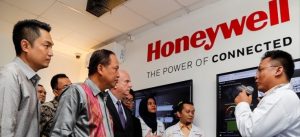
Honeywell’s innovations help to make our world cleaner and more sustainable, more secure, connected, energy efficient and productive; a world where people and organizations have the tools to be even more successful. Nothing is as important as ensuring a clean, safe, and healthy environment for our families, colleagues, neighbors, and communities for many years to come. Honeywell’s corporate social responsibility initiative, Honeywell Hometown Solutions (HHS) offers corporate citizenship programming, provides resources and financial support to those in need and encourages employee volunteerism where we can make a real, lasting impact in critical areas of importance to our communities. HHS focuses on these five areas – Science & Math Education; Family Safety & Security; Housing & Shelter; Habitat & Conservation; and Humanitarian Relief.
At Honeywell, we understand the importance of inspiring and preparing the next generation of science and math leaders. In ASEAN, our STEM initiatives have inspired more than 60,000 students via various programs of which includes the Honeywell Educators at Space Academy (HESA) program, Honeywell Leadership Challenge Academy (HLCA) and Honeywell Institute for Science & Engineering Program (HISE). Other initiatives include education kits, workshops, scholarship opportunities as well as the establishment of Honeywell University Control Labs which allow students and faculties to simulate, learn and develop smart building systems via Honeywell-provided modules and software.
In addition, Honeywell continues to run programs that help protect loved ones; rebuild and improve homes, schools and communities; provide handson support for a cleaner, safer and healthier environment; as well as help communities and employees recover from natural disasters.
For more information please visit us at https://www.honeywell.com/who-we-are/citizenship
“While we often see the impact our projects have on the ground, assessing these with reliable measurement allows us to back up our claims with facts and figures” – Lizayati Damit (Liza) Senior Corp Communications Manager, ASEAN.
– Putting smart to work for our company and the world –
IBM combines the greatest strengths of our company and its people — technology, expertise and energy — to develop innovative programs focused on challenges facing communities where we live and work. Our Corporate Citizenship initiatives are focused in Education and skills; Health; and Community Resiliency.
Towards our focus in Education and skills, we trained 330 educators across Kuala Lumpur, Penang and Johor to use IBM’s analytics Artificial Intelligence platform to enable 13,000 school students to build foundational skills in data analytics. Meanwhile, 60 special education educators have received teacher professional development to use IBM’s design thinking methodology to improve Science learning amongst 1,800 disabled, and sensory impaired students.
In the area of Health, we worked with the Malaysian Mental Health Association (MMHA) to use social media analytics and subsequently develop a cohesive strategy to improve reach to youth at risk of mental health issues by 300% via social media. We additionally worked with the National Cancer Society Malaysia (NCSM) to develop data management and analytics capabilities to enable the organization to better measure the impact and improve youth smoking cessation programs in public schools.
Within our focus in Community Resiliency, we worked in partnership with the Sarawak Ministry of Education, Science & Technological Research to provide effective pro-bono consulting teams of experts to four public agencies to kickstart the agencies’ digital transformation journey into supporting the state of Sarawak’s Digital Economy Strategy. In line with this digital focus also, we facilitated more than 600 students across 3 districts in Sarawak in building essential digital skills through constructing and programming cardboard robots with Artificial Intelligence.
For more information please visit us at www.ibm.com/ibm/responsibility/
– Over 700,000 volunteer hours recorded, over US$2.2 million disbursed to communities –
Who and what we are
Intel Malaysia is the first offshore site for Intel Corporation, with more than US$5B invested since 1972. Today, Malaysia is one of Intel’s most comprehensive sites with 10,000 employees. It is Intel’s largest assembly and test manufacturing facility with an all-Malaysian workforce in manufacturing, producing Intel’s latest products utilizing smart manufacturing techniques. The site is also home to Malaysia’s largest product design and development center, employing 3,500 engineers and is one of the only two Intel shared services hubs supporting HR, Finance, Procurement, IT, and Supply Chain operations to Intel sites globally.
Empowering our people to care for our community
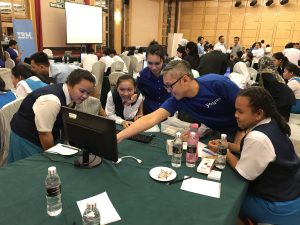
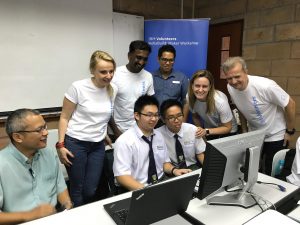
The Intel Involved Matching Grant Program (IIMGP) empowers and encourages our employees to volunteer their skills and time to worthy causes. Through this unique program, Intel Foundation will match US$5 for each hour volunteered by our employees in the community. Since 2006, over 700,000 volunteer hours have been clocked in by our volunteers and over US$2.2 million has been disbursed to NGOs and schools in Malaysia.
To the next 50!
This year, to celebrate Intel Corporation’s 50th anniversary, Intel targets to hit 1 million volunteer hours by 50,000 employees worldwide by the end of 2018. For Intel Malaysia, our goal is 100,000 volunteer hours with 10,000 employees volunteering this year.
For more information please visit us at https://www.facebook.com/IntelMalaysia/
“Our commitment to corporate responsibility and sustainability—built on a strong foundation of transparency, governance, and ethics—creates value for Intel and our stockholders by helping us mitigate risks, reduce costs, build brand value, and identify new market opportunities”.

– Johnson & Johnson Malaysia is focused on raising awareness of mental health issues and eliminating the stigma of mental illness –
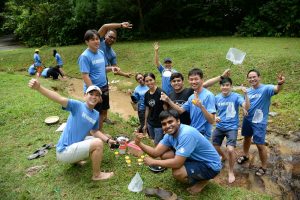
Johnson & Johnson’s Global Community Impact is focused on supporting and championing the people on the frontlines who are at the heart of delivering care. In J&J Malaysia, from 2018 to 2020, we aim to raise awareness of mental health issues and opportunities for each life stages by reaching out to various stakeholders, from employees to school counselors and the public, including students and young adolescents. In July 2018, the GCI team together with the Malaysian Mental Health Association (MMHA) organized an experiential workshop comprising four activity stations to enable participants to better understand the importance of mental health. The workshop, which was accompanied by a fund-raising activity, reached out to 200 employees. The workshop was so successful the GCI and MMHA trained 10 employees to carry out the workshops themselves, after which the workshop was held at Asia Pacific University (APU) and 15 schools in Ampang Jaya in August. The effort reached out to 500 students. Moving forward, over the next few years, GCI will continue to raise awareness of mental health by carrying out the workshops in schools and academic institutions to reach out to the youths. In addition, plans are underway to build an app to help the public become more aware of their mental wellbeing and to help direct them to professional help. GCI will also continuously seek to collaborate with stakeholders to extend our reach in raising awareness of mental health.
For more information please visit us at https://www.jnj.com/our-giving
“Achieving 2020 Goals is integral to Johnson & Johnson’s long-term success. We consider them to be the Key Performance Indicators of our citizenship and sustainability approach and have processes in place to measure and track progress. We report out on our progress annually, including independent review and assurance of our progress and associated data”.

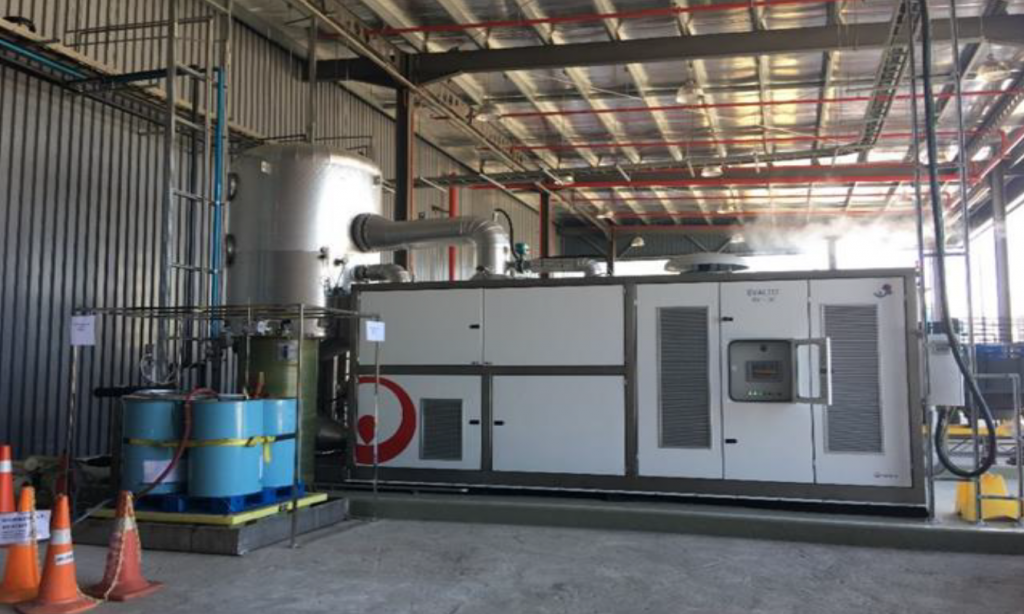
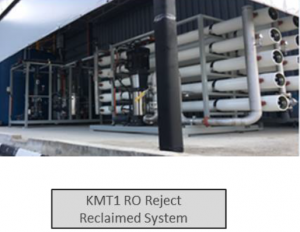
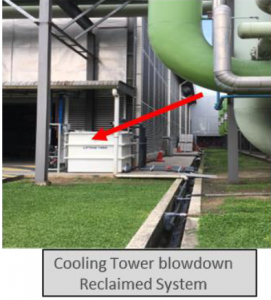
Since 2009, First Solar has decreased the manufacturing water intensity (water consumption per watt produced) by 64%. This is due to significant improvements in module efficiency, manufacturing throughput, and the implementation of water conservation and recycling projects in our manufacturing and recycling operations.
In 2019, First Solar’s manufacturing water intensity decreased by ~46% due to the increased throughput and efficiency of our Series 6 manufacturing process and water recycling initiatives. Whist production more than doubled, absolute water withdrawals only increased by ~14%. Totaling to ~300 million liters of water saved in 2019, equivalent to 7% of First Solar’s absolute water use.
(Article by UNGC)
Clean Water and Sanitation? The State of Corporate Malaysia on Water Sustainability
Sustainable Development Goal 6 – “Ensure Availability and Sustainable Management of Water and Sanitation for All” is perhaps one of the least discussed SDGs in Malaysia, particularly in the corporate space. This is as 92% of the Malaysian population has access to clean water, while 82% has access to sanitation services (World Health Organization, 2015), rendering the perception that Malaysia, in terms of the aforementioned SDG, is doing good.
However, Malaysia as a whole can still do better, if we float the question “Why not 100% access to clean water and sanitation services?”. The focus area in designing solutions for this issue should be on marginalized and special groups, those displaced by natural disasters, development projects and construction. On this, GCMY believes corporate Malaysia can play a role to provide water access to said groups, namely Orang Asal tribes in various rural areas in Malaysia.
GCMY refers to United Nations Global Compact’s publication “Guidance for Companies on Respecting the Human Rights to Water and Sanitation: Bringing a Human Rights Lens to Corporate Water Stewardship” on measures to assess a company’s role, impact assessment and solutions to Human Rights to Water and Sanitation (HRWS):
1. Develop a Policy Commitment and Embed Respect for the HRWS
The primary step in recognizing HRWS on a structural level is to develop a policy commitment to respect HRWS by defining the commitment, engagement with internal and external stakeholders as well as communicating that very commitment once adopted as company policy.
Following that, the company should embed respect for the HRWS via establishing appropriate accountability and building a cross-functional coordination framework. Respect for HRWS should be a set expectation for staff, and the commitment established should be applied to business relationships.
2. Assess Impacts on the HRWS
Impact assessment should begin with an internal review of how the company may be involved in impacts on the HRWS, via business relationships, supply chain or its own projects. This needs to be communicated with affected stakeholders.
Next, evaluation for impact severity and likelihood should be undertaken, where the result of the evaluation can be used to prioritize impacts for attention. Finally, following the initial assessment, a systematic approach can be built to streamline future assessments.
3. Integrate and Take Action on Impacts on the HRWS
After impact assessment and prioritization have been done, the company can begin taking action. First step is to identify options to prevent and mitigate potential impacts. This can be done by firstly understanding the company’s involvement with HRWS impact, then identifying potential prevention and mitigation options.
Following that, the company is recommended to build and use its leverage in business relationships. By evaluating possible sources of leverage, addressing supply chain impact and focusing on relationships with state authorities, the company may use its leverage to respect the HRWS across its supply chain and business partners.
4. Track and Communicate Performance
Firstly, a systematic approach to tracking performance should be built and implemented. The company can choose to review and build upon existing tracking systems. From there, the effectiveness of their efforts should be tracked through business relationships, followed by the development of appropriate indicators. A report should be submitted to stakeholders and their perception of the company’s performance should be taken into account.
The next step will be to review and improve communication. Where stakeholders are affected, the company should be prepared to communicate its vision on mitigating negative impacts of its activities on the HRWS. The company should also improve formal reporting on severe impacts on the HRWS.
5. Remediation and Grievance Mechanisms
In cases in which impact to the HRWS could not be satisfactorily minimized or mitigated, the company should be prepared to remediate. Firstly, the company should understand its responsibility in remediation, before mapping existing external grievance mechanisms and their effectiveness.
Next, the company should design an effective operational-level grievance mechanism following the review. The company needs to understand what makes a grievance mechanisms effective via proper cost-benefit analyses, and then build upon existing internal mechanisms to ensure they are properly fit to address HRWS-related grievances.