| This an updated note meant to help travellers into Malaysia – it is not definitive and is developed from personal experiences relayed back to us. Please check the official channels for any new updates after 1 July 2020. If your travel experience can help us update this please send us an email at [email protected]. Your journey back to Malaysia will contain many stress points because everyone is trying to be careful. It is recommended that you follow the guidelines presented to you. The agents and persons you may encounter on your trip back may be working off data that is not as up-to-date as yours. This has been a common problem since the start of the pandemic which is to be expected in an evolving situation. |
With effect from 1 July 2020, a sales tax exemption facility known as the Approved Major Exporter Scheme (“AMES”) is introduced under Section 61A of the Sales Tax Act 2018. This exemption facility is available exclusively to approved traders and manufacturers in Malaysia who are export-oriented (i.e., major exporters). On 30 June 2020, the Sales Tax (Amendment) Regulations 2020, which prescribe the relevant conditions and application procedures for AMES, was published on the Official Federal Gazette website.
Key amendments to the above-mentioned Regulations have surfaced:
- In order to be eligible to apply for AMES, several conditions are required to be met by a trader and/or a manufacturer, as detailed in the table below:
| Trader | Manufacturer |
| Operating in Malaysia for at least a year;The annual sales value of taxable goods exceeds RM10 million at the time of application; andAt least 80% of the annual sales value of taxable goods are exported sales or transported to Designated Areas or Special Areas. | Operating in Malaysia for at least a year;The annual sales value of manufactured goods exempted from sales tax exceeds RM10 million at the time of application; andAt least 80% of the annual sales value of manufactured goods exempted from sales tax are exported sales or transported to Designated Areas or Special Areas. |
► Eligible companies shall apply for AMES via a prescribed application form and thereafter, submit the completed application form and relevant supporting documents to the Royal Malaysian Customs Department (“RMCD”).
► The approval for the AMES facility is valid for a period of two (2) years or a period as determined by the Director General of RMCD.
► In addition, please note that under this AMES facility, any approved person is allowed to be exempted from the payment of sales tax on the taxable goods imported; or transported from a Designated Area or Special Area; or purchased from a registered manufacturer, subject to the following conditions:
| Where the approved person is a trader | The taxable goods are directly imported or transported from a Designated Area or Special Area, or purchased from a registered manufacturer by the trader;The taxable goods must not be used or must not have undergone any value-added process;The taxable goods are subsequently exported or transported to a Designated Area or Special Area by the trader; andThe taxable goods shall not be disposed of other than by way of destruction as approved by the Director General, not be sold locally or not be accounted for, unless the sales tax exempted for such taxable goods is paid to the Director General. |
| Where the approved person is a manufacturer | Raw materials, components, packing and packaging materials must be directly imported or transported from a Designated Area or Special Area, or purchased by the manufacturer from a registered manufacturer;Raw materials, components, packing and packaging materials shall be used directly and solely in the manufacturing of goods exempted from sales tax;The manufactured goods exempted from sales tax must be exported or transported to a Designated Area or Special Area by the manufacturer;Raw materials, components, packing and packaging materials shall not be disposed of other than by way of destruction as approved by the Director General, not be used other than for the purpose of the manufacture of goods exempted from sales tax, or not be sold locally or not be accounted for, unless the sales tax exempted on such goods is paid to the Director General; andThe manufactured goods exempted from sales tax shall not be disposed of other than by way of destruction as approved by the Director General, not be sold locally, or not be accounted for, unless sales tax exempted for raw materials, components, packing and packaging materials used in the manufacturing of the goods exempted from sales tax is paid to the Director General. |
Note: If the approved person is both a trader and a manufacturer, the approved person is required to make two (2) separate applications (based on the AMES guidelines) and must comply with the above-mentioned prescribed conditions as an approved trader and as an approved manufacturer.
The full and complete version of the above-mentioned Regulations can be found on the Federal Gazette website. Further, RMCD has also released the application form and relevant guidelines on AMES through the MySST Portal.
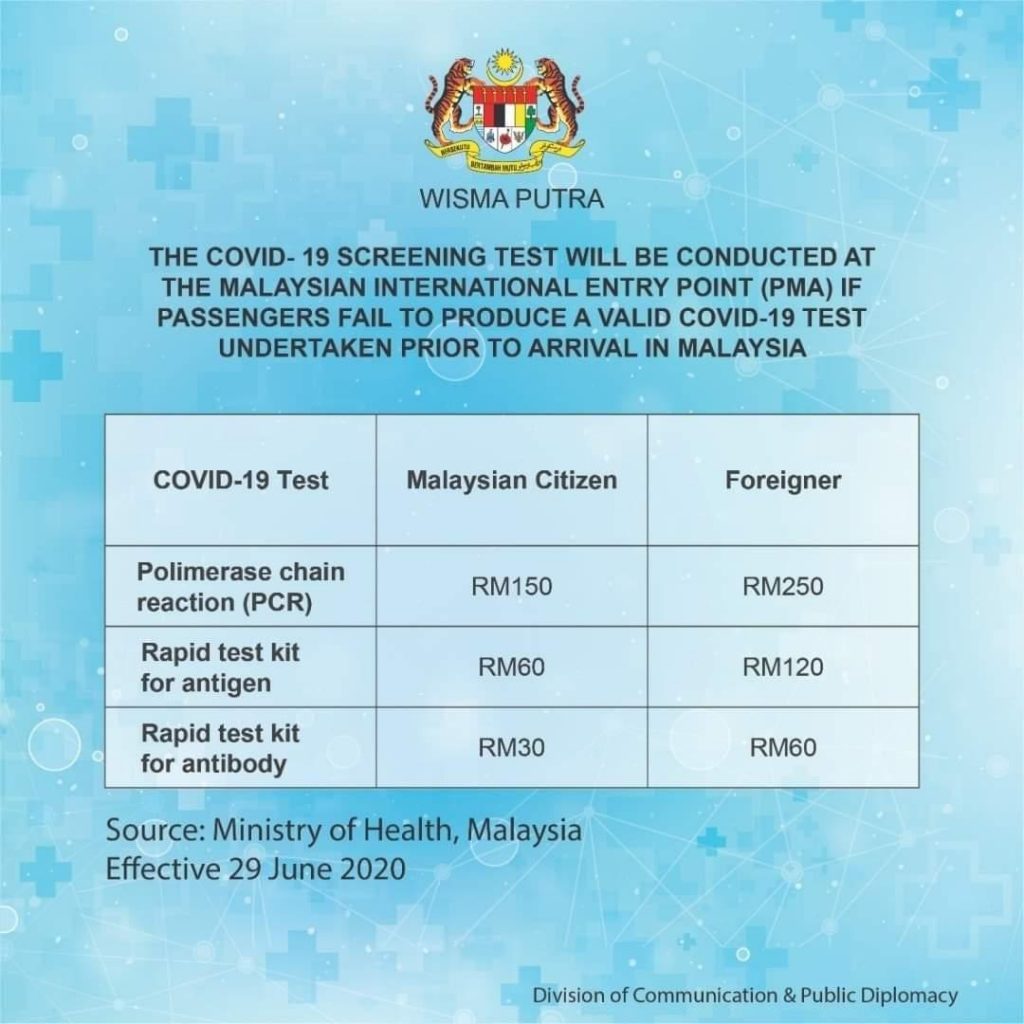
Please take note that all returning Malaysians & non-Malaysians would need to undertake the COVID-19 screening tests at the Malaysian point of entry if passengers fail to produce a valid COVID-19 test undertaken prior to arrival.
Malaysia’s Inland Revenue Board (IRB) issued guidelines on 21 May 2020 to provide clarity on the application of certain subsections of the Income Tax Act, 1967 in determining the “place of business” of a person operating in Malaysia. This morning, July 1, AMCHAM organized a webinar that featured 2 of the big four accounting firms, Deloitte and KPMG on a current topic of interest “place of business“.
Attendees were given an overview followed by case studies that provided an in-depth understanding of the topic. The introduction of Sections 12(3) and 12(4) of the Malaysian Income Tax Act 1967 (the Act), effective from 28 December 2018, provides more certainty in assessing whether the business profits of a non-resident that is from a non-treaty country (e.g. US, Jersey etc.) would fall within the Malaysian income tax net.
AMCHAM would like to thank all our speakers from Deloitte and KPMG for the interactive session that shed some light to areas that needed further clarifications, Chia Woon Tan, Associate Director, International Tax of Deloitte Tax Services Sdn Bhd, Gagan Deep Nagpal, Director (Transfer Pricing) of Deloitte Tax Services Sdn Bhd, Hooi Beng Tan, International Tax Leader at Deloitte Tax Services Sdn Bhd and Nicholas Crist, Executive Director, Corporate Tax of KPMG Malaysia.
Foreign Direct Investment (FDI) has always been a great contributor to the development of Malaysia’s economy. The recent COVID-19 pandemic has not only shaken the economic stability globally but also affected Malaysia’s position as a trading nation. As a result, the government of Malaysia has made few announcements with regards to measures and strategies it will take to mitigate these issues.
On Tuesday 30 June 2020, AMCHAM hosted the Malaysian Investment Development Authority (MIDA), in a member-exclusive webinar which provided an overview of the FDI developments in Malaysia. Dato’ Azman Mahmud, Chief Executive Officer of MIDA gave an exclusive presentation for this session and provided attendees an idea of what the government has planned, to continue making an attractive location for FDI. This marks the beginning of an ongoing series that AMCHAM will be having with MIDA, giving its members access to hear from MIDA and for MIDA to hear from the AMCHAM members. Stay tuned for the next sessions.
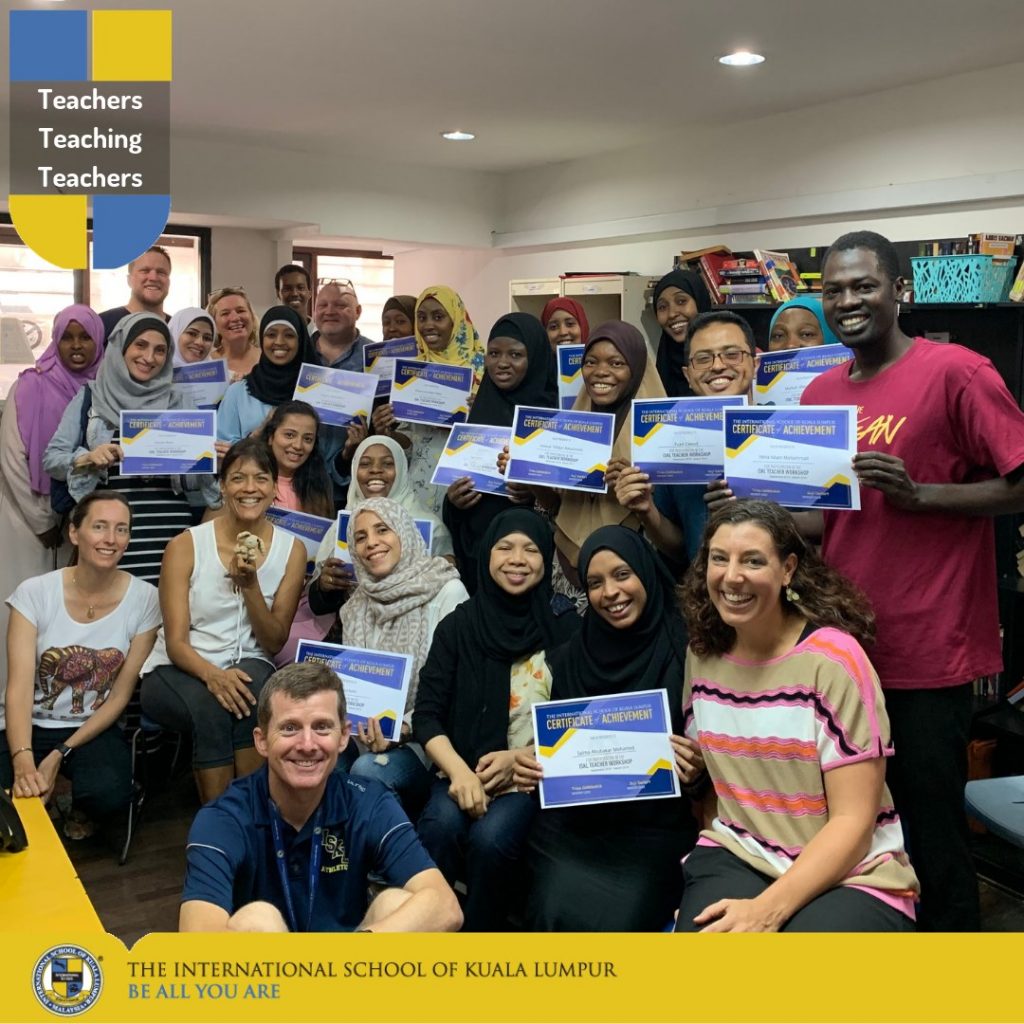
– Changing Lives Through Education –
Every other Saturday during the academic year ISKL teachers from each division, representing every subject, can be found off campus at a refugee learning center in Ampang Point. Collectively, they spend the morning sharing their knowledge and skills with a group of dedicated, motivated, and inspirational teachers who teach refugee students at centers across Kuala Lumpur. “Teachers Teaching Teachers” is a homegrown idea started and run by current and former ISKL teachers.
The Saturday morning workshops cover a range of topics from traditional core subjects such as English, math, science, and humanities through to design thinking, movement, music, and counseling. ISKL teachers also share their expertise and experience about how to build a classroom community, differentiate learning programs and create lesson plans. The workshops are designed to give the teachers practical ideas which can easily be implemented back in the classroom.
Teachers Teaching Teachers highlights the power of affecting positive change in the local community. All those who are involved in the workshops, whether teaching or being taught, are united in their support of a generation of students on a learning journey which will hopefully lead to a more empowered future.