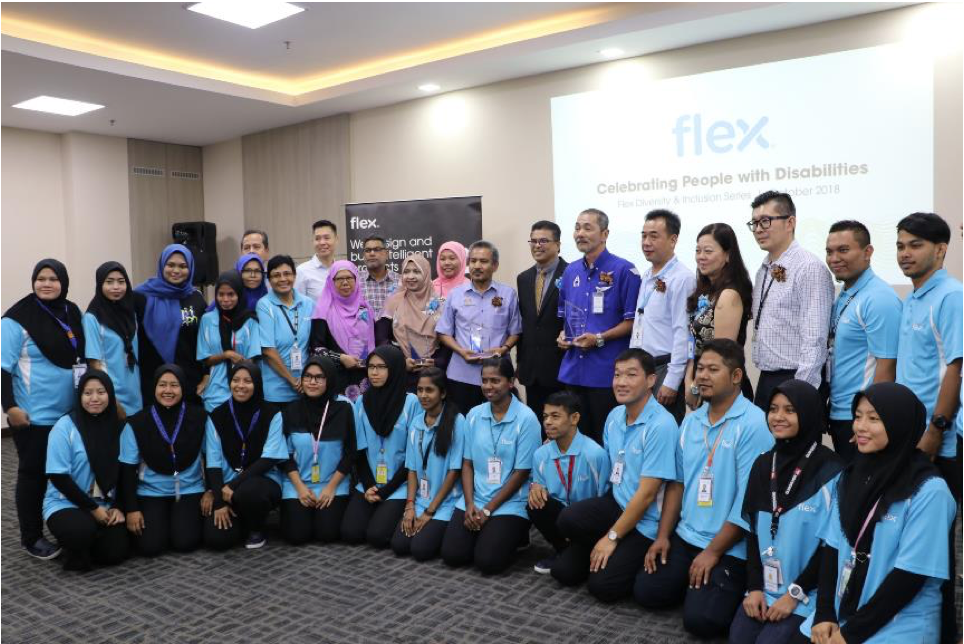
Flex promotes and encourages diverse and inclusive work environment globally and wants to provide Person with Disabilities (PwDs) with equal career opportunities. Many PwDs are not given equal career opportunities, and Flex wants to make a positive difference in their lives. Flex has hired hundreds of PwD employees to staff its other facilities in India and China for a number of years now and found PwDs’ performance to be at par with other non-PwD staff. The same result applies for Penang. The hiring of PwDs was made possible through Flex’s partnership with the Penang Deaf Association, Johor Deaf Association and JobsMalaysia (the recruitment arm of the Ministry of Human Resources). All of Flex’s PwD employees are hearing impaired.
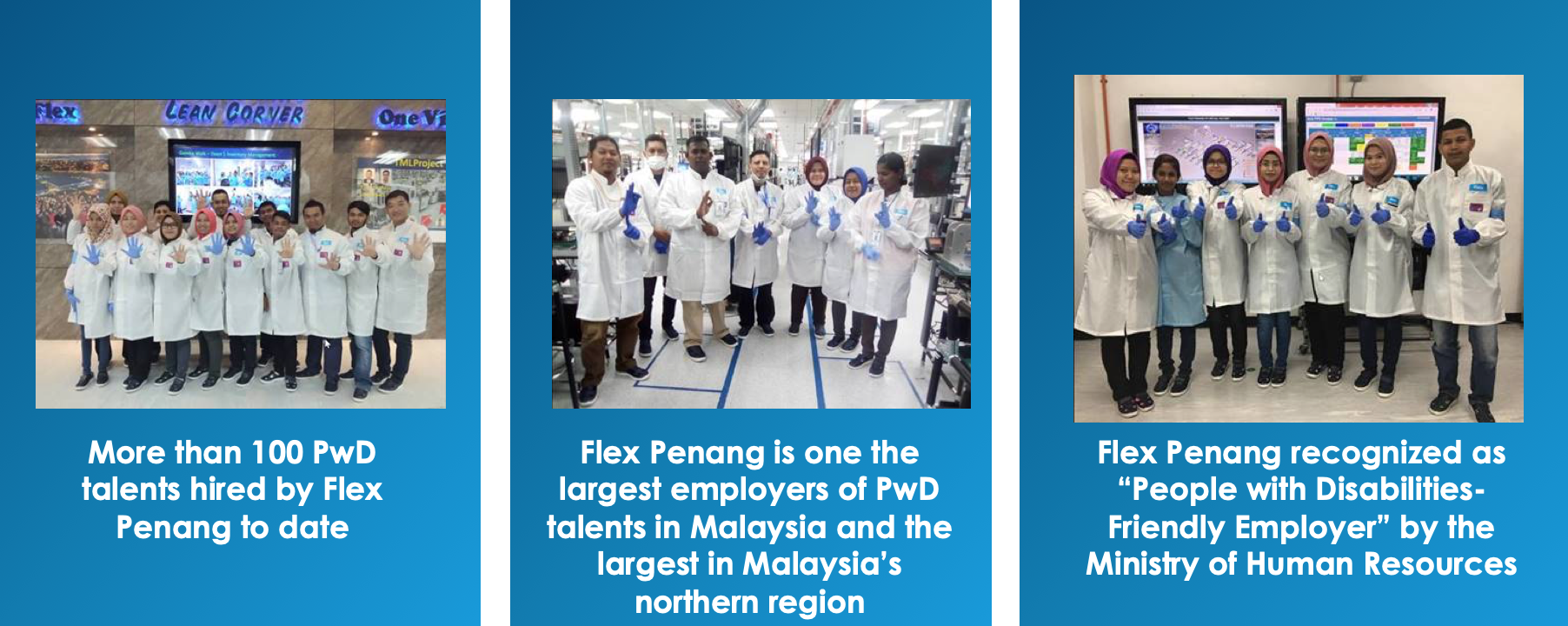
In total, Flex Malaysia has hired 126 PwD employees, making the company one of the largest employers of PwDs in Malaysia:
- Flex Johor: 31 PwD employees
- Flex Penang: 95 PwD employees
Developing PwD Talent:
- Flex provides classroom and on-the-job training for PwD employees so that they are well-equipped to do interesting and meaningful work (in tech fields). Flex also provides employees with job rotation opportunities so that they can learn new skills.
- We assign a “buddy” to help each PwD employee. Flex’s PwD employee work alongside other employees at the production floor; they are not segregated at the workplace.
- We treat all employees as equals (including PwDs) and do not accord “special” treatment/ status on PwDs.
- In preparation to receive our new PwD employees, relevant staff are required to undergo a sign language training program conducted by the Johor Deaf Association.
PwD-friendly Facilities: We have installed a special “flashing light” alarm system to alert hearing-impaired PwD employees in case of emergencies. The buddy system also helps provide a ready friend who can guide them or help evacuate them in case of emergencies.
- Result: Flex was recognized as a “PwD Friendly Employer” by the Ministry of Human Resources in April 2019 for embracing diversity and inclusion in the workplace.
Noteworthy Stats:
- 487,000 PwDs make up Malaysia’s 32.4 million population.
- Only 3,782 PwDs out of the 487,000 in Malaysia, are registered employees. This means that only about 0.8% of PwDs are employed in Malaysia.
- Flex alone accounts for ~3% of the registered PwD employees. Flex will continue hiring more PwD employees – at least doubling the current figure.
Flex is committed to the ongoing advancement of equality, respect and dignity in our workplace and the communities we serve, through programs that improve equal engagement and inclusion (including that of PwDs).
In short, Flex believes that “no one should be left behind”. Flex has plans to double its PwD workforce in the near future.
“We noticed that hearing-impaired employees were not given equal career opportunities in the industry, and we wanted to make a difference in their lives. We want to hire, develop and empower hearing-impaired employees so that they can achieve their full potential. We also believe in creating an inclusive and diverse ‘Flex Family’. Just like a real family, we want to meet our people’s social, emotional, developmental and communication needs, including that of hearing-impaired employees.”
– Mr. Viswanathan Paramasivam, Flex’s Vice President of Operations
“We encourage a sense of collective pride and belonging in a workplace where every individual is empowered to do their best work. We believe that diverse, inclusive and collaborative teams enable us to transcend conventional creativity, as we help companies transform ideas into smart solutions that shape a better world.”
– Mr. Jacob Philip Kanianthara, Flex’s Vice President of Operations
(Article by UNGC)
Decent Work and Inclusive Growth: The GCMY Perspective
Malaysia has progressed significantly from independence. Our economy experienced rapid growth of a Tiger Cub Economy, with technology and business developing at a rapid pace. So did the wellbeing of its people, as we grew to become one of the best healthcare providers in the ASEAN region.
Amid impressive progress, however, today’s economy is not working for everyone—from the very poor to the middle class, many are struggling to participate in and benefit from global economic activity. In its “Outlook on the Global Agenda 2015,” the World Economic Forum calls out rising income inequality and persistent jobless growth as the two most important economic trends facing the global economy, contributing to rising inequality and restricting consumer spending and growth. Concerns exist that in the coming decades, current rates of economic progress will slow or reverse, and that many will continue to be excluded from economic opportunity, which not only has direct economic impacts but also could jeopardize social progress and stability.
GCMY refers to United Nations Global Compact’s publication “Business Leadership for an Inclusive Economy: A Framework for Collaboration and Impact” on the business role in creating inclusive prosperity, namely on three key investments – (1) Providence of good jobs, (2) Increasing access to essential goods and services and (3) Investing for prosperous local communities:
1. Providence of Good Jobs
While employment is necessary for inclusive growth, it is not sufficient to achieve that goal. Jobs that enable prosperous livelihoods in the 21st century have different features than in the past. It is clear that we are living in a period of substantial disruption, with economic, technological, and cultural/demographic conditions changing very rapidly. In the mature economies, the promise of lifelong jobs with defined benefit pensions are rapidly disappearing. In fast growing economies, new technologies and changing natural resource conditions threaten to reduce employment opportunities in global supply chains, which— however imperfect—have provided a valuable entry point for tens of millions of people into the formal economy over the past 30 years. For example, researchers predict that 47 percent of the U.S. workforce is at high risk of automation and, after several years of decline in middle-income jobs, it is now low-income and low-skill jobs that are most likely to be automated. At the same time, global “robot-driven” job creation could reach 1.5 million through 2016.
In light of these changes, employment that leads to more inclusive participation depends not only on working conditions in one’s current job, but also skill development over the long term. Moreover, this approach is greatly strengthened by the existence of an enabling environment that promotes human capital development and ensures a viable social safety net. In the service economy as well as in supply chain manufacturing, this means a focus not only on working conditions and compensation in one’s current job, but also an effort to enable workers to develop skills that they can apply elsewhere. This could mean financial literacy skills that allow people to manage their resources, or training and education that can be applied in one’s next job, regardless of whether that is with their current employer.
2. Increasing access to essential goods and services
Maximizing access to essential goods and services not only has direct social benefit, it also can add tremendous value for companies. The business benefits include opportunities to reach new markets, enhance reputation, increase innovation, strengthen workforce engagement and productivity (e.g., through distribution of health products), and engage customers. For example, financial inclusion initiatives ranging from product innovation to financial education have resulted in 700 million previously unbanked people using financial products for the first time through banks and mobile providers between 2011 and 2014.
Moreover, greater access to essential goods and services contributes to a better overall economic climate, particularly in developing markets. For example, a 2014 report from Deloitte (commissioned by Facebook) posits that reaching 75 percent of the population in developing markets with internet access “could generate US$2.2 trillion in additional GDP, a 72 percent increase in the GDP growth rate, and more than 140 million new jobs”.
3. Investing for Prosperous Local Communities
Companies that make investment decisions that generate local economic benefit can reap benefits of their own, including securing social license to operate and increased social stability, catalyzing local economic “ecosystems” that improve economic conditions, and enhancing risk mitigation on issues such as poor public governance and corruption. For example, a 2011 survey of 40 extractives industry leaders, insurers, law firms, and research institutes suggested that a major mining project could lose US$20 million per week if conflict delays production.
Inclusive community engagement and investment can also deliver returns at a macro-economic level. For example, if people are better able to access health services because of improved roads, transport services, health facilities, or service providers, productive capacity of the whole community is increased.
Law firm Azmi & Associates brings 3 of their newest articles:
- New SC Guidelines on Conduct of Directors of Listed Corporations and Their Subsidiaries
- Digital Securities Offering in Malaysia (Part 1)
With its leadership tossed into uncertainty again, Malaysia risks delays and loss of new investments, analysts and business groups say, as anxiety bubbles among foreign investors worried about policy disruption and reforms stalling.
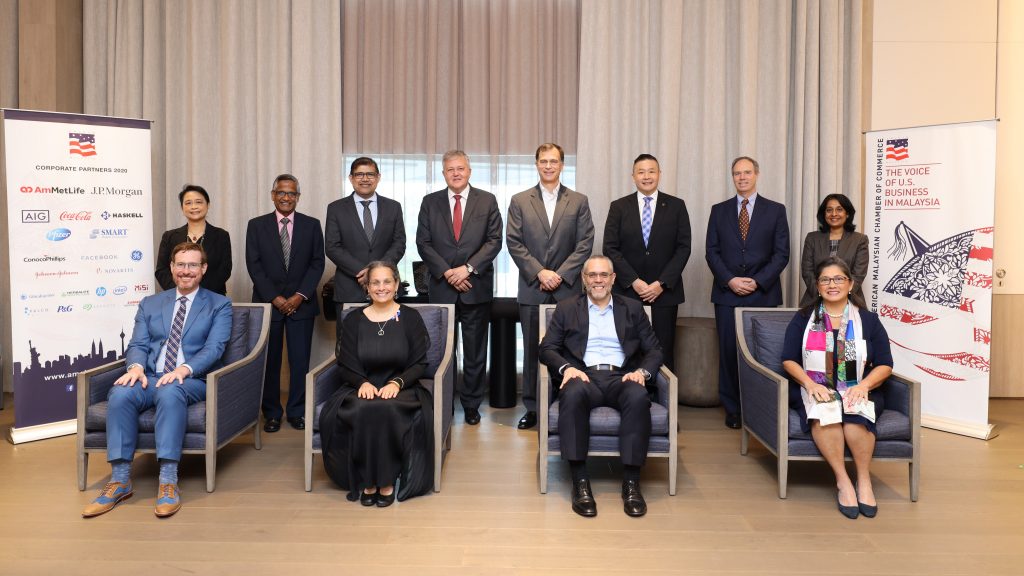
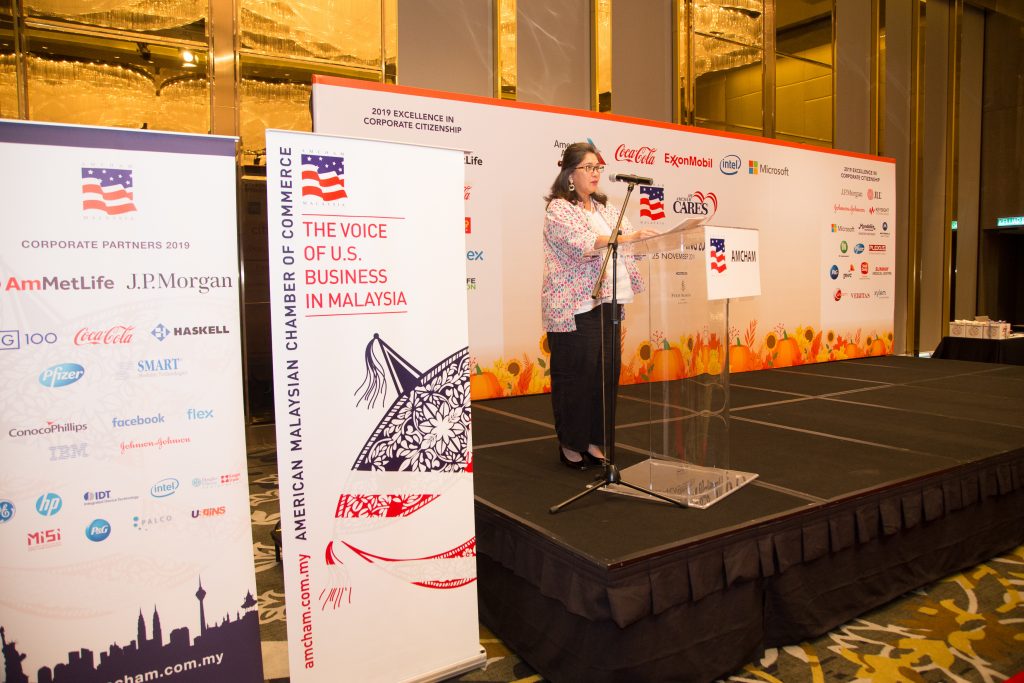
“Political instability ranks high on corporations’ considerations because it would have a ripple effect on policies,” said the American Malaysian Chamber of Commerce CEO Siobhan Das said.
AMCHAM’s membership structure will be changing incorporating the Corporate Membership Tiers system in 2021. The tiered membership structure will provide more opportunities for members to add representatives and new branding opportunities as well as participate at a level you select all across AMCHAM’s platforms. Each level will increase your visibility, engagement, and direct involvement with key aspects of the Chamber.
The Chamber needs the support that the future demands. With this, we invite you to help build a sustainable and stronger Chamber.
For more information about the tiers available, please click on the brochure below or email us at [email protected]
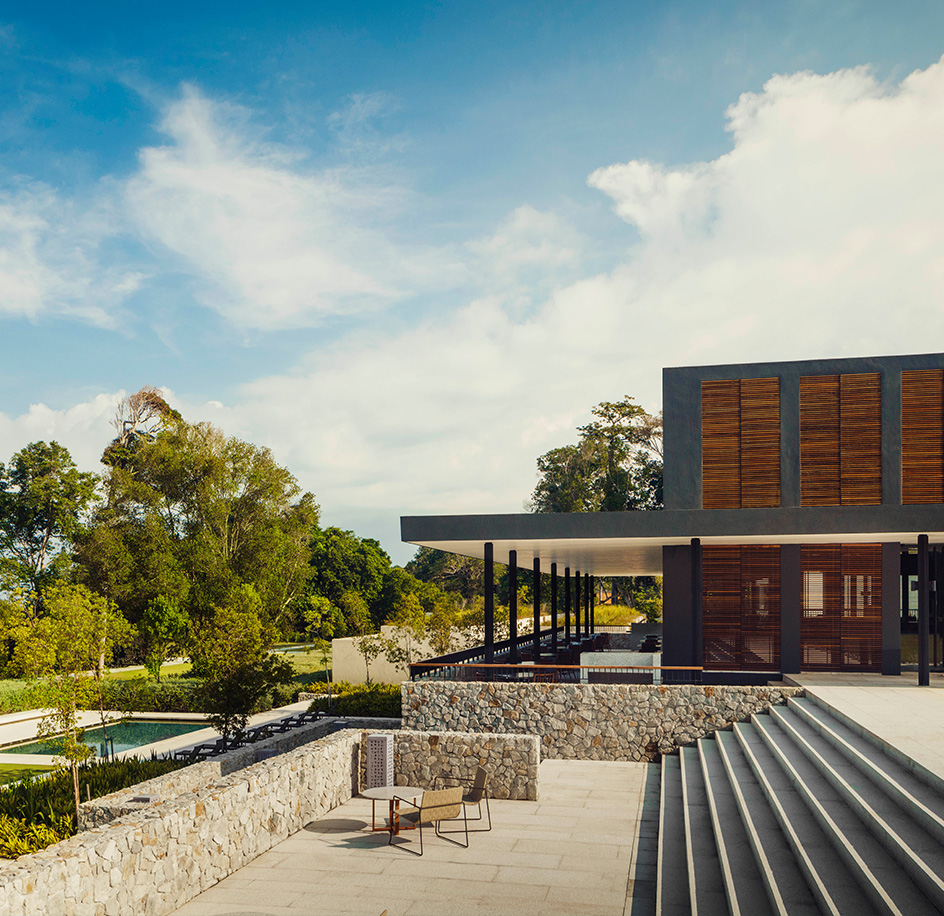
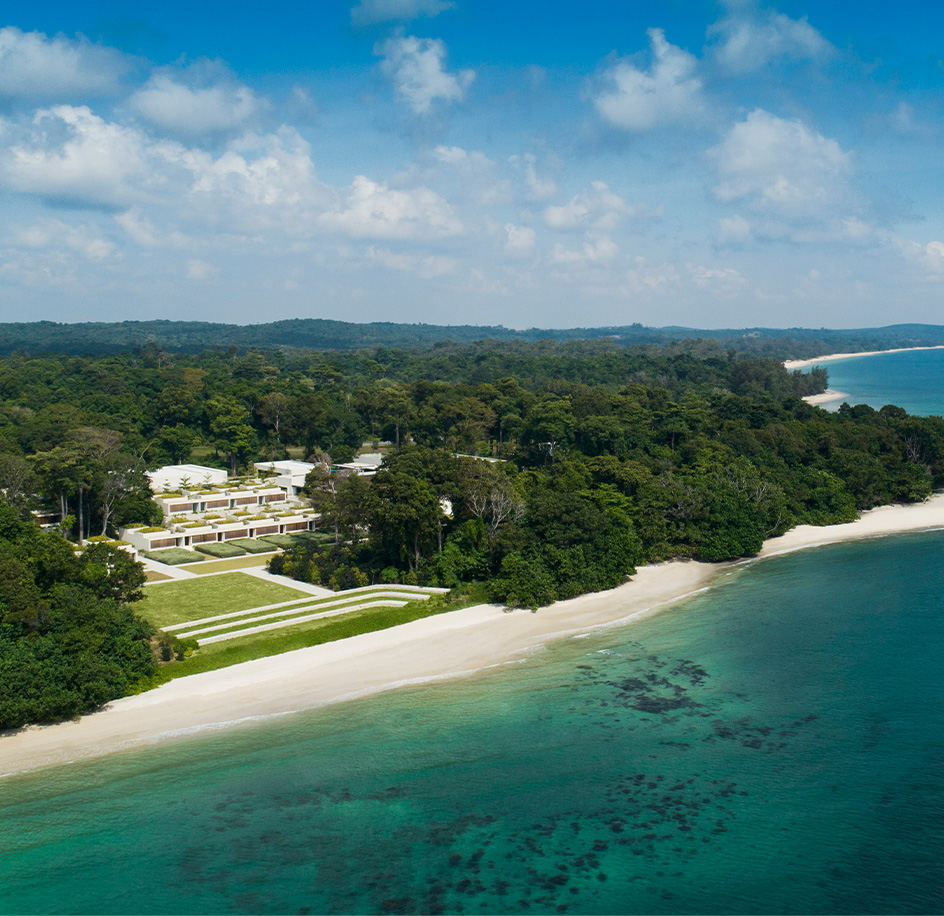
Explore the shimmering sea, spectacular wildlife, inspiring adventures and tantalising cuisines at One&Only Desaru Coast with our exclusive package for Malaysian residents, and enjoy 40% off Best Available Rate and 15% off Chenot Spa treatments and food bills at restaurants and bars.For a limited time only, be rewarded with an additional Gift Certificate for an overnight stay at AC Hotel by Marriott Penang. Rediscover Kuala Lumpur as a prelude to a culturally-rich visit to Penang and Embrace the Island vibrant local delights with this exclusive offer.
Head here for more information