Leadership skills and social influence are becoming some of the most sought-after qualities in the 2020s. Adding to that is the challenge of communicating without coming off as overconfident or brash, especially for introverts.
Today, 2 December, AMCHAM held a virtual workshop on how to lead in influence without authority. The second entry as part of AMCHAM’s Women’s Week, brought together two trainers – Angela Cheung, Managing Director of APV, and Treena Nairne, Director of Dashpoint Management to conduct the workshop.
Both trainers shared some useful and practical tips about how to network, present, and find unique ways of communicating. They also provided ques and tips on what to observe and what memorable methods can be used to be effective in networking, even for introverted personalities.
Thanks Angela and Treena for making this session fun, lively and interactive for the audience.
As part of AMCHAM’s Women’s Week and in conjunction with AMCHAM’s MP Chat Series, YB Hannah Yeoh joined us for an informative and casual conversation on rising women equality in Malaysia in the working, global, and parental environments.
In this exclusive session, YB Hannah Yeoh, spoke about some of the major factors affecting working women and working parents such as childcare and the need to enhance e-learning. She also spoke about where her inspiration comes from, her role models, and who she turns to for advice. She provided practical and helpful ideas as to how to gain confidence and what should serve as motivation both in work and life.
The first of AMCHAM’s Women’s Week list of programs and the first MP Chat in a long time, it was a successful event with over 100 attendees. It was a very interactive session as attendees were also able to ask questions on topics such as raising children in the current era, preparation for the working environments, role models, and more.
(Article by Leonard Yeoh & Pua Jun Wen)
As Malaysia was in the process of reopening all activities to revive the country’s economy, the country encountered record daily spikes of COVID-19 cases in October 2020. Due to the sudden spike in COVID-19 cases, the government has implemented the Conditional Movement Control Order (“CMCO”) in Kuala Lumpur, Putrajaya, Selangor, Labuan and Sabah.
The resurgence of Covid-19 cases has caught the nation’s capital off-guard and it will potentially inundate the already teetering economic climate. Most businesses may not be prepared for the abrupt loss of cash flow or the contraction of business so soon due to this CMCO. While this second CMCO, implemented with less stringent movement regulations and only in certain areas of the country, may not have caused the high number of retrenchments as the first wave, but the second round may still pack a sizable economic punch.
An “opportune time” for retrenchment?
Businesses have yet to recover from the financial impact brought by the country’s first MCO and they are still struggling to cope with the turbulence. Thousands of small and medium businesses are sitting by the sidelines as they may need to halt parts of their operations again in response to the recently implemented CMCO.
Businesses are most likely losing its financial wherewithal and the employers’ hands are tied. Businesses on the brink of collapse may have no option but to release their employees to prevent insolvency. In times like these, the “threshold” and expectation for a responsible retrenchment might be lowered as the impulse to cut cost by businesses is understandable.
Can you fire?
The law recognises that employers have the right and prerogative to manage their workforce, subject to fair labour practices being implemented. Employers should abide by the necessary selection criteria and to let go staff based on objective criteria such as “Last-in, First-Out (LIFO)” and to preserve those with skills to support business sustainability. A company which is genuinely facing financial difficulties due to COVID-19 outbreak has legitimate grounds to reduce its workforce. Employers must exhaust other means, i.e. by reducing working hours, reducing or freezing the hiring of new employees, reducing or limiting overtime prior to retrenching employees. While salary reduction is one of the recommended steps to be taken to avert retrenchment, employees’ consent should be obtained for any salary reduction. A unilateral salary reduction may be viewed as a breach of contract that may potentially give rise to a claim of constructive dismissal.
As responsible employers, companies should help affected employees to look for alternative positions or jobs in associate companies or other companies. Employers should endeavour to meet their obligations in the area of retrenchment benefits due to the employees. Despite the novel COVID-19 situation, it is no less pertinent for employers to observe proper procedures. This is to prevent unnecessary money spent on resolving wrongful dismissal disputes with the employees amidst the worrisome COVID-19 situation.
Employers should not be too quick to trim its workforce as the other side of the coin is that, it may require time and effort to rehire when business picks up again.
Moving forward
To the dismay of all Malaysians, it is certain to see a second wave of retrenchment and job losses if the number of Covid-19 cases continues to escalate. The financial pain during the second wave is certainly going to extend further beyond the food and beverage, aviation, retail and hospitality industries. History has favoured the prepared, being prepared for new lockdowns or outbreaks will be a prerequisite to thrive.
The ultimate wild cards in the job outlook are how many businesses could still remain resilient during the second wave of COVID-19 outbreak and how long it will take for job opportunities to rebound. Some may not even survive the second wave of COVID-19 outbreak, rendering employees rehiring completely impossible. The government will be battling over how to fund or support the unemployed and businesses on the cusp of insolvency. People will find themselves confronting an uncertain future.
“Everything will be okay in the end. If it’s not okay, it’s not the end.” – John Lennon.
Leonard Yeoh is a Partner and Pua Jun Wen an associate with the law firm, Tay & Partners.
The COVID-19 pandemic has caused disruptions of business operations all across the ASEAN region. To understand the changing needs of US companies in the region, AmCham and ERIA created a rapid survey in April 2020 to understand the evolving needs of US companies in Indonesia. Five months later, the two institutions joined forces again to implement a similar survey providing a more in-depth investigation of how foreign companies in ASEAN have been responding to COVID-19 and what plans they have moving forward.
Twenty-four chambers and business organizations representing foreign companies were involved in the implementation of this survey. 264 firms with operations in ASEAN responded to 26 questions about the impact of COVID-19 on their business operations.
On 30 November, AmCham Indonesia and ERIA had an informative web session to discuss the findings from the report and provide an outlook for 2021. AMCHAM’s CEO Siobhan Das participated in a panel discussion along with Sunit Dhoka, Country Representative, Cargill Indonesia and Dionisius Narjoko, Senior Economist, ERIA moderated by Lin Neumann, Director of the American Chamber of Commerce in Indonesia.
The panelists talked about how businesses and countries were affected by the pandemic, the changes that had to be made, and what should be observed in the following year.
(Article by UNGC)
Thought Leadership and Innovation – Keys to Driving Corporate Sustainability Forward
Sustainable Development Goal 9 – “Industry, Innovation, and Infrastructure” is perhaps one of the most discussed SDGs in Malaysia, particularly in the corporate space. The drive for innovation is obvious from the rise of startups in Malaysia, while existing corporations strive to innovate their processes in order to remain competitive.
On this end, SDG 9 is a value UN Global Compact Network Malaysia holds close as we support corporations who take initiative to generate thought leadership via research and development on existing technologies, innovative financing environments to seed corporate leadership in the sustainability space, among others.
GCMY refers to United Nations Global Compact’s publication “Blueprint for Business Leadership on SDG 9” on measures as to how businesses can advance Goal 9:
1. Research, develop, and deploy products, services and business models to deliver sustainable and resilient infrastructure
Globally, governments and businesses spend $3 trillion per annum on infrastructure projects, collaborating through public-private partnerships. Businesses supply the majority of the technology and skills underpinning the construction and operation of these assets. These activities should comply with all the relevant standards and requirements of the country.
Leading companies can, on their own or preferably in partnership with ministries/government agencies and other stakeholders, engage in the research, development, and deployment of new products, services and business models that can deliver on the world’s long-term infrastructure challenges. This can include applying innovative methods to maximize the share of urban residents with access to project benefits and essential services, and innovating for more sustainable, resilient infrastructure technologies.
2. Support inclusive and sustainable upgrading of developing country industries in global value chains
Most national development plans in developing countries call for an increase in the share of employment in industry. All businesses with industrial operations and/or strategic industrial suppliers in developing countries must have policies in place to ensure that these activities are inclusive and sustainable. But an essential element of developing countries’ upgrading in the global value chain is the transfer of technology and skills.
To facilitate this, leading companies can establish, invest, or partner with operations with higher added value production processes and support skills transfer and develop local labour markets through inclusive training and apprenticeship programs. They can partner with peers, government, and other stakeholders to help design complementary policies and education programmes, and to ensure that they build on existing capabilities and align with national development plans. This maximizes the chances of successful technology and skills transfer.
3. Create innovation systems for sustainable development by providing access to finance, fostering entrepreneurship, and pooling financial and research resources in a global knowledge base
Inclusive, sustainable industrialization and infrastructure require far more conducive and productive local and global innovation systems. These systems can only emerge with the full support of the private sector and its unique innovation capabilities. Companies can play an active role in shaping these systems by supporting the Malaysian government at the national level but activity at the global level is also crucial, as the scale of the challenge of achieving Goal 9 calls for fruitful global innovation systems.
Companies can support innovation systems for sustainable development by fostering entrepreneurship within the company itself and by financing external innovative enterprises through venture capital and incubators. Leadership in international innovation systems can consist of extraordinary contributions to global pools of research infrastructure. It can also consist of significant contributions to the global knowledge base through education and research funding. Leading companies take measures to ensure that the innovation systems that they support, and the findings that come from them, are open and accessible. They can also proactively engage peers, supply chain members, and the government. Where possible, they engage representatives of vulnerable people and natural assets to understand areas of need that can be addressed with innovative solutions.
4. Upgrade and retrofit infrastructure and industry assets across own and supply chain operations to make them sustainable and resilient
Business plays a central role in planning, designing, financing, building, and operating infrastructure and industrial assets. Yet large parts of the world’s existing infrastructure and industrial asset base are not fully functional, not designed to withstand increasing weather variability and environmental hazards, nor accommodate changing economic realities associated with long-term sustainable development. In developing countries, there is a critical lack of sustainable, resilient infrastructure and industry assets to enable long-term sustainable development.
All businesses are expected to manage risks of negative environmental and social impacts over the lifetime of their assets. But leadership requires asset owners and operators to factor into their investment planning different future states of the world that factor in population growth, technology and demand shifts, changing weather patterns, natural hazards, and conflict. Leading companies should also retrofit assets to make them sustainable, with increased resource-use efficiency and ensure greater adoption of clean and environmentally sound technologies and industrial processes. Leading companies focus these efforts on own and supply chain operations, partnering with supply chain members to build capacity and provide resources to do so.
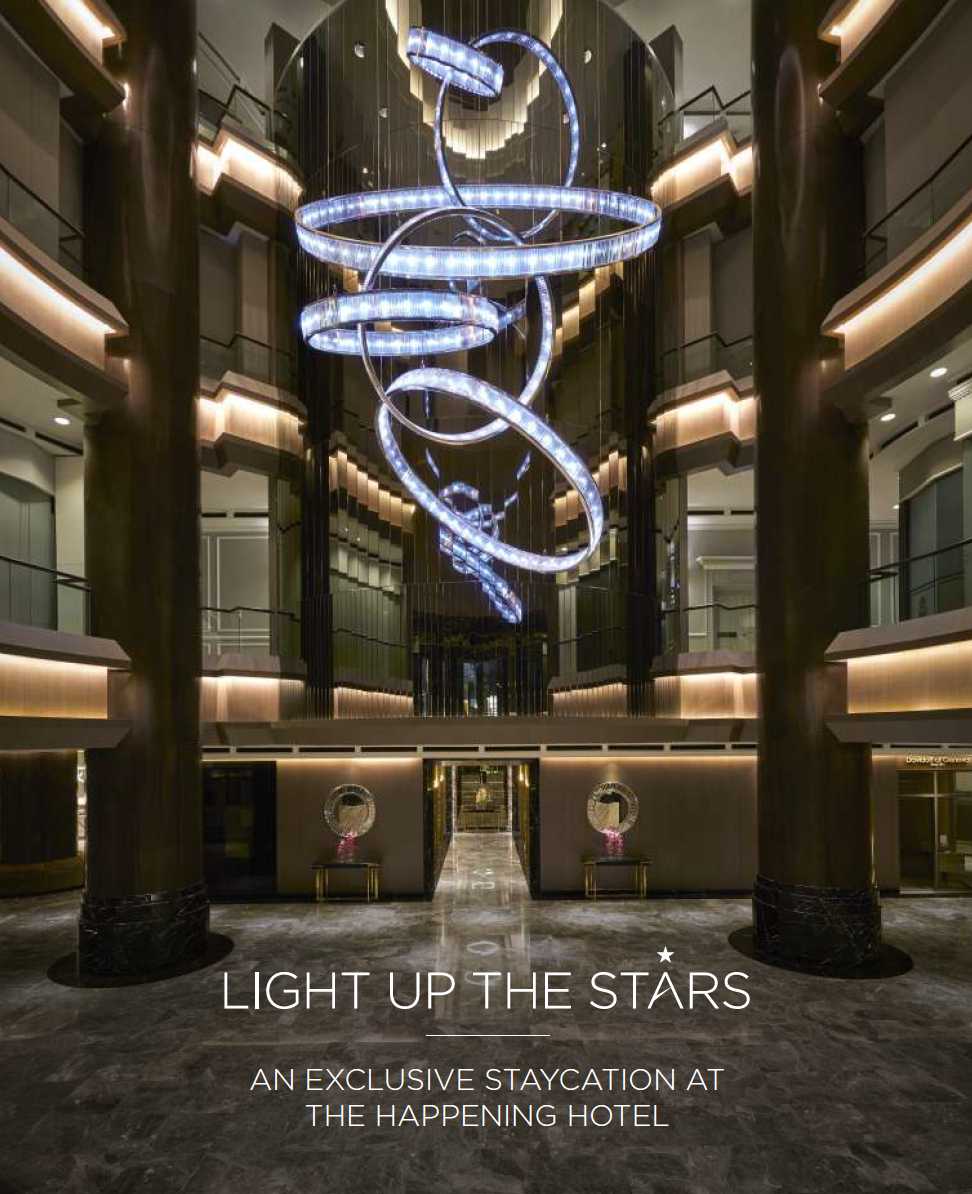
Immerse in distinctive cosmopolitan comfort as JW Marriott Kuala Lumpur lights up the stars right in the heart of Bukit Bintang. Inspire your senses, rediscover the city’s vibrant shopping avenue and excite your palate at The Starhill Dining – Home of the Tastemakers. Celebrate the festive season with us and fuel your imagination with the Light Up The Stars staycation.
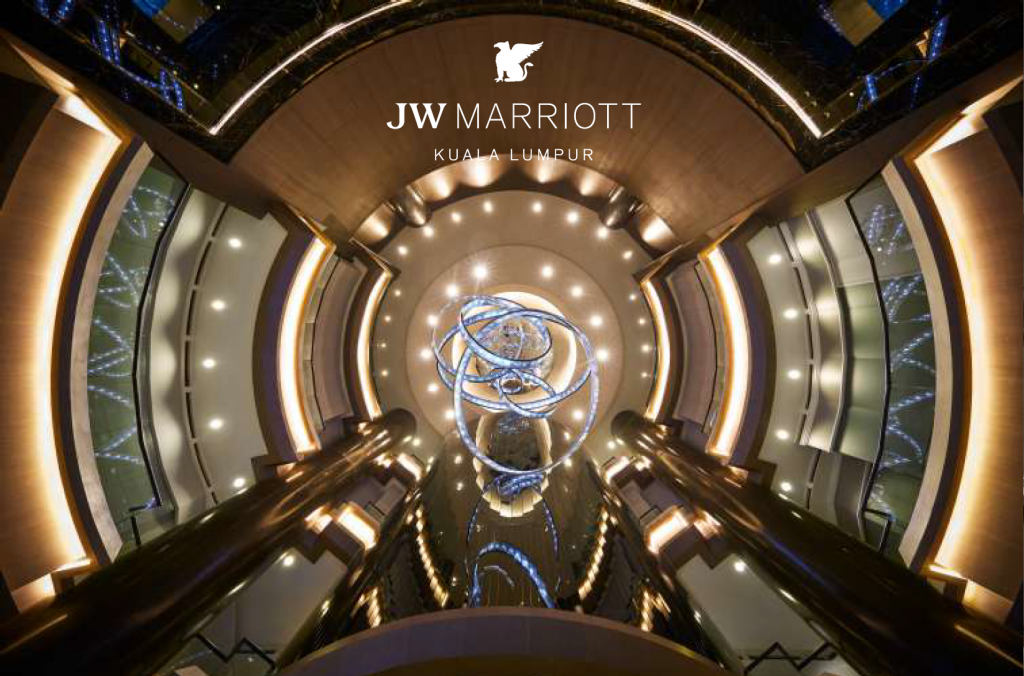
Light Up The Stars Gift Certificates
Treat yourself or someone special to a pulsating getaway at JW Marriott Kuala Lumpur, right in the heart of Bukit Bintang. For a seamless city escape, The Happening Hotel is set to unveil unforgettable experiences with our gift certificates, available for purchase for a limited time only.