As one of the world’s largest semiconductor companies delivering intelligent and energy-efficient products and solutions, STMicroelectronics Muar is driven by its CSR strategy and takes into account the social impact in the way it operates as a business. With monthly huge consumption of electricity, this creates imbalance power distribution in Muar district and affects future development of the area in the long run.
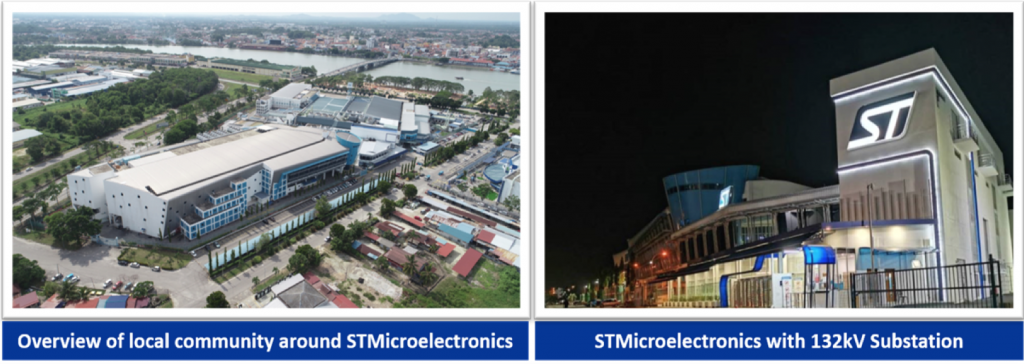
On July 2019, the Company launched the 132kV Substation Project, a very strategic investment which resulted in business sustainability and other benefits to the Company as well as surrounding communities. Since completion, the site enjoy cost saving for about USD1Million per year. The site can grow further and plan for production expansion with power availability increase from 24 megawatt to 29 megawatt and to capitalize on existing empty floor space of about 7,000m2 and other new future buildings with reliable power sources.
With more reliable power sources, it will also reduce the potential of Interruption-To-Production (ITP) and improve power distribution system. The substation is being protected and equipped with blast wall, sound attenuation and electro-magnetic force (EMF) level verification ensuring safe and healthy operational condition.
Most importantly, the project allow local utility provider utilizing the previous power supply setup used by STMicroelectronics for future development of Muar district. With the expansion of production areas, local communities will benefit from high employment opportunities thus increasing incomes and expenditures in the economy stimulating the country’s growth.
(Article by UNGC)
Affordable and Clean Energy: The Malaysian Perspective
When looking into the model for renewable energy, we need not look so far; Sarawak’s energy production is 74% hydroelectricity, 13% natural gas (LNG) and 13% from other sources including renewables. The Borneo state is projected to increase its share of renewable energy production for the foreseeable future.
In fact, when it comes to green energy, Malaysia is pushing on all fronts. By 2030, we have set targets of 100,000 electric cars usage, 100,000 electric motorcycles, 2,000 electric buses and 125,000 charging stations across the country. We have tested the electric bus concept with the Sunway BRT Line and proven that green public transportation is the way to go. The next decade is about solidifying this move towards a Malaysia with cleaner and more affordable energy.
GCMY refers to United Nations Global Compact’s publication “A Global Compact for Sustainable Energy: A Framework for Business Action” on measures for companies to engage in green energy efforts, based on three tenets – (1) Improving access to modern energy services, (2) Improving energy efficiency and (3) Increasing the share of energy generated from renewable resources:
1. Contributing from Core Business Activities
While utility and fuels companies can increase the mix of renewable energy in their energy sales, consumer goods companies can increase the energy efficiency of goods sold so consumers become more energy efficient by default. Electronics and technology companies can invest in research and development to increase the efficiency and quality of goods sold, which will in turn increase the efficiency and quality of the electrical grid and telecommunications. These are just a few examples of how companies can, and are currently, using core products and services to further the Sustainable Energy for All targets. Innovative thinking will drive the next generation of goods and services.
In general, businesses should always seek to integrate Sustainable Energy for All in a way that helps drive innovation in products and services, future vision, and profitable revenue growth. Making a strong business case for incorporating the Initiative’s targets will ensure that the private sector can take a long-term perspective and have a significant and lasting impact.
2. Social Investments and Philanthropy
Businesses should seek to identify ways that social investments in Sustainable Energy for All targets can align with their core business. This will allow the private sector to establish a strategic link between social investments and products and services/business operations, and will make it more likely that such activities will be sustained and reach a significant scale. Businesses can offer different types of financial support to local communities, philanthropies, and NGOs to support their missions. Companies can also initiate their own social investment projects by donating their core products and services to communities or by encouraging employees to volunteer their time and expertise.
Energy suppliers (power producers and fuel providers) as well as energy consumers can have a significant impact in this area and can develop social programs focused on sustainable energy that support and augment their core business strategies. There is much to contribute in the areas of technology, finance, development, services, and communications that is critical to supporting Sustainable Energy for All.
3. Advocacy and Public Policy Engagement
Energy is a cross-sector issue that requires collaboration between the private sector and policy makers, regulators, and NGOs. Energy policy varies across countries, but in general, businesses rely on large-scale public investments in energy infrastructure to obtain access to energy and to expand their operations. Governments also influence energy efficiency and renewable energy policies by holding the unique ability to set standards and regulations.
Governments often request input from the private sector when making public policy decisions around energy. Businesses should seek to engage governments (national, regional, or local) on relevant issues that can protect competitiveness, drive opportunities, and help them advance the Sustainable Energy for All targets. Often a lack of clarity and direction leads to a lack of progress in advancing increased energy efficiency and renewable energy due to the private sector’s reluctance to make large infrastructure investments under a changing regulatory environment. By participating in summits, conferences, and other important public-policy interactions, private-sector leadership can work to protect their investments and state the business point of view on the future of sustainable energy.
Increasing public awareness of issues related to energy access, energy efficiency, and renewable energy is also critical to achieving the Sustainable Energy for All targets. The private sector can play a role in increasing public awareness by launching communications campaigns and marketing directly to customers and consumers. An upcoming opportunity in that respect is for companies to leverage and support the UN’s Year of Sustainable Energy for All in 2012 and its associated public awareness campaigns. Consumers that are more aware of the benefits of increased energy access, energy efficiency, and renewable energy use are more likely to change purchasing decisions, consumption behavior, and voting patterns to drive more energy efficient and renewable energy lifestyles.
The world continues to navigate through uncharted waters and this year, most countries may experience a depressed economy. Regardless of which, global multinational companies still need to grow, to increase profitability and shareholder value, and ultimately help to boost global economies.
On 10 September, AMCHAM held an exciting webinar discussion to uncover Malaysia’s potential and what can be achieved in the foreseeable future to elevate Malaysia’s status as a destination for Foreign Direct Investments (FDI). Panellists included Mr. Ernesto Pittaluga, Corporate and Public Sector, Sales & Marketing Regional Head, Asia Pacific, Treasury and Trade Solutions at Citi, Muhammad Azmi Zulkifli, Chief Executive Officer, InvestKL, Fitri Abdullah, Managing Director, OracleMalaysia, and Abdul Rahman Abu Haniffa, Director of Government Affairs and Policy, GE Malaysia. The session was moderated by Siobhan Das, Chief Executive Officer, AMCHAM.
This session dove into what Malaysia is actively engaged in, and what needs to be done in the near future, to maintain its attractiveness as a destination of choice for FDI. Special thanks to all our speakers for providing an exciting and insightful discussion.
The astonishing growth of China has yanked up the region’s economies, but its militarization of the South China Sea and dam building on the Mekong River have nations wary about Beijing’s outsized ambitions. Adding to that is the trade war launched by the Trump administration which has left Southeast Asians feeling less secure and losing confidence in the U.S. as a security hedge.
On 8 September, AMCHAM had a book discussion session with Mr. Murray Hiebert Senior Associate, Southeast Asia Program at Center for Strategic and International Studies (CSIS). Mr. Hiebert’s recently released book Under Beijing’s Shadow: Southeast Asia’s China Challenge, provides a snapshot of ten countries in Southeast Asia by exploring their experiences with China and how it impacts their perceptions of Beijing’s actions and its long-term political, economic, military, and “soft power” goals in the region. Mr. Hiebert also provided a Malaysian perspective on the subject matter as well as the possible future.
It was a lively discussion and we thank Mr. Hiebert for spending his time with us during the Labour Day evening in the US.
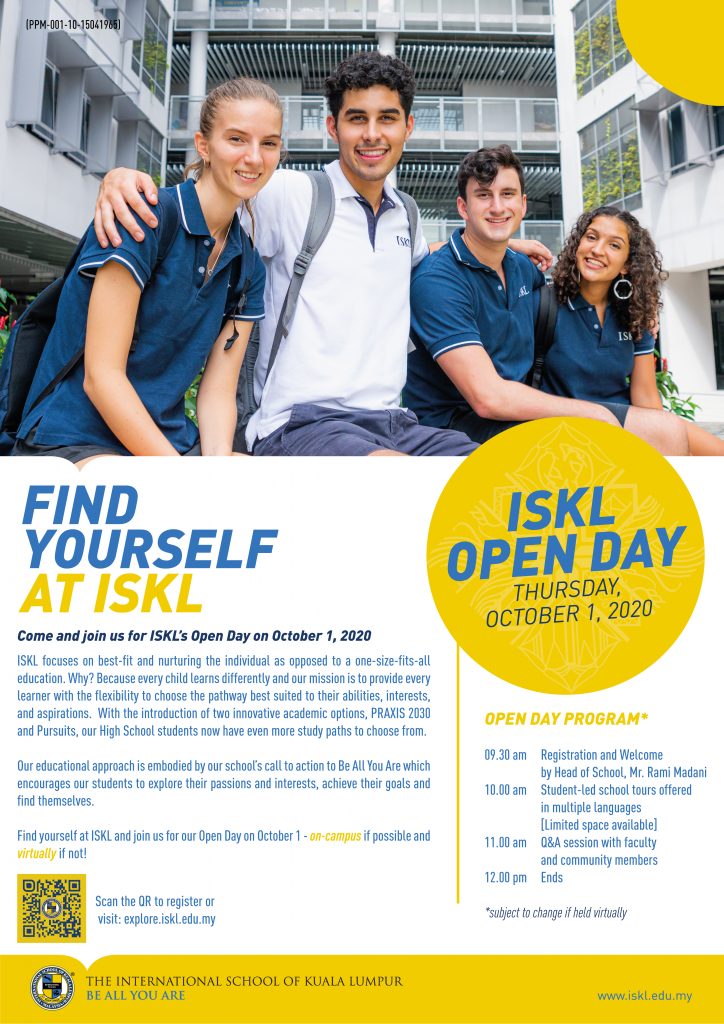
ISKL focuses on best-fit and nurturing the individual as opposed to a one-size-fits-all education. Why? Because every child learns differently and our mission is to provide every learner with the flexibility to choose the pathway best suited to their abilities, interests, and aspirations. With the introduction of two innovative academic options, PRAXIS 2030 and Pursuits, our High School students now have even more study paths to choose from.
Our educational approach is embodied by our school’s call to action to Be All You Are which encourages our students to explore their passions and interests, achieve their goals and find themselves.
In times of a pandemic, why should you commit both time and financial resources to be certified with the ISO 37001 standard? Why even consider the ISO 37001 certification process? Well the most powerful tool an organisation can use to demonstrate ethical practice is an effective bribery defence and deterrent strategy. Do you not want full assurance that you succeeded in establishing, implementing, maintaining, reviewing and improving your Anti-Bribery Management System (ABMS)? A good quality process drives a company and involves everyone in producing a quality service or product.