(Article by UNGC)
Responsible consumption and production is fundamental to sustainable development. Thus far, economic growth has been deeply connected to unsustainable outcomes including the degradation of natural capital, the advance of climate change, and violations of human rights. For example, unsustainable consumption and production has, to differing extents around the world, caused greenhouse gas emissions to surge, contributed to severe air pollution, decreased agricultural productivity threatening livelihoods and social cohesion, and heightened water scarcity. Waste production has led to burgeoning landfills with large methane emissions and negative health impacts as well as serious plastic pollution in the world’s oceans. Food production and consumption is also one of the primary causes of biodiversity loss through habitat degradation, overexploitation of fish, pollution, and soil loss.
As producers of much of the world’s output, businesses have a central role to play in advancing responsible production and consumption. They can manage sustainability of their own operations by improving efficiencies, look to source more sustainable inputs, improve the sustainability of products and services at the point of use with credible sustainability information, report publicly on their sustainability performance and that of their supply chain, and take steps to ensure their products are not misused to violate human rights.
State of Food Wastage and Responsible Consumption in Malaysia
- In Malaysia, the country’s population bins up to 16,688 tonnes of food daily, which is enough food to feed 12 million people a day
- According to SWCorp, the recycling rate in the 7 states of Malaysia (Kedah, Perlis, the Federal Territory of Kuala Lumpur, Pahang, Negeri Sembilan, Melaka and Johor) was 30% in 2020 and aims to achieve 40% by 2025.
- Based on a business stakeholder consultation recently organized by UN Global Compact Network Malaysia & Brunei (as part of the technical working committee for Malaysia’s Voluntary National Review) which was attended by 57 participants including PLCs, MNCs, GLCs, and SMEs, all groups placed SDG 12 as one of their top priorities for future business opportunities.
Do your actions satisfy leadership qualities?
1. Intentionality
- Is your company committed to supporting the achievement of Goal 12? Have you developed a holistic strategy that reflects this commitment, covering end-to-end operation and the wider community?
- Are you committed to learn from your actions and do you have processes in place to improve them accordingly?
- Is your strategy supported by the highest levels of management, including the Board of Directors.
2. Ambition
- Do your actions achieve long-term outcomes that greatly exceed those resulting from current industry practice?
- Are your actions aligned with what is needed to achieve Goal 12?
3. Consistency
- Is support for Goal 12 embedded across all organizational functions?
- Are staff and board incentives aligned with achieving Goal 12?
4. Collaboration
- Do you proactively look for opportunities to partner with Governments, UN agencies, suppliers, civil society organizations, industry peers and other stakeholders to inform how to advance Goal 12?
5. Accountability
- Do you publicly express your commitment to advance Goal 12?
- Do you identify, monitor, and report on impacts, including potentially adverse impacts?
- Do you mitigate risks associated with your action?
- Do you remediate negative impacts associated with this action?
- Do you engage stakeholders in a meaningful way?
Framework for Business Action
Business Action 1: Design and implement a responsible, circular business model
Today, most business models are based on significant resource inputs, waste generation, greenhouse gas emissions, and energy losses. Businesses can lead a shift away from this linear economy by designing and adopting circular business models. This goes beyond adopting more efficient technologies and sustainable sourcing practices: it requires a fundamental rethink of systems design and the way in which products and services are produced and used in a manner that produces zero waste and minimum impacts. In product design this may imply a shift to offering services, for example mobility, instead of products, such as a car.
Example Practice
A public transport company works with an electric vehicle manufacturer, city and national authorities to introduce a city car concept that is fully integrated with public transport in a metropolitan area. It operates a ”free floating” system where customers can pick up their EV and return it anywhere within the area.
Business Action 2: Significantly narrow or close material and energy loops across own and supply chain operations
Many companies run inefficient, unsustainable production processes with significant resource inputs, waste generation, greenhouse gas emissions, and energy losses; and also depend on inputs from supply chains with large inefficiencies. Prices do not reflect the real costs of these inefficiencies to society, so companies must act responsibly by steering towards more efficient resource flows and sourcing from sustainable supply chains. There is significant scope for leadership by introducing novel ways to narrow or even close material and energy loops in own operations through a ‘reduce, reuse, and recycle’ approach to inputs such as water, raw materials, non-renewable minerals, energy, and packaging. Leading companies can also take action to close resource loops across the supply chain or switch to sustainable supply chains.
Example Practice
An agriculture company develops innovative vertical farming products using closed-loop irrigation systems to provide access to local, fresh vegetables in urban areas throughout the year
Business Action 3: Shift to a portfolio of goods and services that require, and promote, negligible use of resources and produce negligible waste
Today, the use of products and services including food, cars, buildings, appliances, and information technology are associated with unsustainable levels of pollution, use of resources, and production of waste at the point of use. As providers of most products and services, businesses have an important role and responsibility to make their use as sustainable as possible and provide reliable information on their sustainability to buyers. To support this, leading businesses can deploy product and services innovations throughout the product life cycle, for example by designing for minimal resource requirement in use, appropriate lifetimes including through offering maintenance services, and providing for easy dissembling for reuse or recycling.
Example Practice
A financial institution offers mortgage packages at reduced costs tailored to new-build homes and offices that have high energy efficiency performance and satisfy the passive house standard
Business Action 4: Develop, implement, and share solutions for tracing and reporting on sustainability of production and consumption across end-to-end operations and impact on surrounding communities
To allow for global investment to flow to sustainable businesses, and for all stakeholders to understand how they might be impacted by business practices, companies must integrate sustainability information into their reporting cycle. This includes reporting information on environmental, social and governance indicators and the results of due diligence processes related to human rights. These are also essential tools for risk identification and management as well as long-term social, environmental, and financial performance. There is scope for leading companies to develop comprehensive tools for tracing and reporting on the sustainability of end-to-end operations, including impacts on communities surrounding business activities, including through the development of replicable digital tools and processes for inclusive stakeholder engagement and collaboration.
Example Practice
A restaurant chain deploys a cloud-based software tracking system to document pathways for all agricultural inputs, inform quality assessments and guarantee sustainable practices throughout its supply chain
The business case for leadership on Goal 12 includes substantial reductions in production costs for companies with resource intensive production processes. Goal 12 ties the people, planet and prosperity goals together. Action on Goal 12 is strongly interconnected with outcomes on other SDGs related to resource use and the environment, as well as those focused on people. Action on Goal 12 can advance SDGs through its connection with life on land and water (Goals 14 and 15), its impact on the use and contamination of water (Goal 6), associated use of energy (Goal 7) and impacts on climate change (Goal 13). Progress on Goal 8 implies that Goal 12 becomes ever more significant, as current production and consumption rates per unit of income cannot be sustained in the future. Companies that aim to lead on Goal 12 must carefully manage risks that result from this interconnectedness. These include pressures to substitute natural resource use in production with unfair labor practices. Leading companies recognize and take account of these interconnections, especially ensuring that changing production and consumption decisions respect the human rights of potentially affected populations.
EY has released its latest tax alert issue (No. 4/2021).
- Malaysian developments
- Update on Malaysia’s double tax agreement with Cambodia
- Double deduction for COVID-19 screening costs borne by employers
- Substantial activity requirements for a Labuan International Commodity Trading Company (LITC)
- Frequently Asked Questions on International Tax issues due to the COVID-19 Travel Restrictions
- Tax incentives for the employment of senior citizens, ex-convicts, parolees, supervised persons and ex-drug dependents
- Real property gains tax exemption on the disposal of low-cost, medium-low and affordable residential homes
- Stamp duty exemptions on the purchase of first residential homes
- Guidelines on the application for green technology tax incentives
- Overseas developments
- India’s Finance Bill 2021 clarifies scope of e-commerce Equalization Levy
- Taiwan amends Transfer Pricing Regulations
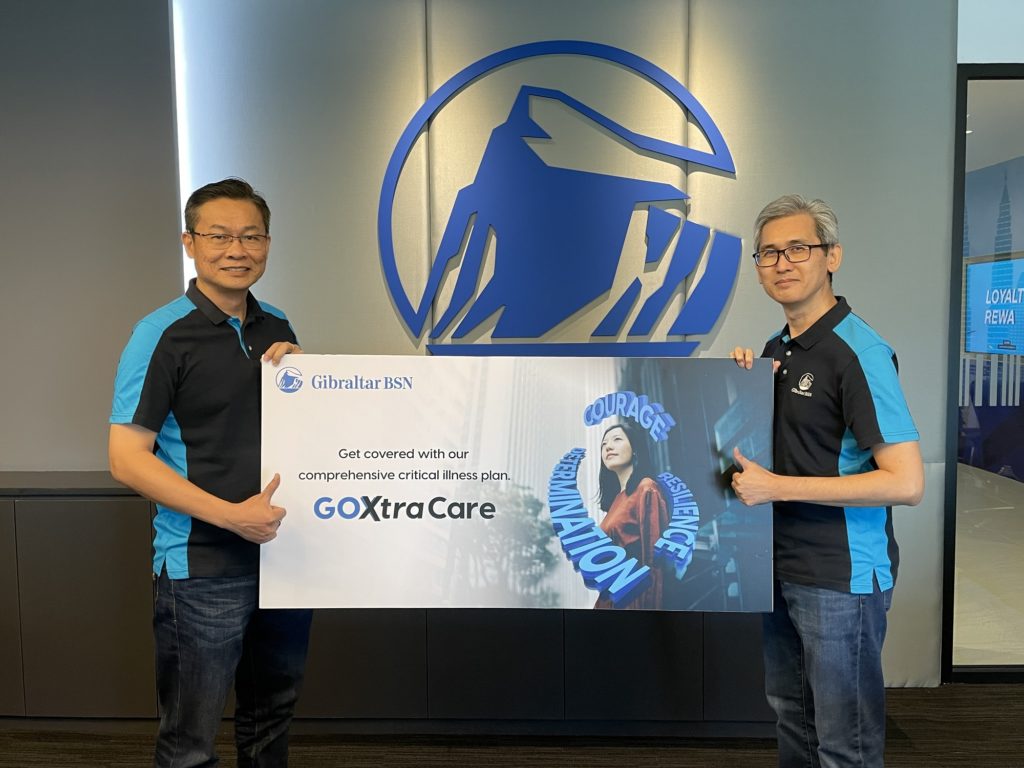
Kuala Lumpur, 22 February 2021 – According to the Ministry of Health Malaysia, one in 4 Malaysians will suffer from Cancer before age 75[1]. Other surveys state that one in five Malaysian deaths are due to Heart Diseases and one in ten deaths that occur are due to stroke[2].
Despite the prevalence and rising healthcare costs for critical illness conditions, many Malaysians remain under protected and are open to financial impact from a significant life event. Households surveyed under the National Health and Morbidity Survey 2019 show that only 8.1 percent of Malaysian households utilise their insurance to pay for health services. The majority of Malaysians (81.4 percent) pay their health bills from their current income, 35.8 percent use their savings, while 10.9 percent pay with monies borrowed from family and friends. [3]
Realising the heavy financial burden of recovering from a critical illness condition to the patient, family, and society, Gibraltar BSN today launched GoXtra Care, a comprehensive critical illness plan that provides multiple lump sum payments of up to RM2,000,000 for 151 conditions from early to advanced stages and 10 special conditions.
Addressing a timely need, Lee Kok Wah, Chief Executive Officer of Gibraltar BSN Life Berhad said, “With Malaysia’s increasing medical inflation, treatment for critical illness conditions can be extremely costly, resulting in financial burden to the customer. With that in mind, we designed GoXtra Care to cover our customer’s extensive financial needs by allowing multiple claims from different illness groups and the automatic reset of coverage back to 100% if no other claims are made within 12 months after the first Early Stage critical illness claim.”
[2] https://www.worldlifeexpectancy.com/malaysia-stroke https://www.worldlifeexpectancy.com/malaysia-coronary-heart-disease
[3] Fact Sheet, National Health and Morbidity Survey 2019
On 22 February, 2021, AMCHAM had a virtual townhall with the members of the Chamber. This first members’ townhall of the year was a casual session and allowed for AMCHAM to have a chat with the members and inform them of updates and initiatives going around.
Siobhan Das, CEO, AMCHAM, provided an update on what’s been going on at the Chamber, the new initiatives, committees, upcoming events, and other new changes. The results from AMCHAM’s Workforce and COVID-19 Survey were also revealed. Our Government Relations team also provided an update from an industry consultation meeting with MITI that took place just this afternoon to discuss a proposed safe work bubble SOP for the manufacturing sector and its related services.
Each member had the opportunity to share updates surrounding their companies and industries and overall general work-life under the current MCO. Look forward to more of these sessions in the coming months.
Malaysia deposited its instrument of ratification for the Multilateral Convention to Implement Tax Treaty Related Measures to Prevent Base Erosion and Profit Shifting (“MLI”) on 18 February 2021. The number of countries that have deposited their ratification instruments for the MLI is 63.
The Ministry of Human Resources (KSM) has taken several initiatives in relation to employee accommodation compliance throughout the country to comprehensively and effectively control the transmission of the COVID-19 pandemic.
The first initiative is the drafting of the Emergency Ordinance (Minimum Standards on Housing, Accommodation and Employment Facilities) (Amendment) 2021 gazetted on 17 February 2021.
Read More: