In Malaysia, small-and-medium enterprises (SMEs) constitute the backbone of the economy, making up a significant portion of the country’s economy while contributing to job creation, economic growth and innovation.
Amidst an uncertain business landscape, it is crucial for SMEs in Malaysia to take a proactive approach towards expanding their operations through cross-border trade, which in turn leads to additional revenue channels. Cross-border trade also offers a plethora of opportunities for SMEs, including reaching untapped customer base and capitalizing on economies of scale. These opportunities serve as essential safeguards against the challenges posed by the current economic conditions.
In Prime Minister Datuk Seri Anwar Ibrahim’s budget 2024 speech, he highlighted the government’s unwavering commitment to this critical sector, including the adoption of new digital technology.[1] In line with this, FedEx recognizes the pivotal role of SMEs within the country’s economic landscape and is dedicated to facilitating their journey towards growth and enduring success. This becomes even more evident as SMEs embrace digital innovation and emerging trends to maintain agility and resilience, particularly within the dynamic e-commerce landscape.
Here is how FedEx empowers Malaysian SMEs with its long-standing presence, unparalleled connectivity and digital solutions that strengthen their logistics strategies.
Towards Greater Logistical Connectivity for SMEs
Over the past three decades, FedEx Malaysia stands as a testament to numerous remarkable milestones. These include the strategic positioning of our network capabilities within our key facilities. Notably, FedEx established a logistics facility in Johor—a strategic gateway to Singapore—that significantly enhances connectivity for the southern Malaysian region on the global stage. Similarly, the FedEx Batu Kawan facility in Penang enhances connectivity for the northern region of Malaysia, utilizing both land and air transportation networks. These strategically positioned facilities play a pivotal role in ensuring efficient and timely transportation, providing businesses within Malaysia with access to swift and dependable delivery services, both domestically and internationally.
Bolstered by FedEx active support for the Regional Comprehensive Economic Partnership (RCEP), the company’s global network presented promising opportunities for exponential growth among SMEs. As a long-standing advocate of free global trade, FedEx is positioned to support SMEs in globalizing their businesses by leveraging the benefits of this regional collaboration.
With the Asia Pacific region contributing a substantial 34 percent share of the global air cargo market[2], FedEx remains attuned to the evolving demands within the region, including Malaysia. This understanding enables us to optimize our global network and provide tailored solutions that enable SMEs to explore new markets, fostering increased import and export opportunities that ultimately contribute to their growth.
Supply Chain Strategy as a Critical Precursor to SMEs
In recent years, FedEx Malaysia has focused on supporting SMEs as they expand their global reach. Amy Blair, who leads Batik Boutique, a Malaysian social enterprise specializing in crafting and marketing handmade batik products, exemplifies this trend. Batik Boutique’s journey, marked by a robust local presence and international acclaim, is propelling the global export of their unique batik creations.
Conversely, Yusfariq Iqmal Yuslan, the founder of The Jasmine Group, who embarked on his journey in the hijab business. Notably, he pioneered the Hijab Magnetic, or the PINLESS hijab, which has achieved extensive market presence in Malaysia and Indonesia, and now to various global markets, supported by FedEx international deliveries and solutions.
It is evident that SMEs can potentially reap substantial advantages from FedEx logistics solutions, such as FedEx International Connect Plus, which has the ability to strike an ideal balance between speed and affordability, in ensuring cost-effective deliveries without compromising on efficiency. In addition, FedEx International Economy caters to day-definite deliveries to over 170 global markets, making sure that customers’ packages reach their destinations smoothly and without unnecessary hassles.
SMEs are presented with vast opportunities to tap into the e-commerce space, where online businesses continuously evolve to accommodate ever-shifting customer preferences, and incorporating aspects like personalization, shoppertainment and streamlined payment methods. This evolution is facilitated by FedEx through digital solutions such as the FedEx Compatible software solutions, which enables business owners access to shipping and other services directly from the software they need. Alongside this, the FedEx Ship Manager (FSM) online shipping tool offers businesses and individuals a comprehensive and efficient solution to manage their shipments online.
30-Year Milestones
Since 1993, FedEx Malaysia has solidified its reputation as a reliable logistics service provider across diverse sectors, encompassing overseas trade, SMEs and e-commerce delivery. FedEx takes pride in fostering the growth of local companies, many of which have expanded into regional or international brands. As the company commemorates its 30th anniversary, FedEx unwavering commitment to bolstering Malaysian SMEs and creating more possibilities for local businesses remains firm. The company is also committed to stay ahead of the supply chain curve by focusing on best-in-class innovations that will pave the way for the future. Looking ahead, FedEx will continue to focus on these key areas in Malaysia:
- Championing Innovation and Adaptation: By maintaining its pioneering stance in innovation and remaining agile to evolving market dynamics, FedEx is well positioned to cater to the shifting SME needs. FedEx leverages technology to improve its operations and enhance the customers’ experience. The company adopts a data-driven approach, and continuously invests in innovations and new technology that echoes broader industry trends, to operate at the intersection of physical and digital networks. For example, FedEx uses insights gained from machine learning, artificial intelligence, and other advanced analytical methods in the company’s network to optimize internal operations and help customers improve complex processes. This proactive approach equips SMEs with advanced solutions to thrive in a dynamic business environment.
- Embracing Sustainability: As the market continues its upwards trajectory, the company will continue its focus to establish a sustainable supply chain across all operations, which include reducing emission and waste, replacing older technologies and vehicles with more efficient ones, and revolutionizing the company’s operations with newer technologies. A recent addition to the company’s suite of services is the FedEx Sustainability Insights, an innovative, global emissions reporting tool which empowers FedEx customers to gauge CO2 emissions, enabling them control over their carbon footprint. Through these endeavors, FedEx is committed to achieving global carbon neutrality in its operations by 2040.
- Prioritizing Employee Well-being: FedEx recognizes its workforce as its paramount asset, and is devoted to cultivating a work environment that enables team members to create an impact, learn and grow, and spread their wings. Guided by the People-Service-Profit (P-S-P) philosophy, the company cultivates a secure, inclusive and gratifying work environment that empowers team members to deliver exceptional customer service. Moreover, the company’s Employee Value Proposition (EVP) helps create a workplace to recognize individuals for their achievements and provide growth opportunities for them to thrive.
In order to attain long-term success, SMEs need to collaborate with a reliable logistics partner who possesses a deep understanding of the complexities involved in cross-border trade and provide a variety of logistics solutions tailored to their business needs. By teaming up with the right logistics provider, business owners can concentrate on their core business functions while entrusting all supply chain-related responsibilities to their chosen partner.
[1] https://belanjawan.mof.gov.my/en/
[2] https://www.iata.org/en/pressroom/2022-releases/2022-25-01-01/
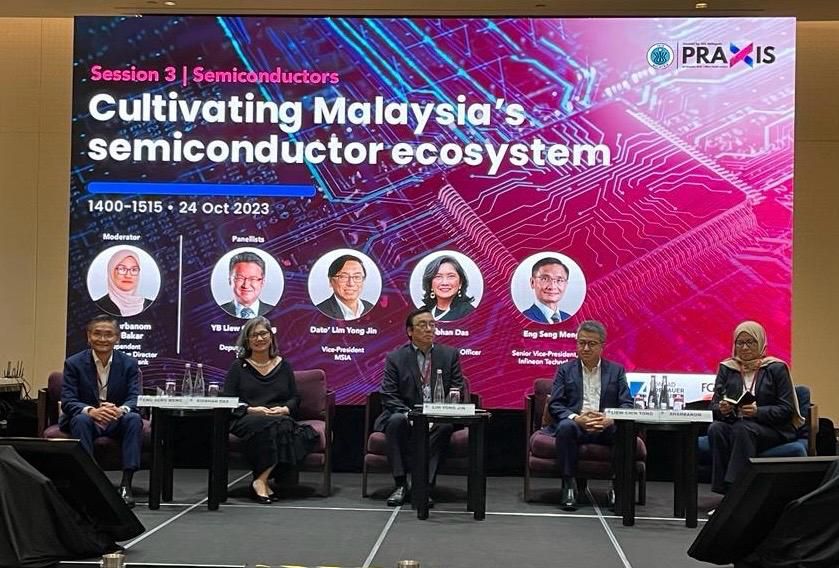
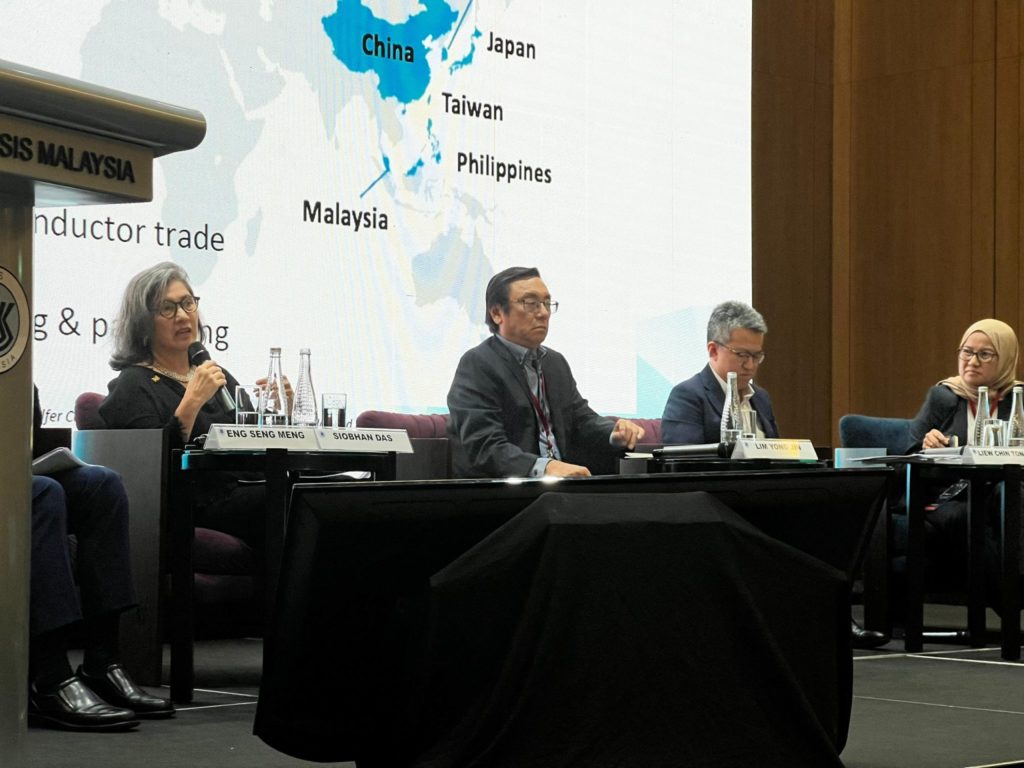
It was an insightful discussion at the PRAXIS Conference hosted by ISIS Malaysia at Hilton Kuala Lumpur on 24 October.
Our CEO, Siobhan Das, together with other panelists YB Liew Chin Tong, Deputy Minister, MITI Malaysia, Dato; Lim Yong Jin, Vice President, MSIA and Eng Seng Meng, Senior Vice President and Managing Director, Infineon Technologies explored the opportunities and risks arising from geostrategic considerations and the feasibility of Malaysia moving into other areas of the value chain.
The conversation revolved around the government policies, geopolitical challenges, supply chain resiliency and talent to further strengthen Malaysia semiconductor industry in the future and move up the global value chain.
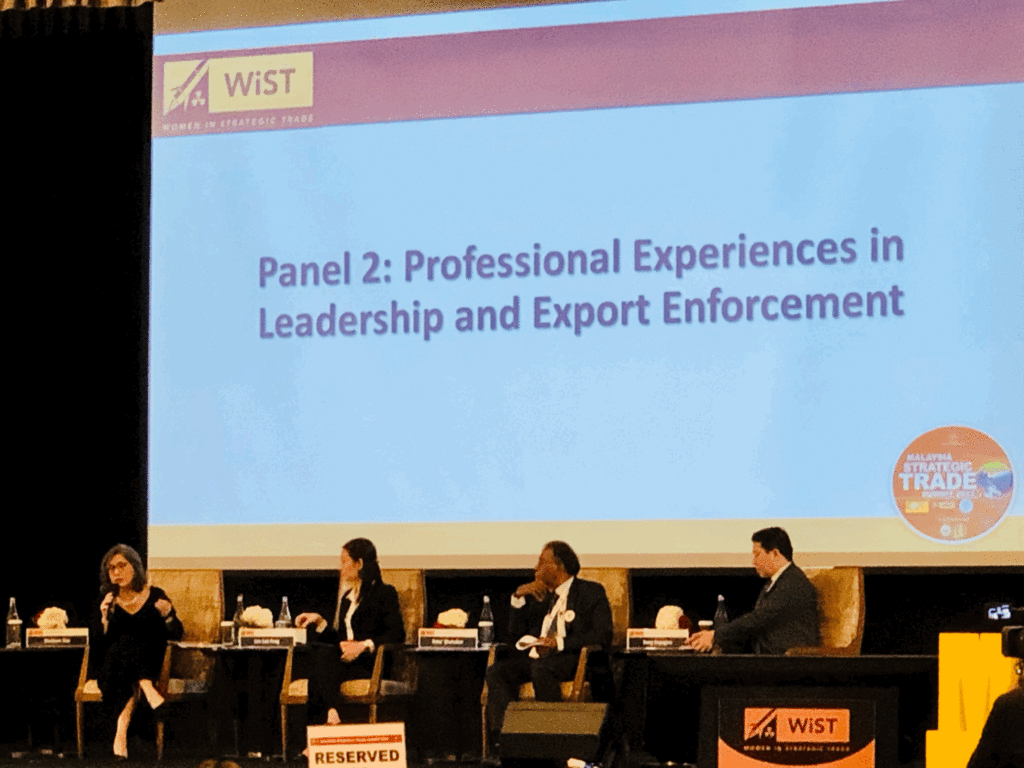
Siobhan Das, CEO of AMCHAM moderated Panel 2 on “Professional Experiences in Leadership and Export Enforcement” at the Women in Strategic Trade Forum.
She was joined by Lim Sok Peng, Customs Singapore, Dato Shahabar, Former STS Controller, MITI Malaysia and Seng Sopagna, Customs Cambodia. Together, they explored the essential skill sets necessary for success in the field of strategic trade and its associated career pathways.
The panel also delved into the important subject of increasing female involvement in strategic trade management and export enforcement.
The discussions were insightful, with panelists sharing their experiences in leadership and export enforcement, as well as offering valuable advice early and mid-career professionals seeking to advance in the fields of Strategic Trade Management and export enforcement fields.
Budget 2024 was tabled in the Parliament on Friday, 13th October 2023 by Prime Minister and Minister of Finance, YAB Dato’ Seri Anwar bin Ibrahim . Based on the theme of “Reformasi Ekonomi, Memperkasakan Rakyat (Economic Reform, Empowering People)”, it will be the largest budget to-date, with an allocation of RM393.8B (approx. US$83.3B), surpassing Budget 2022’s allocation of RM388.1B.
The 2024 budget is based on the MADANI Economic framework which is the main focus of the Unity Government in ensuring that the interests and needs of the people are taken into account in addition to driving the country’s economic growth.
Here at JLL, several Budget 2024 proposals are highlighted from the real estate point of view.
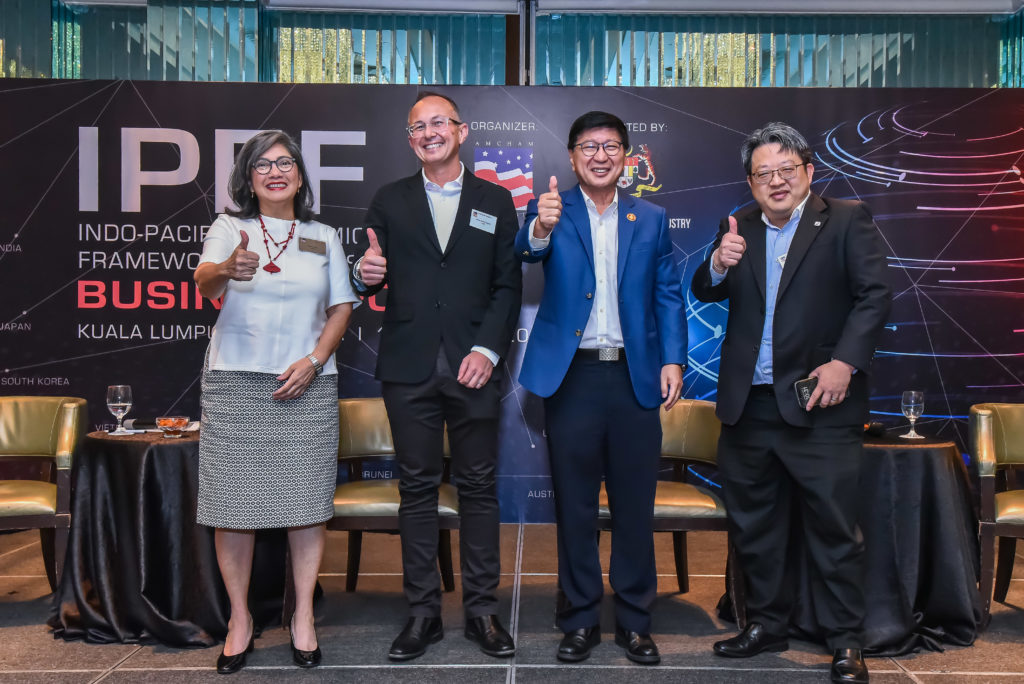
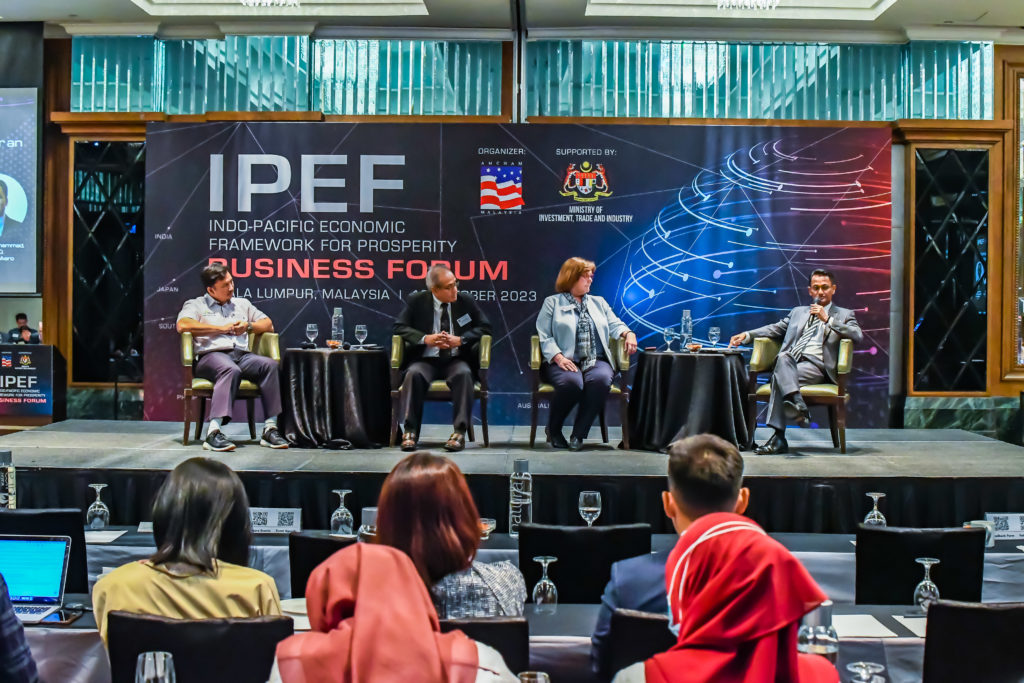
On 18 October, AMCHAM, in partnership with the Ministry of Investment, Trade and Industry (MITI) Malaysia, hosted the IPEF Business Forum 2023 at the Mandarin Oriental Hotel, Kuala Lumpur.
The IPEF Business Forum took the opportunity to look at how the IPEF Framework provides a new way of looking at trade and development that takes into account pressures of today including the need to address climate change, creating productive and higher paying jobs and collaboration amongst like minded nations.
Dr Apurva Sanghi, lead economist of The World Bank delivered the keynote address, highlighting that Malaysia is an important player in IPEF, which has the potential to enable a material improvement in the areas that are critical for Malaysia.
In each of the three moderated discussions, the panelists emphasized the importance of communication and information sharing among 14 countries to operationalise IPEF and for IPEF to deliver tangible benefits.
It was acknowledged that IPEF is a foundation for building a more resilient and adaptable supply chain in the Indo-Pacific region. The panel highlighted that the COVID-19 pandemic revealed the importance of collaboration, supply chain adaptability and the need for governments to facilitate an enabling environment for supply chain resilience.
The forum concluded with the closing remarks delivered by Manu Bhalla, chargé d’affaires, ad Interim, U.S. Embassy in Malaysia.
We thank all participants for their participation. We hope that the Forum provided a deeper understanding of the opportunities within IPEF and encourages further discourse to explore the potential and promises of IPEF.
[Click here to view the gallery of the business forum] [Click here for the IPEF meeting]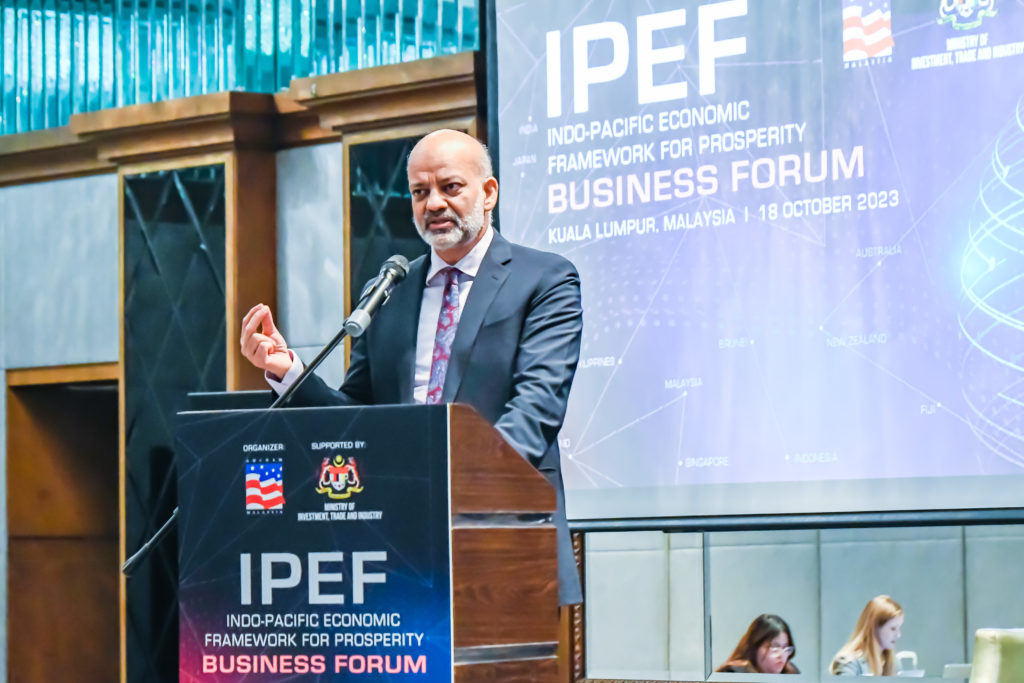


Micron Malaysia today has officially announced the opening of its second state-of-the-art smart manufacturing facility in Batu Kawan Industrial Park (BKIP). It is located on the same site as its first plant in BKIP.
Micron Malaysia Vice-President and Country Manager Amarjit Singh Sandhu said this expansion enables Micron Malaysia to boost production output and further strengthen its assembly and test capabilities.