This Ramadan, DaVita is bringing the tradition of bubur lambuk, a beloved porridge traditionally shared with the community to bring people together, symbolizing unity and compassion. In this blessed month, DaVita is extending this tradition beyond the confines of home and into the hearts of the people serving over 2,000 individuals with this heartwarming meal.
As the holy month of Ramadan graces us with its presence, DaVita teammates from across Malaysia has recently distributed bubur lambuk within various communities of general public, dialysis patients and their caregivers in Masjid Al-Hasaniah Kuala Sungai Baru Melaka, Pusat Dialisis DaVita Kota Warisan, Pusat Dialisis DaVita Bangsar, Surau Nurul Aflah Taman Sri Saujana Johor, Pusat Dialisis DaVita Sungai Besar, Pusat Dialisis Sri Rampai, Pusat Dialisis DaVita Gurun, Pusat Dialisis DaVita Kangar and Pusat Dialisis DaVita Sabak Bernam.


JABIL has extended its corporate sponsorship by an additional RM50,000 to SMK Permatang Pasir’s robotics team – Pasirian Rex. The funds will be used to cover part of the team’s travel expenses to allow them to compete in-person at the FIRST Tech Challenge (FTC) World Championship to be held in Houston, Texas, United States next month (April).
Pasirian Rex was named the Champion of Alliance in FTC Malaysia, earning the team the opportunity to represent Malaysia in the finals in Houston.
Representing the team are high-schoolers – team leader Arash Badlishah Huzainol Hisham, Kash Damia Maira Mahadzir, Kash Dania Aydina Mahadzir, Ainur Amylia Md Isa and Muhammad Akmal Farish Effendy.
Singapore, March 25, 2024 —FedEx Express (FedEx), a subsidiary of FedEx Corp. (NYSE: FDX) and one of the world’s largest express transportation companies, has been named ‘Overall Logistics & Supply Chain Management Supplier of the Year’ and also received the ‘Best Logistics & Supply Chain Management Supplier Award: Last Mile Implementation’ at the Asia-Pacific Biopharma Excellence Awards 2024 (ABEA 2024).
Organized by IMAPAC, ABEA 2024 seeks to give recognition to exceptional bioprocessing, logistics and supply chain management, as well as clinical trials experts, organizations, and technologies in the Asia region.
FedEx has built its healthcare capabilities over decades, including its dedicated healthcare team and cold chain network, to ship vaccines, biologics, and medical aid all around the world. With a global network of more than 680 aircraft and 200,000 vehicles, and four Life Science Centers in the region including South Korea, Japan, Singapore and India, FedEx enables movement of healthcare shipments using temperature-controlled solutions and real-time monitoring using FedEx SenseAware to help protect shipment integrity. The company’s dedicated service, FedEx Clinical Care, provides an end-to-end shipping solution designed to transport precious biological samples at the exact speed and temperature required for safe, compliant clinical trials.
“The healthcare industry has very specific and carefully regulated logistics needs. Being recognized by voters among the biopharma community is the highest possible recognition we can receive,” said Salil Chari, senior vice president, Marketing and Customer Experience, Asia Pacific, Middle East, and Africa Region, FedEx Express. “Our mission is to make supply chains smarter for everyone. We are transforming to build the world’s most flexible, efficient, and intelligent logistics network by using advanced sensor-based monitoring and predictive tools to ensure critical shipments reach their destinations safely. Our healthcare customers can be confident our innovative solutions will meet all their shipping needs.”
The ABEA 2024 was held in conjunction with 11th Biologics Manufacturing Asia, 8th BioLogistics World Asia and 2nd Clinical Trials Festival Asia on 20th March 2024 in Singapore, gathering hundreds of biopharma industry leaders. To learn more about the ABEA 2024 awards, please visit.
KUALA LUMPUR, MARCH 25, 2024 – Corporate net zero carbon (NZC) goals are driving ambitious portfolio decarbonisation plans for occupiers in Malaysia leading to a significant gap between supply and demand for sustainable buildings in the region. The mismatch between supply and demand will drive strong competition among occupiers seeking low-carbon office spaces in the years leading up to 2030.
According to global real estate consulting firm JLL (NYSE: JLL), 96% of occupiers surveyed across Malaysia are targeting 100% green certified portfolios by 2030, up from 3% currently. The sentiment is particularly strong in countries including India, Malaysia and Thailand, with over 95% of occupiers targeting 100% green certified portfolios.
The challenge, according to JLL’s analysis, shows that across Asia Pacific, for every 5 sq. ft of demand, only 2 sq. ft of low carbon space is in development from now until 2028.
“Green office space is becoming increasingly critical for businesses in Asia Pacific. In the near future, leasing space in green certified office buildings will no longer be a differentiator but a requirement for occupiers in the region,” says Kamya Miglani, Head of ESG Research, Asia Pacific, JLL. “To achieve decarbonisation goals, we are seeing more companies adopt strategies such as energy audits, sustainable fit-outs, and green leases.”
Renewable Energy for Sustainable Expansion
37% of occupiers surveyed in Malaysia said that on-site renewable energy provision will become indispensable due to decarbonisation goals by 2030. Additionally, 76% expect their energy needs to be met by renewables, compared to 17% today. The transition to renewable energy is a critical step for the real estate industry to redefine and transform buildings from passive energy consumers to active contributors through onsite renewable energy generation.
The collaboration between landlords and occupiers will be critical to fulfilling sustainable building demand. Currently, many occupiers rely on Renewable Energy Certificates (RECs) and Power Purchase Agreements (PPAs) for renewable procurement.
Fit-Out Opportunities: Addressing Scope 3 Emissions
While developers typically focus on the embodied carbon footprint of building construction, the impact of fit-outs is often overlooked. Currently, 67% of occupiers surveyed in Malaysia have cited investments required for office fit-out as one of their greatest sustainability challenges.
Building fit-outs contribute to approximately one-third of emissions, especially as the average office make changes to its interior at least 20 times in its life cycle. This lack of focus on fit-out emissions stems from the traditional separation between teams responsible for building development and interior fit-out.
“Breaking established silos is key to transitioning towards zero waste in the design phase through to procurement and strip-out, to support the reduction of emissions associated with waste and material use,” Miglani adds.
Building Performance Data and Evolving Standards
As decarbonisation goals intensify for portfolios, occupiers demand building performance and sustainability data that goes beyond certifications. As a result, occupiers are turning towards sustainability technology for automation of environmental data tracking and reporting, and utilising artificial intelligence for energy efficiency gains.
However, navigating the ever-changing and complex landscape of ESG regulations and reporting remains a challenge. As regulation plays a key role in assessing alignment with climate targets within the global and regional contexts, the key is to identify and evaluate the most relevant and important standards within the context of the organisation’s own ESG strategy.
“Across Asia Pacific, there is strong competition for sustainable assets. Occupiers need to navigate this reality through stronger collaborations with stakeholders like landlords, investors, technology partners and city administrations,” says Elke Kornalijnslijper, Head of Energy and Sustainability, JLL. “As companies move beyond making commitments to implementation, we’ll increasingly see a mindset shift from “how much will a green portfolio cost my business” to “how much will not-investing in making my portfolio green will cost my business”.
Significant Gap Between Supply and Demand in Malaysia
Compared to more mature markets, Malaysia has a lower provision of green certified spaces. Currently, only 37% of the total existing prime office space has obtained any green certification. Looking at the future supply, approximately 10.5 million square feet is expected to be added to the total stock within next five years, with 38% of that space expected to have green certification.
“Considering the ambitious aspirations of corporates to occupy green certified spaces by 2030, there is likely to be a significant gap between supply and demand. Despite the market being considered competitive and tenant-driven overall, in the “green” segment, it is clearly a landlord’s market and expected to maintain this position in the medium term,” says Yulia Nikulicheva, Head of Research & Consultancy, JLL (Malaysia).
This presents an opportunity for landlords of existing buildings, especially those located close to transportation hubs, to undertake Asset Enhancement initiatives. However, it is crucial that the building structure aligns with tenant requirements, including floor plate size, ceiling height, column grid, electricity capacity, and other important features.
“Additionally, we believe there is potential to develop new high-quality office projects that meet tenants’ requirements for space efficiency and green features, provided that those projects are located in the most popular submarkets such as Kl City and KL Fringe or close to major transportation hubs,” added Nikulicheva.
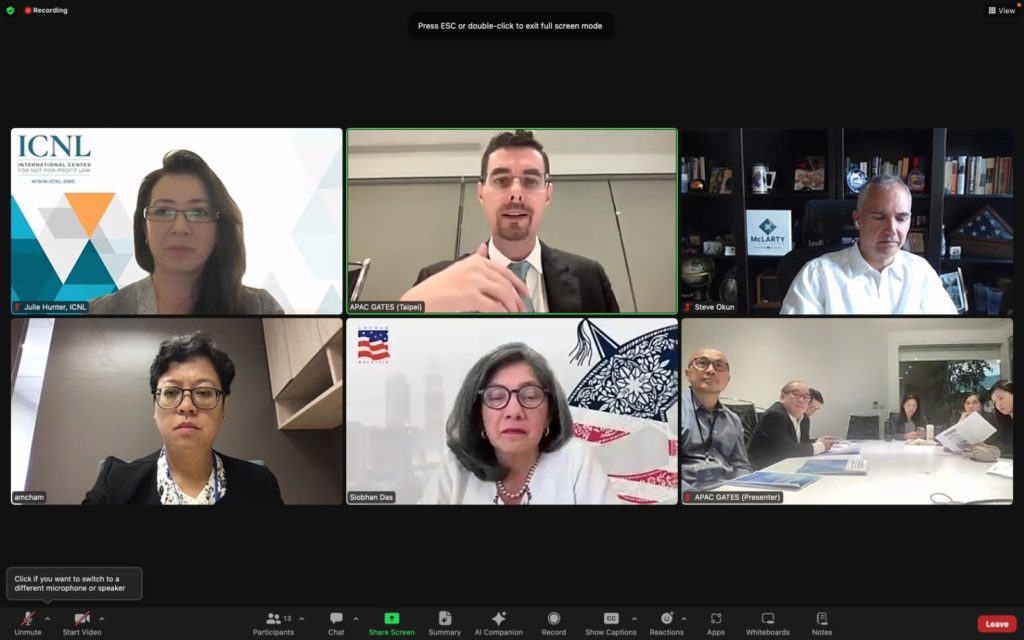
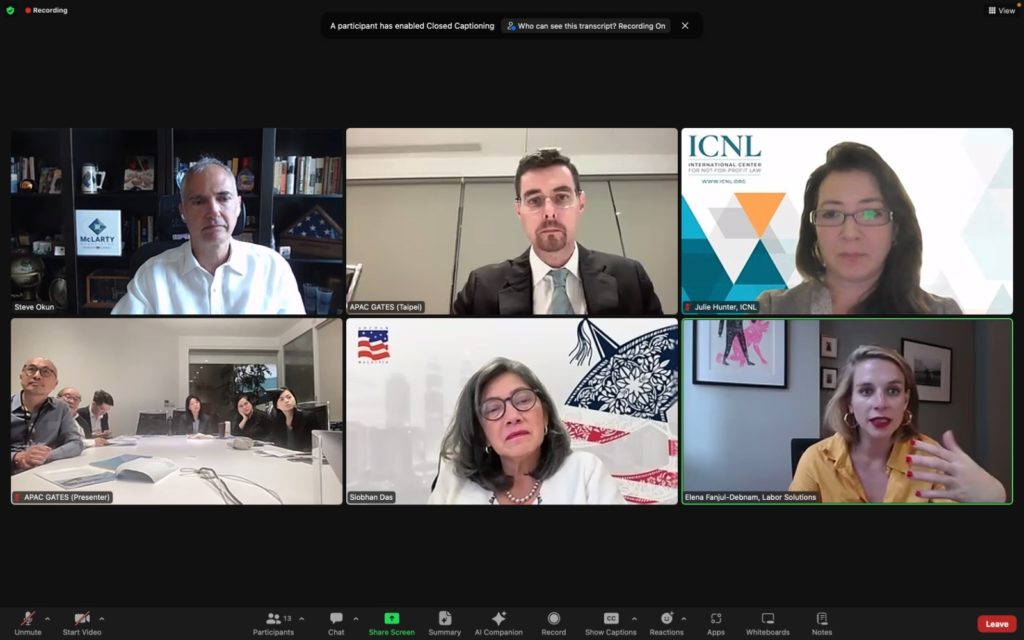
On the morning of 27 March 2024, APAC GATES, an Asia-focused association management company that provides services to international associations, unveiled its latest research, delving into the unique role played by international business associations (IBAs) throughout the Indo-Pacific in advocating for rights and civic freedoms amid the challenges posed by the COVID-19 pandemic.
Siobhan Das, CEO of AMCHAM, presented as a case study, the Chamber’s pivot to meet the demands of COVID-19 and its experience of being a bridge between government, industry, and the community at large. The discussion with panelists that followed focused on today’s increasing expectation for companies and governments to be good stewards of both people and the environment and new trade rules that will need to be adhered to globally. Associations and chambers can play a role and should look for opportunities to bring stakeholders together to navigate the complex journey ahead.
We sincerely thank APAC GATES for inviting AMCHAM to showcase how it navigated the complexities of the pandemic and appreciate the research they are doing to better understand IBAs.
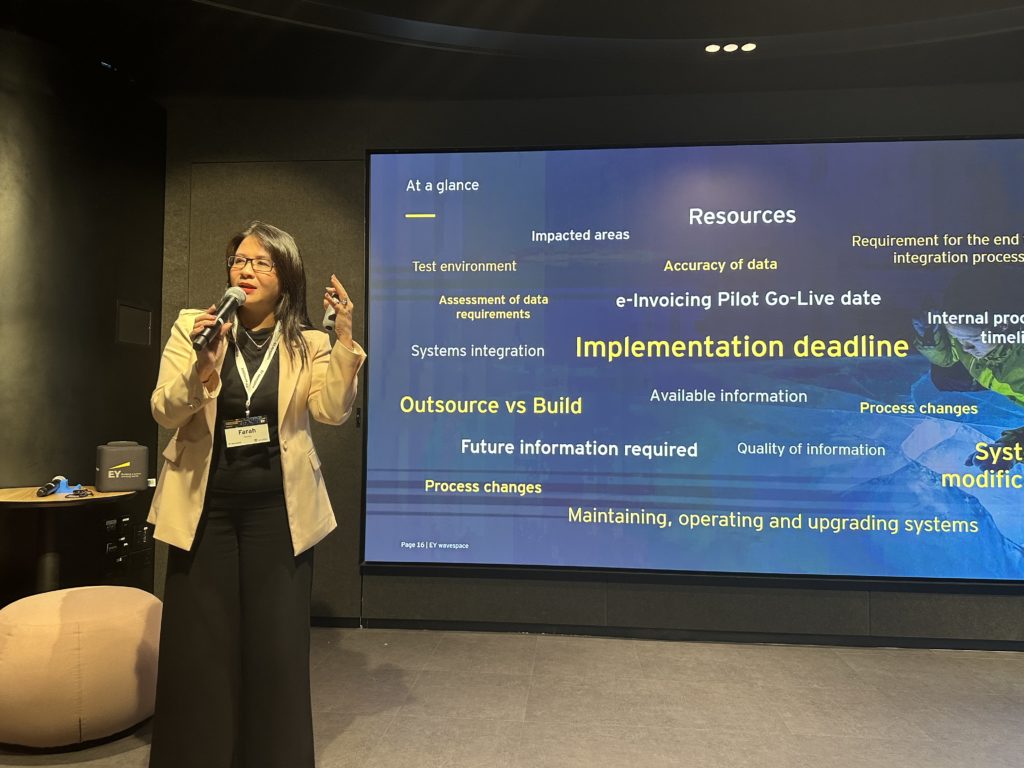
E-invoicing presents companies with a challenge because they need to integrate a nexus of functions, not just tax but finance, procurement, and more, to ensure successful deployment. The overall intent is to drive efficiency by leveraging technology to ease operations and reporting needs.
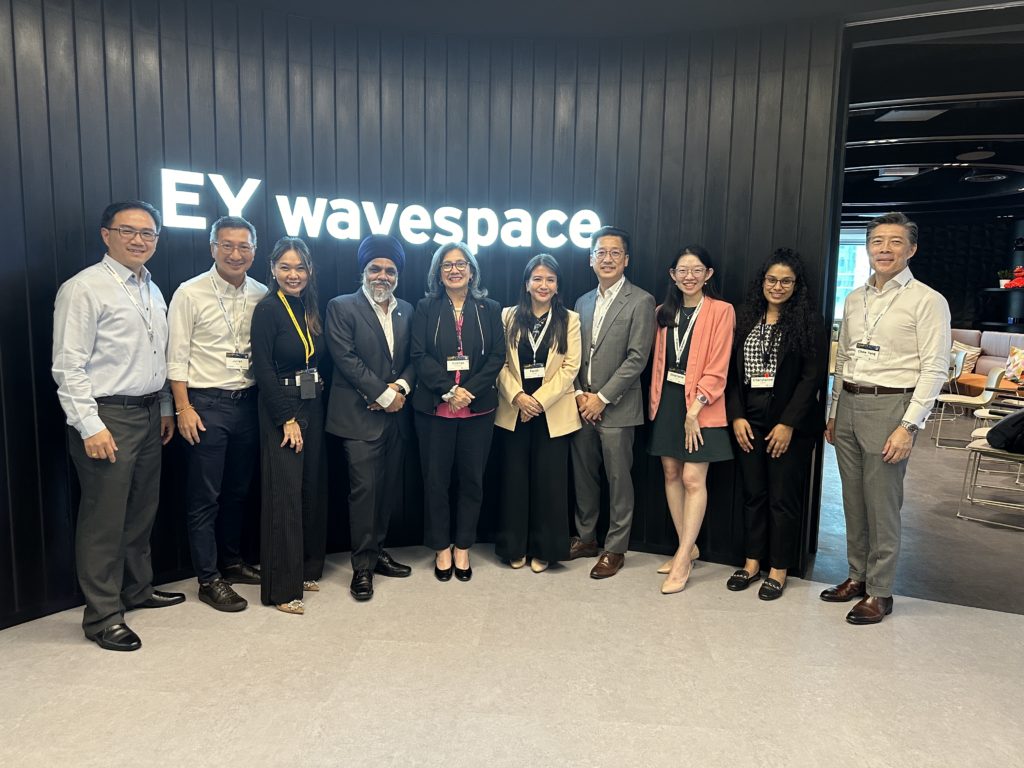
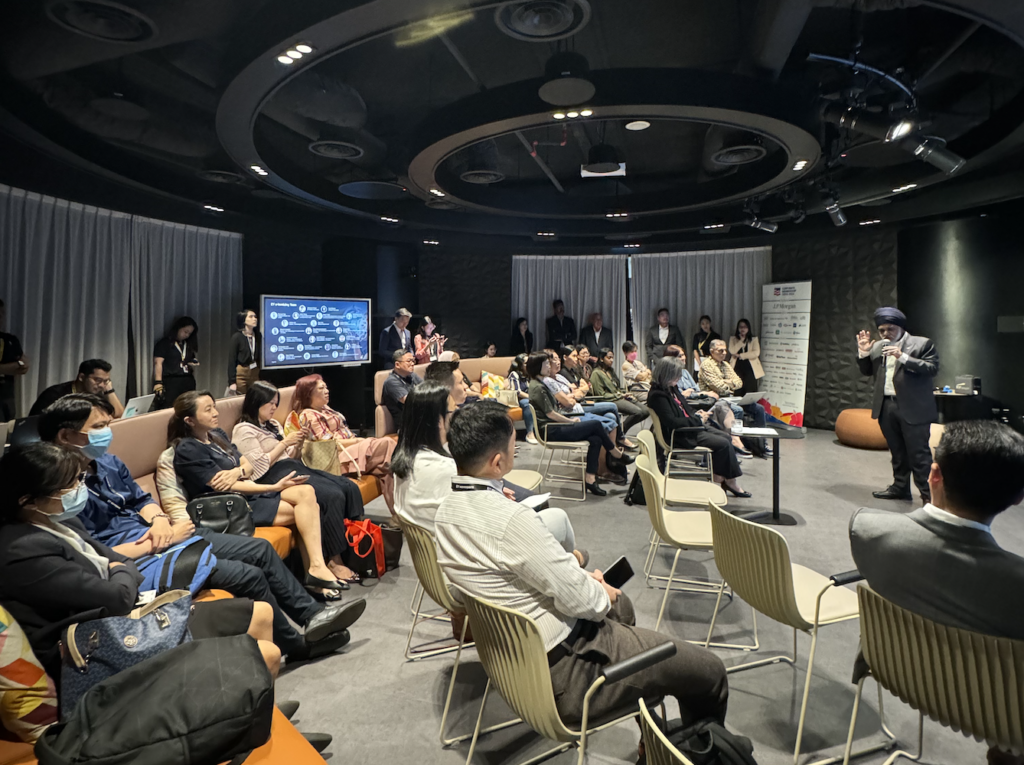
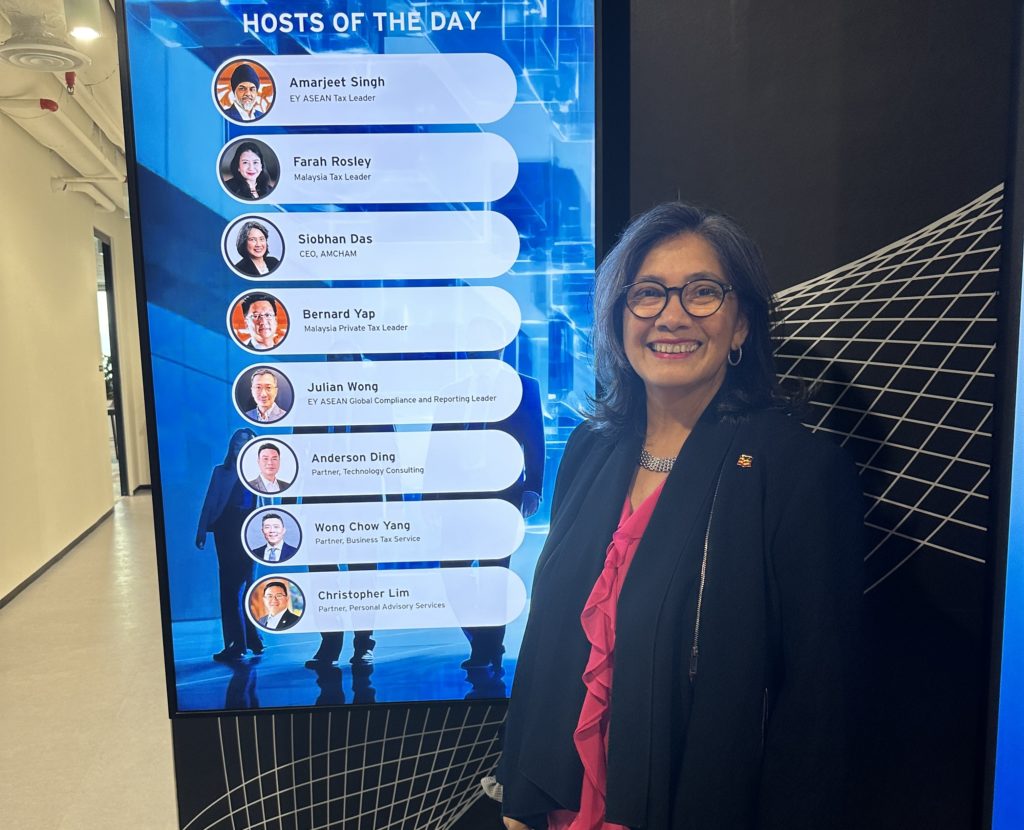
EY’s special session for AMCHAM members on “Solving the Tax Technology Puzzle for e-Invoicing” was attended by a host of member companies primarily from the finance and IT departments, others from technology or procurement. Tax and compliance staff, however, was always a filter and ever-present in the back of their minds.
Presenters, including a number of partners from EY, reviewed the technologies and requirements, pitfalls to avoid, and common technology issues that could arise. Successful examples and insights from other markets were also discussed in this session. Attendees then went into their breakout rooms for practical exercises and reconvened for a wrap-up during which each member shared a reflection encapsulated in an “I used to think…but now I realize…” statement pertaining to e-invoicing. Many expressed that they wished the session had gone on for longer but were glad they had come as they had learned much that they could take back to their offices.
Thank you to EY for organizing and conducting this workshop and helping us navigate the complexities of Malaysia’s move to e-invoicing on 01 August.