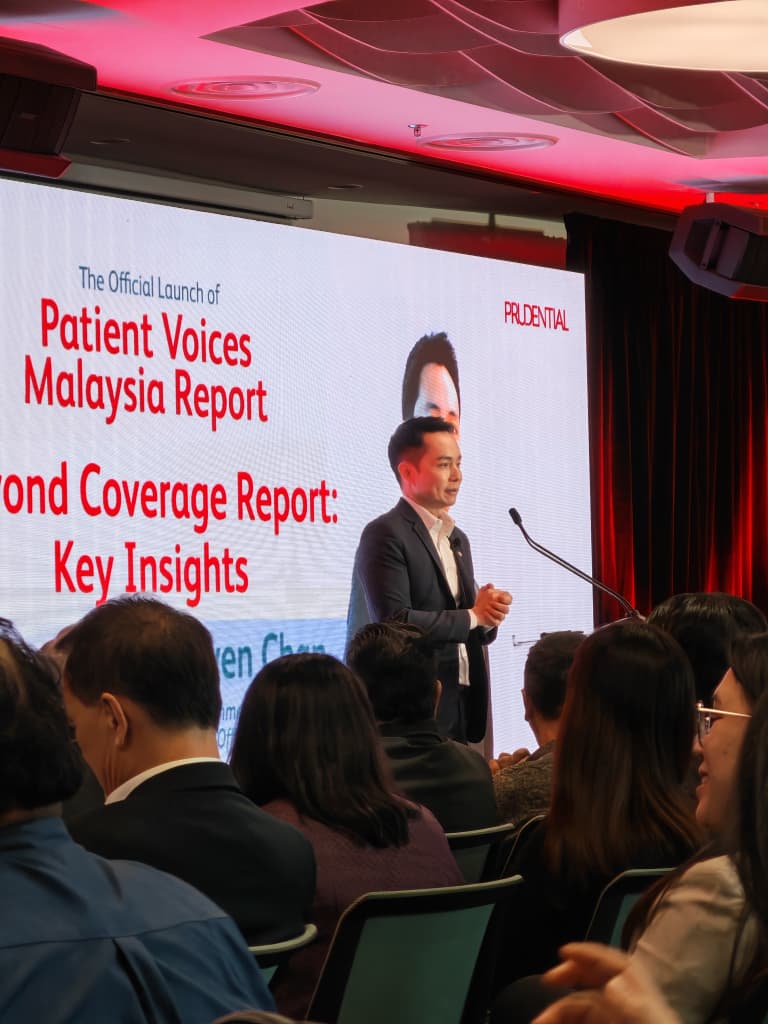
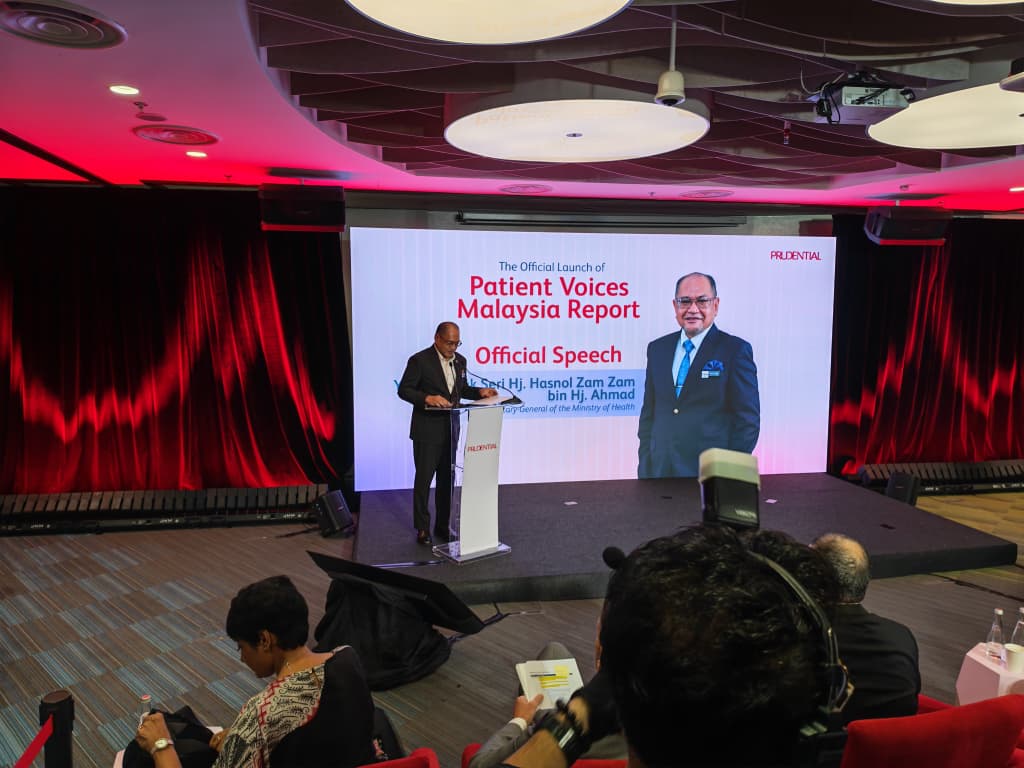
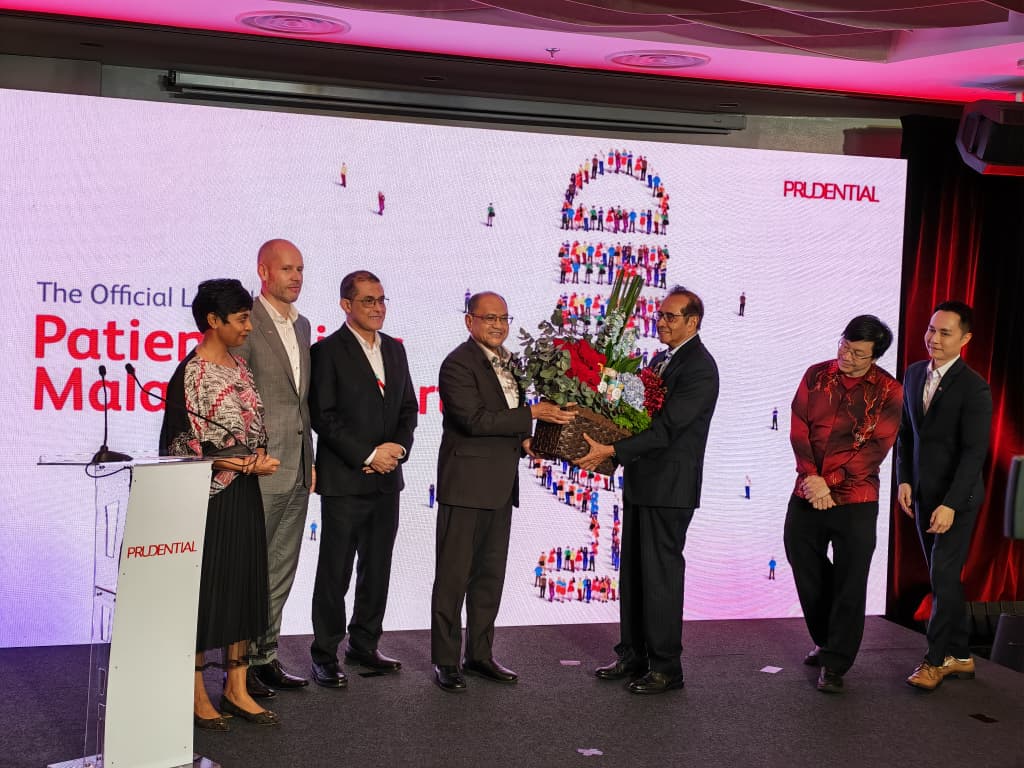
On 31 March, AMCHAM attended the launch of the Prudential Patient Voices Malaysia Report, hosted by Prudential, a Gold member.
The report examines Malaysia’s evolving healthcare landscape and highlights opportunities to enhance patient confidence and experience across the care journey. The launch convened stakeholders from across the public and private sectors for a meaningful exchange on the future of healthcare.
Presentations included key insights from the report by Manisha Keyal, Chief Health Officer, Prudential Malaysia, and Dr. Neeladri Verma, Manager, Health Policy and Insights at Economist Impact. Steven Chan, Group Chief Government Relations and Policy Officer at Prudential plc, also shared findings from the Beyond Coverage Report.
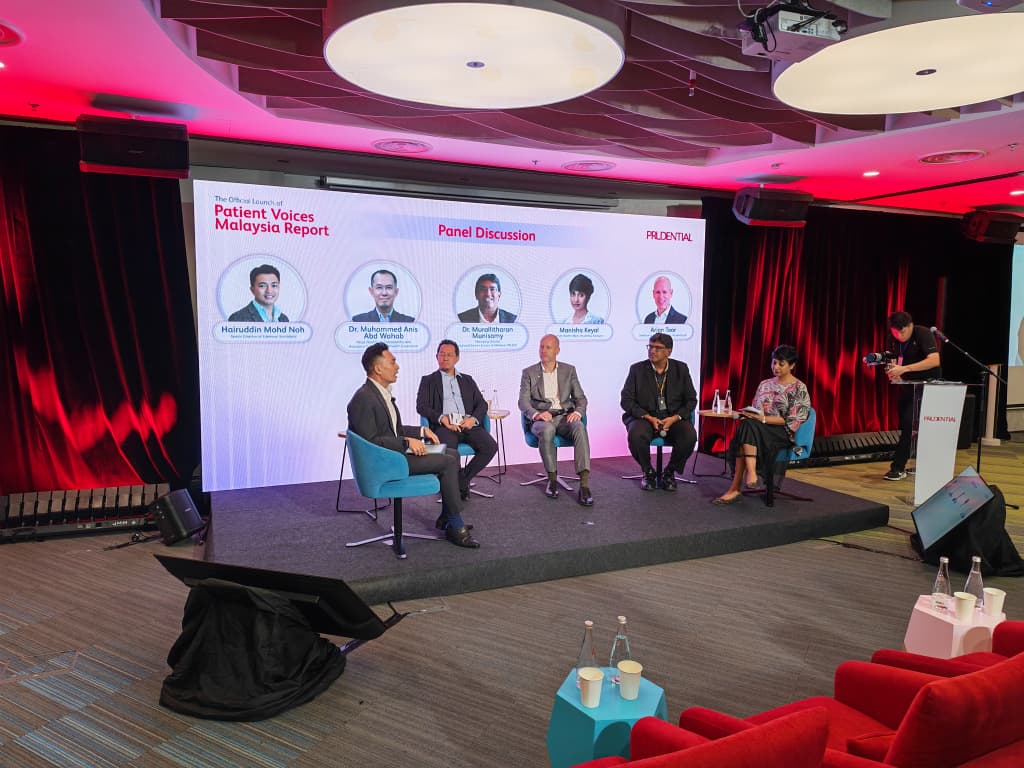
The session featured a panel discussion on “From Protection to Recovery: Rethinking How Malaysia Supports Patients Across the Care Journey,” with Arjan Toor, CEO, Health, Prudential plc, and Manisha Keyal.
AMCHAM thanks Prudential for the invitation and for convening a timely and insightful discussion.


The airline expects to take delivery of more than 250 new aircraft by April 2028 – the most by any airline in a two-year period to further modernize its fleet, add new aircraft variants, create a new experience for transcontinental travellers and introduce new onboard products for every customer, reinforcing United’s position as a leading premium airline.
New airplanes joining United’s fleet between now and April of 2028 include:
- 47 Boeing 787-9 Dreamliners with the Elevated interior
- 33 will be configured with additional premium seats
- 40 Airbus A321neo Coastliners out of 50 total on order
- 28 Airbus A321XLR out of 50 total on order
- 119 Boeing 737 MAX
- 18 Airbus A321neos
For today’s business traveller, the journey matters just as much as the destination. With demanding schedules, elevated expectations, and global responsibilities, they seek more than just a seat—they need a space that allows them to work efficiently, rest comfortably, recharge fully, and arrive at their destination prepared.
United Airlines is redefining premium international travel with the introduction of its newly elevated Boeing 787-9 Dreamliner—a next-generation experience designed for today’s business traveller. From redesigned United Polaris business class suites featuring enhanced privacy and lie-flat comfort, to thoughtfully curated dining and seamless onboard connectivity, every detail has been reimagined to deliver a more refined, productive, and restful journey. With a higher proportion of premium seating, cutting-edge in-flight entertainment, and elevated service touches, this aircraft sets a new benchmark for long-haul travel—inviting travellers to explore more through an experience that begins the moment they step onboard.
The Prime Minster, Dato’ Seri Anwar Ibrahim, announced several initiatives in relation to sales and service tax on 5 January 2026. One of these initiatives was the reduction of the rate of service tax for the provision of rental or leasing services from 8% to 6% commencing 1 January 2026.
On 23 January 2026, the Royal Malaysian Customs Department issued the Service Tax Policy No. 2/2025 (Amendment No. 3) which, among others, granted a service tax exemption of 2% on rental or leasing services from 1 January 2026 until amendments to the relevant subsidiary legislation have been gazetted.
The Agreement on Reciprocal Trade (ART) between Malaysia and the US is no longer valid, Investment, Trade and Industry Minister Datuk Seri Johari Abdul Ghani confirmed.
The minister explained that the trade arrangement became inapplicable following a US Supreme Court ruling in February that struck down broad tariff measures introduced under former President Donald Trump, the New Straits Times reported.
“It is not on hold. It is no longer there, it’s null and void,” Johari said.
“The United States Supreme Court has ruled that if you want to impose tariffs, you must have reasons. They cannot impose tariffs on a blanket basis.”
Speaking to reporters after an event in his constituency, Johari said the US is now shifting its trade enforcement strategy. Washington is relying on other tools, such as a temporary 10 per cent tariff under Section 122 of the Trade Act, which could be followed by a review under the more stringent Section 301.
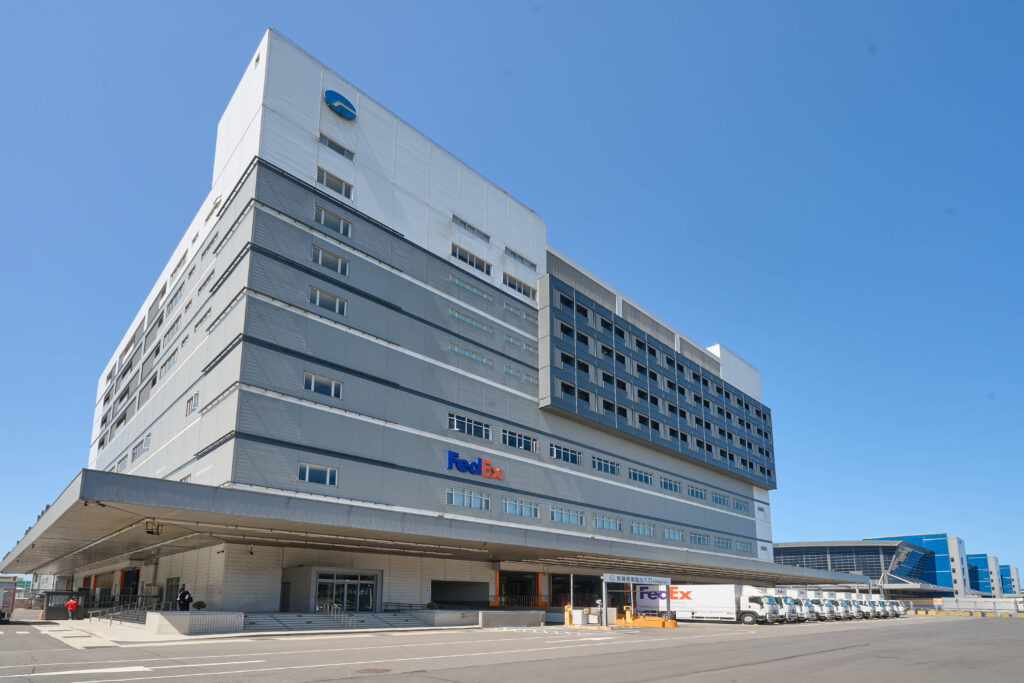
Singapore, March 13, 2026 — Federal Express Corporation (FedEx), one of the world’s largest express transportation companies, is enhancing its Asia Pacific network with the opening of its newly expanded Transshipment Center at Taoyuan International Airport. This facility represents FedEx’s largest single investment in Taiwan in its 35-year history. The expansion significantly increases the facility’s sorting capacity to support growing logistics demand from high-tech, semiconductor, and e-commerce sectors across Taiwan and the broader APAC region.
The new facility doubles the footprint of the previous site, spanning approximately 19,000 square meters. It features an advanced automated sorting system that processes up to 9,000 packages per hour. Efficiency is 2.5 times higher for imports and 1.2 times for exports compared to the former facility. Enhanced capabilities for handling express parcels, freight, and specialized shipments, including hazardous materials and cold-chain goods, strengthen operational safety and supply-chain resilience. Businesses shipping across borders benefit from greater speed and reliability.
Supporting High-Tech Supply Chains with Precision
This new facility underscores APAC’s growing role as a global technology powerhouse. The region accounts for over 80% of the world’s semiconductor production. Rapid advances in AI and other emerging technologies are fueling demand for logistics infrastructure that connects technology hubs, manufacturing centers, and high-growth markets with speed and precision[1].
Moving high-value, time-sensitive products such as semiconductors and precision instruments requires exceptional reliability, real-time visibility, and rigorous security at every stage of the journey. FedEx addresses these needs by integrating FedEx Surround® Monitoring[2] and Intervention and SenseAware ID[3] ID sensor technology in its cross-border shipping.
Investing in the Network Backbone to Support Asia’s Trade
“As economies across Asia Pacific become increasingly interconnected through trade and investment, businesses need a logistics backbone that can keep pace with shifting trade flows,” said Salil Chari, regional president, Asia Pacific, FedEx. “The expansion of our Taiwan Transshipment Center reinforces FedEx’s commitment to building logistics infrastructure that delivers the speed, reliability, and agility customers need to strengthen their supply chains and grow their reach across new markets.”
Supported by 40 weekly flights connecting Taiwan to the United States, Europe, and Asia Pacific markets, the new facility enhances FedEx’s network capabilities. Businesses can leverage intra-Asia trade growth and access new opportunities in Europe and the U.S.
This investment builds on FedEx’s 2025 network enhancements that reinforced intra-Asia trade corridors. New flight routes connecting South Korea with Vietnam and Taiwan have improved transit times for high-tech and e-commerce shipments. Expanded connectivity between the FedEx Asia Pacific Hub in Guangzhou and key Southeast Asian markets, including Penang and Bangkok, has further strengthened FedEx value proposition.
To meet growing demand along the Asia-Europe trade lane, FedEx also added five weekly flights connecting Asia-Pacific to its European hub in Paris, bringing total weekly frequencies to 26. These network investments enable more flexible and efficient cross-border movement of goods, helping lower trade barriers and accelerate access to international opportunities for SMEs across APAC.
Supporting Asia-Pacific’s rise as a global trade growth engine, FedEx continues to invest in air networks, logistics infrastructure, and intelligent digital solutions that help businesses thrive along the world’s most dynamic trade corridors.
[1] Asian Development Bank – Asia’s Semiconductor Powerhouses Can Thrive in the AI Era
[2] For more information on FedEx Surround® monitoring and intervention, and other innovations, please visit fedex.com.
[3] For more information on SenseAware, please visit fedex.com.