HSBC Malaysia recently scooped up a total of eight awards as part of The Asset Triple A Treasury, Trade, SSC (Sustainable Supply Chain) and Risk Management Awards 2021 including Best Renminbi (RMB) Bank in Malaysia for the fourth year in a row, Best in Treasury and Working Capital – MNCs/LLCs and Best Service Provider, Cash Management in Malaysia for the second year in a row.
These wins are a recognition of the bank’s continuous digital transformation efforts for its customers especially during a year impacted by the COVID-19 pandemic.
The Asset awarded HSBC Malaysia for five client solutions that were created jointly with the clients, using some of the latest digital technologies and solutions while keeping innovation at the heart of the initiatives.
These include:
· Best Supply Chain Solution for Proton
· Best Payments & Collections Solution for Sports Direct
· Best Payments & Collections Solution for DPO International
· Best Payments & Collections Solution for Agile Property
· Best Liquidity and Investments Solution for Silverlake Axis Group
Kuala Lumpur (May 17): The big data analytics (BDA) market in Malaysia is expected to grow to US$1.9 billion (about RM7.85 billion) in 2025, from US$1.1 billion in 2021, according to Malaysia Digital Economy Corp’s (MDEC) commissioned study by IDC.
The study noted that the services sector will contribute 64% of total data-driven spending, with the banking and telecommunications sectors contributing nearly a third, MDEC noted in a statement on May 10.
MDEC senior vice-president for investment and brand cum chief marketing officer Raymond Siva said the COVID-19 pandemic had been a game changer in terms of demand for BDA, backed by surging demand for data and cloud services. He added that companies investing in BDA will continue to expand their presence by having Malaysia as a base for their regional and global businesses and operations to manage their core functions.
RHB Asset Management Bhd has launched the RHB Sustainable Global Thematic Fund, the first conventional fund in the market with a focus on environmental, social, and corporate governance (ESG) through a thematic approach.
The Fund enables investors to participate in long-term sustainability-focused investment themes including climate change, healthcare, and empowerment such as education and employment services, financial security and inclusion, information and communication technologies and sustainable infrastructure.
The RHB Sustainable Global Thematic Fund invests in the shares of the AllianceBernstein (“AB”) Sustainable Global Thematic Fund (Target Fund), which covers a diversified portfolio of companies with exposure to sustainability investment themes across developed and emerging markets.
The Target Fund adopts clear investment processes that are rooted in the United Nations Sustainable Development Goals (UNSDGs) and integrates ESG factors in all investment decisions.
By Brian Sim, Managing Director and Country Head, PERSOLKELLY Malaysia.
It is hard to fathom just how much businesses have transformed in the span of 1 year. COVID-19 brought with is a sleugh of challenges, but it could also be seen as a litmus test for organisations to respond to emergency situations (in Malaysia, the Movement Control Orders or “MCO”). Technology played a pivotal role in facilitating the transformation process of organisations, across all sectors – as remote work became the new normal.
Today, the main focus for almost every person and organisation is the vaccine. For many, it symbolizes hope and a return to normal, though there are also many who are more conservative in their views about the vaccine. Either way, both sides want the same thing – to protect their wellbeing and return to the status quo before COVID-19.
But is a return to the status quo even possible?
- Enforcement activities and roadblocks will be increased. The public is to stay at home if there is no need to be outside.
- 2 strategies to reduce movement:
- Reducing the on-site workforce for both the public and private sectors.
- Reducing the operational hours of the economic sector.
- 80% of the civil service force will Work From Home (WFH).
- For the private sector, the workforce will be reduced with 40% WFH.
- Public transportation will be reduced to 50% capacity. The frequency will also be reduced.
- Business operations will be limited to 8am to 8pm.
- Hotspot Identification For Dynamic Engagement (HIDE) will continue to be utilized. Those deemed high risk will be immediately closed.
- Companies are required to check employees’ MySejahtera status before they enter for ‘high risk’ individuals.
- The Ministry of International Trade and Industry (MITI) will provide detailed SOPs.
- Relevant Ministries and the National Security Council will also upload SOPs on their respective websites.
- Food-related businesses (restaurants), grocery, convenience stores, pet stores, petrol stations, and laundry services are allowed to operate from 8am to 8pm.
- Night markets are allowed to operate from 4pm to 8pm.
- Shopping malls can be open until 8pm.
- Pharmacies can open from 8am to 10pm.
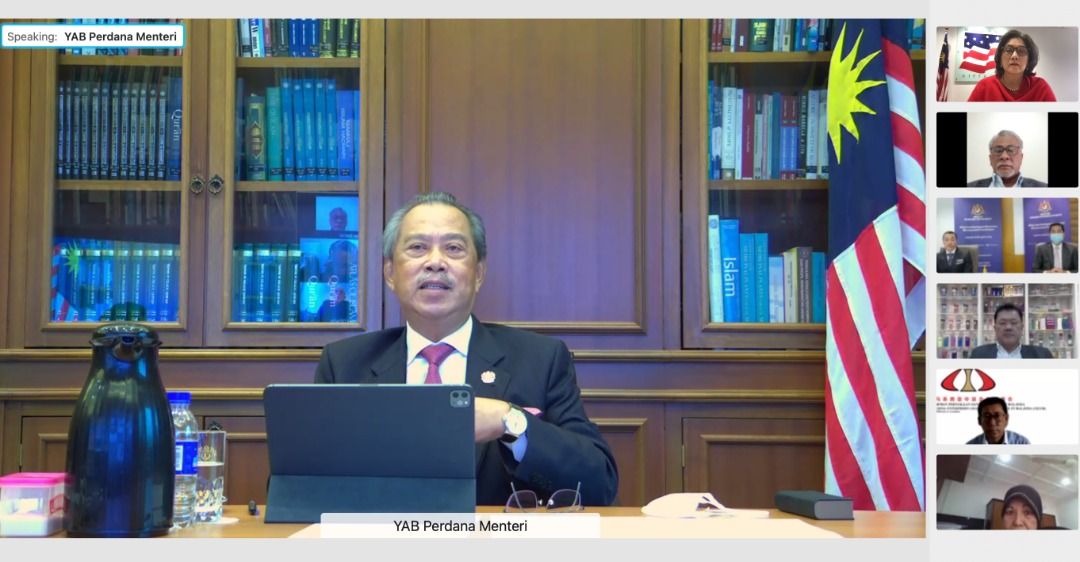
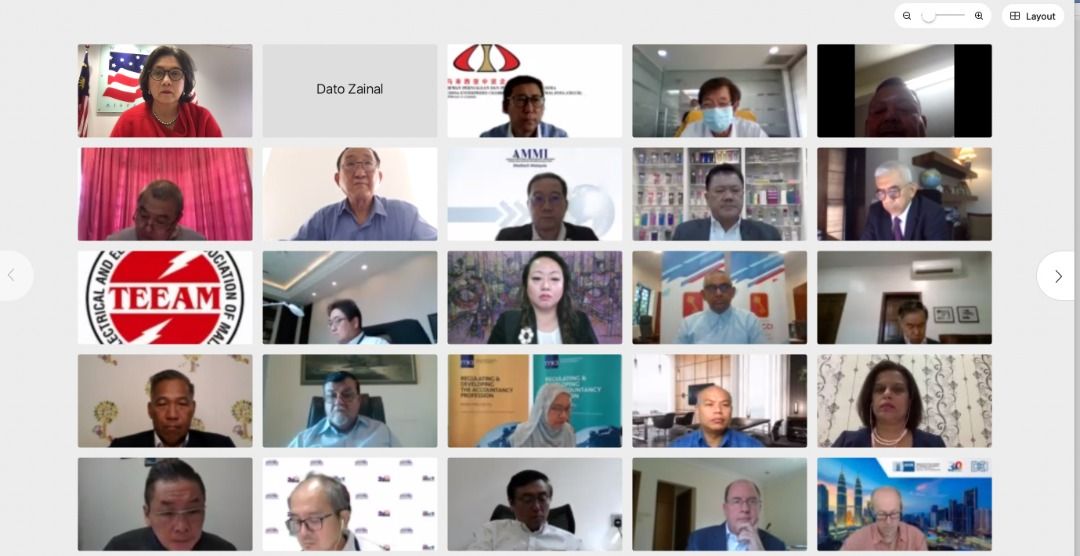
AMCHAM would like to thank the PM of Malaysia, Tan Sri Dato’ Haji Muhyiddin, Y.B. Dato’ Seri Mohamed Azmin Ali, Senior Minister, Ministry of International Trade & Industry, Tengku Zafrul, Finance Minister, and other ministries involved in yesterday’s session for reaching out to the industry players to hear our views on efforts to stop the COVID-19 transmission.
AMCHAM encourages the Government to work closely with industry and to keep the communications channels open in order to exact the maximum impact of a stricter and more managed lockdown with tighter enforcement of SOPs. We strongly recommend for businesses to continue operations as the country cannot afford another lockdown and that more should be done to ensure communities are supported in reducing transmissions.
We are confident that the Government will be able to strike a balance between public health and economic health. We should do our best to maintain the upward momentum of the economy and restore business confidence at home and throughout the global supply chain, of which Malaysia plays a significant role.
AMCHAM calls for simpler, more easily understood SOPs and for every person to be accountable for greater self governance.