Today, AMCHAM held the third session of AMCHAM GATE 40 and a group of GATE participants dialed in for an insightful conversation with Daphne Au, Regional Head of APAC Regulatory & Gov. Affairs at AIG.
Daphne started with a quick overview of her professional journey to date before opening the floor to questions. Participants were curious to know about the challenges faced by a government relations practitioner, handling the career transition to the government relations field from other business functions and tips on building a government relations role within an organization.
Following the announcement of the National Recovery Plan, the SOPs for Phase 1 have been released and will take effect starting 29 June 2021. The updated SOPs include movement control for unloading of essential and non-essential goods, business and services open hours, and more.
Read More:
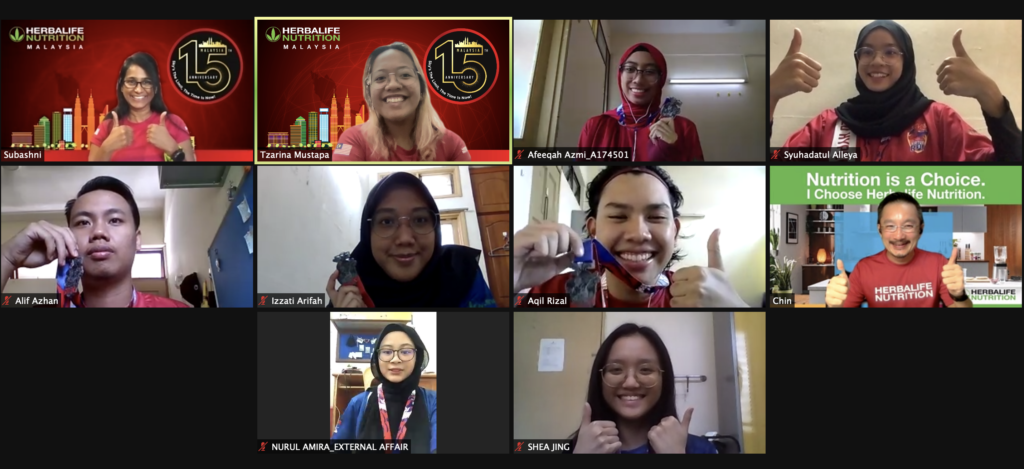
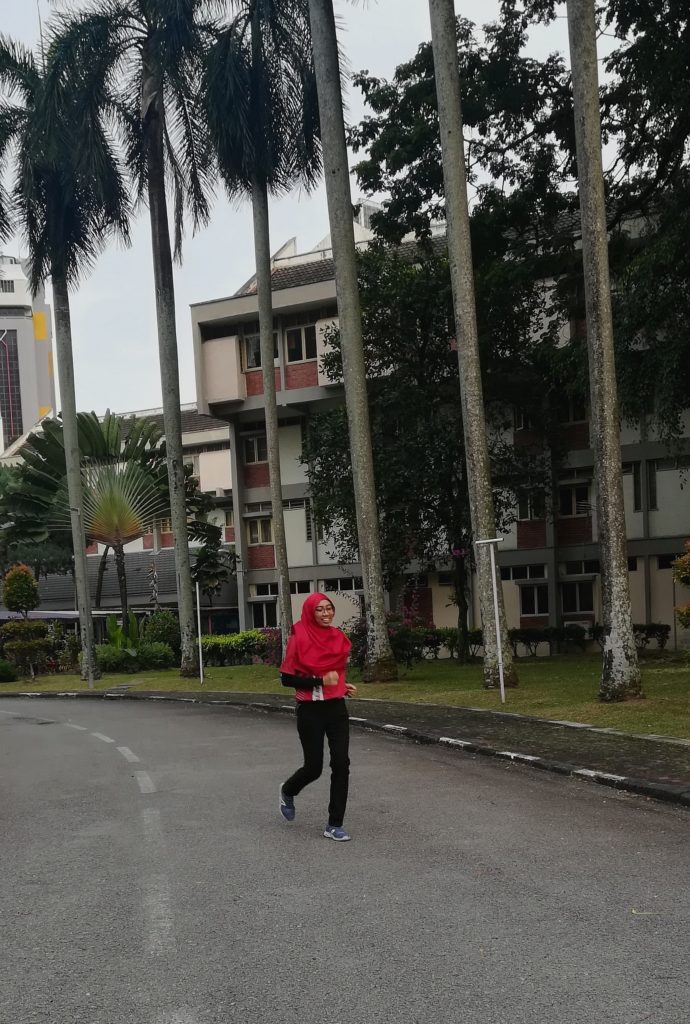
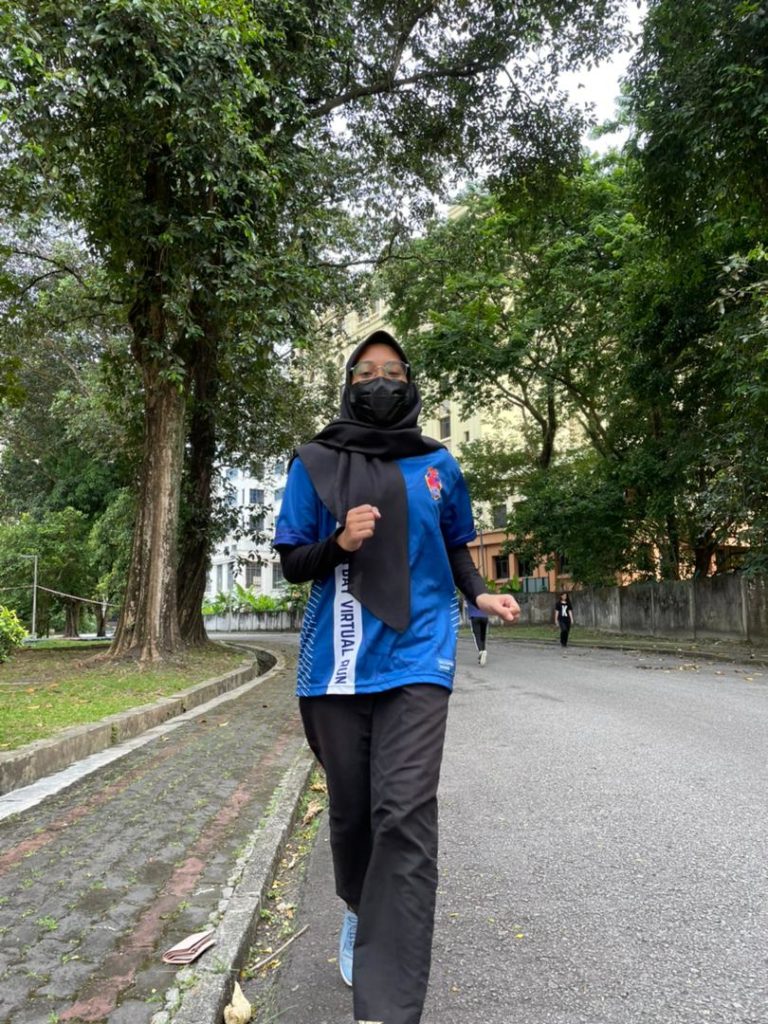
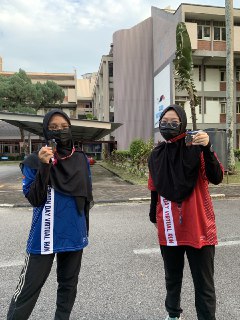
KUALA LUMPUR, 28 JUNE 2021 – Herbalife Nutrition, a premier global nutrition company, recently lent support to a World Hypertension Day Virtual Run hosted by Universiti Kebangsaan Malaysia (UKM). In conjunction with the World Hypertension Day last month, the Virtual Run aimed to raise awareness on hypertension and encourage Malaysians to lead a healthy, active lifestyle.
According to the National Health and Morbidity Survey (NHMS) conducted by the Ministry of Health (MOH) in 2019, hypertension is one of three major risk factors leading to cardiovascular diseases in Malaysia, along with diabetes mellitus and high cholesterol.[1] Hence, it was key to spread awareness and work towards tackling these issues and taking responsibilities for one’s health.
“In conjunction with World Hypertension Day, we wanted to highlight the ongoing hypertension issue in Malaysia. In order to improve in this aspect, multi sector collaboration is needed to raise awareness and work towards the same goal of improving people’s quality of life by tackling this issue. Therefore, we are grateful that Herbalife Nutrition went on this journey with us and helped us to bring more attention to hypertension,” said Prof. Dr. (PhD) Suzana Shahar, Dean of Faculty of Health Sciences, UKM.
Due to the series of Movement Control Orders (MCOs) implemented throughout the year, Malaysians have been looking for new, fun ways to stay active and healthy from the confines of their homes. “Staying at home all day can easily result in sedentary behaviour and being physically inactive. Hence, we are delighted to join UKM to promote this virtual run event in order to help Malaysians stay on track on their respective health journeys. It aligns with our purpose to help people live a healthy, active lifestyle, supported by good nutrition,” said Steven Chin, Senior Director/General Manager, Herbalife Nutrition Malaysia and Singapore.
Over 203 participants took part in the World Hypertension Day Virtual Run, which ran from 17 May 2021 until 5 June 2021. Participants tracked their steps and distance for the virtual run by using either a pedometer, a smartwatch or step counter apps on their phones. The virtual run was divided into two categories – individual (10km) and team (100km) and participants were allowed to run from anywhere, at any time and submit their results when they have reached the allocated distance.
“As group sports activities have been limited due to the various stages of MCOs, the Faculty of Health Sciences from UKM aimed to encourage the community to adopt a healthy lifestyle and create a spirit of sportsmanship and competitiveness even by running at home with this Virtual Run. On top of that, we also wanted to celebrate community achievements in maintaining heart health,” said Nur Afeeqah, one of the student organizers of the Virtual Run from Faculty of Health Sciences, UKM.
Exciting social media contests in conjunction with the virtual run
Additionally, UKM organised two exciting social media contests with Herbalife Nutrition which were the Meal Showdown contest and the Flaunt Your De-Stress contest. Participants of these contests posted pictures and videos related to the theme of the contests along with hashtags for the event #WHDVirtualRun #TogetherWeAvoidHypertension #KnowYourNumbers. The winners were selected based on their themes, interpretation and creativity.
[1] National Health and Morbidity Survey (NHMS) 2019, Ministry of Health
Progress in promoting peace and justice – together with fostering effective, accountable, and inclusive institutions – is a decisive challenge across the globe. Violence cost 12.6 percent of world GDP in 2016. While homicides have declined and more citizens around the world have better access to justice, violent conflicts have increased in recent years. A few high-intensity armed conflicts are causing a large number of displaced persons and threatening rule of law. In 2016 the IMF estimated the annual cost of bribery alone at about $1.5 to $2 trillion. Bribery and corruption impede business growth, raise transaction costs, and create an unlevel playing field. This ultimately creates social instability, fuels mistrust in public officials and institutions, and undermines the rule of law. Indeed, an estimated 4 billion people world-wide continue to live outside the protection of the law. There is also still a gulf between quality of governance globally, including government effectiveness, regulatory quality, and, pertinent to the private sector in particular, control of corruption. Corruption and bribery scandals can cause major societal instabilities.
Businesses have a vitally important role to play in respecting and supporting peace, justice, and strong institutions, both globally and in the countries in which they operate. Now more than ever, a growing number of business leaders are recognizing they have a crucial role to play in advancing anti-bribery and corruption, peace and rule of law efforts, as a complement to, not substitute for, government action.
Business leadership on Goal 16 is about respecting and supporting Governments in efforts to advance peace, justice, and the proper functioning of effective, accountable, and inclusive institutions. Leading businesses will critically examine the direct and indirect consequences of their end-to-end operations to ensure that they are respecting and supporting the rule of law, including strengthening efforts to combat corruption, protect human rights, and reduce violent conflict. To this end business can implement such measures that ensure robust supply chain management and transparency of financial flows. Businesses can also be leaders through support of accountable and inclusive institutions and peace-building efforts by building organizational capacity in the public sector and the provision of technologies, skills, and logistical solutions in areas of conflict and humanitarian crises.
State of Peace, Justice and Strong Institutions in Malaysia
- As of 2020, Malaysia is ranked 57 out of 180 countries in Corruption Perception Index with a score of 51 where 0 indicates a highly corrupted country and 100 being the cleanest.
- According to the Global Corruption Barometer for Asia 2020 survey, 71 percent of Malaysians view government corruption as a big problem. However, 67 percent of them felt that the government is doing a good job fighting it whereas 68 percent of Malaysians believe that ordinary citizens can make a difference in the fight against corruption.
- A recent report by the Institute for Democracy and Economic Affairs (IDEAS) looked into how supply chain corruption impacts the cost of living. Among the findings were that the commonness of corruption in Malaysia is induced due to social norms, as people would often evade regulatory enforcement and dismiss corruption as a legitimate transaction or ‘cost of doing business.’ With less effective control over corruption, it would adversely impact price increase in goods and services, making the economy highly prone to inflation. While bribery is seen as the “common” form of corruption in public and private businesses, other forms including extortion, fraud, embezzlement, abuse of discretion and favouritism have also often taken place. The report concluded that addressing corruption in Malaysia on a systemic scale will require sustainable policy efforts across all segments of society.
Do your actions satisfy leadership qualities?
1. Intentionality
- Is your company committed to supporting the achievement of Goal 16? Have you developed a holistic strategy that reflects this commitment, covering end-to-end operation and the wider community?
- Are you committed to learn from your actions and do you have processes in place to improve them accordingly?
- Is your strategy supported by the highest levels of management, including the Board of Directors.
2. Ambition
- Do your actions achieve long-term outcomes that greatly exceed those resulting from current industry practice?
- Are your actions aligned with what is needed to achieve Goal 16?
3. Consistency
- Is support for Goal 16 embedded across all organizational functions?
- Are staff and board incentives aligned with achieving Goal 16?
4. Collaboration
- Do you proactively look for opportunities to partner with Governments, UN agencies, suppliers, civil society organizations, industry peers and other stakeholders to inform how to advance Goal 16?
5. Accountability
- Do you publicly express your commitment to advance Goal 16?
- Do you identify, monitor, and report on impacts, including potentially adverse impacts?
- Do you mitigate risks associated with your action?
- Do you remediate negative impacts associated with this action?
- Do you engage stakeholders in a meaningful way?
Framework for Business Action
Business Action 1: Identify and take robust action against corruption and violence in own operations and the supply chain
Businesses can contribute to peace and justice by developing, implementing, and sharing solutions to take robust action against corruption and violence throughout their own operations and the supply chain. All businesses should take action against corruption and violence, including by implementing strong whistleblowing and anti-bribery and corruption policies. Leading companies go further and extend their commitments to multiple tiers of the supply chain. This requires tools and frameworks for robust supply chain management and transparency of financial flows. Business can also advance Goal 16 by controlling the way in which products and services, including financial services, are used by its customers.
Example Practice
A textiles company adopts robust supply chain traceability practices to identify corruption and/or potential human rights violations in its overseas factories and develops a plan for redressal or disengagement as appropriate. It shares good practice with industry peers on how to disengage, and advocates for supply chain regulation and standards
Business Action 2: Work with government to strengthen institutions and increase respect and support for the rule of law
Companies can, in close consultation with Governments and civil society, become leaders on increasing respect and support for the rule of law, and building stronger, more accountable, and inclusive institutions that govern the workplace, marketplace and community. Companies can bring capabilities that can significantly bolster government efforts. They can build organizational capacity in the public sector where there are significant capacity gaps, contribute technological solutions such as information technology and data analysis, and facilitate the development of legal and regulatory frameworks.
Example Practice
A shipping company creates a maritime anti-corruption network that helps companies identify and address vulnerable elements in maritime processes where corruption is prone to take place. The network collaborates with local Governments and other actors to identify and mitigate the root causes of corruption in the industry.
Business Action 3: Work with government and/or international institutions in areas of conflict and humanitarian crises to contribute to peace and institution building
Companies that work in, or source from areas of conflict and humanitarian crises must conduct business with great care. They have a responsibility to make substantial efforts to respect and support human rights in the context of their end-to-end operations and are encouraged wherever possible, to appeal to international institutions and the embassy of a business’ home country to understand whether there is hard evidence that a particular state is engaging in crimes against humanity. Beyond that, there is scope for businesses to become leaders by supporting working with Governments, peace building and institution building organizations. This could include the provision of technologies, skills, logistical solutions, and security services, taking care that their contribution does not cross into domains that are exclusively the remit of the government.
Example Practice
A shipping company dedicates a materially significant proportion of its fleet towards identifying and rescuing refugees on precarious boats. It works with local government authorities, NGOs, and multilateral agencies to rehabilitate the refugees in a manner consistent with international law and good practice
There is a strong interdependence between business success and the sustainability of the societies in which they operate. An operating environment which is governed by the rule of law provides the basis for commercial certainty and long-term investment, growth, and sustainable development for all. Goal 16 is highly interconnected to all of the other Goals. Without a peaceful, just and inclusive society, which is supported by strong institutions, the 2030 Agenda cannot be achieved.
AMCHAM kicked start our Monday with a virtual meeting between Brian McFeeters, the U.S Ambassador to Malaysia, and the AMCHAM Penang members. Traditionally, the U.S. Ambassador will make a trip to Penang, spend a day or two visiting the U.S. companies and their facilities, unfortunately, with the current pandemic, a virtual meeting was the next best option.
It was an excellent opportunity for the members to meet the Ambassador and also to discuss issues that have risen due to the current lockdown which has been lengthened further.
Members appreciated the platform to raise their concerns and we hope this is the first to many more meetings in the coming months. Thank you to our members and the U.S. Embassy team for making this meeting happen and thank you to our new Board Member, Dave Mitchell from BSCI for chairing this meeting!
An aid package worth RM150 billion has been unveiled to help the people, businesses, as well as those vaccinated under Phase One of the National Recovery Plan to curb the spread of COVID-19.
The government will also provide a total amount of RM10 billion direct fiscal injection.
In a special address, Prime Minister Tan Sri Muhyiddin Yassin on Monday (June 28) listed a number of initiatives under the package known as the “Pakej Perlindungan Rakyat dan Pemulihan Ekonomi (Pemulih)”:
Read More:
- English Version (coming soon)
- BM Version