Passport Fee Change
The passport book security surcharge, one component of U.S. passport fees, is scheduled to increase from $60 to $80 on December 27, 2021. Please see below for additional information on how this will affect your passport application.
Passport Renewal by Mail
Passport applications submitted via Aramex through our Passport Renewal By Mail Program will be subject to the fee that is in effect on the date that your application is submitted to Aramex. Passport applications submitted to Aramex on or after December 27, 2021 with fees in the old rate cannot be accepted and will be returned to sender.
| PASSPORT RENEWAL BY MAIL FEES | ||
| Service Type | Fee prior to December 27, 2021 | Fee on or after December 27, 2021 |
| Passport Book | USD $110.00 (RM 473.00) | USD $130 (RM 559.00) |
| Passport Card | USD $30.00 (RM 129.00) | USD $30.00 (RM 129.00) |
Passport fees must be paid by banker’s cheque (U.S. dollar or Ringgit) made out to ‘U.S. Embassy Kuala Lumpur’. Current fees in Ringgit are listed in the table above and are based on the official Consular exchange rate. Applications that do not include payment by banker’s cheque in the correct amount cannot be accepted and will be returned to sender. Do not round your fee payment up or down – the banker’s cheque must be in the precise amount listed above.
Aramex delivery service fees must be paid by banker’s cheque made out to ‘Aramex Malaysia Sdn Bhd’. Aramex fees are listed on our website.
For more information about renewing your U.S. Passport by mail, including eligibility, processing times, and other information, please review the full instructions on our website here.
In Person Passport Appointments
Passport applicants applying in person at the U.S. Embassy on or after December 27 will notice a $20 increase in the overall passport fee, which differs based on the age of the applicant and whether the applicant is eligible to use a DS-11 or DS-82 passport application. For a full schedule of passport fees, please review our website here: https://travel.state.gov/content/travel/en/passports/how-apply/fees.html
You may find more information about renewing your passport at the U.S. Embassy in Kuala Lumpur, including the link to our online appointment system, on our website here: https://my.usembassy.gov/u-s-citizen-services/passports/. Please note that appointment availability is based on our staffing and other external factors, and we can only accommodate appointment expedite requests for humanitarian or medical emergencies.
Assistance:
- U.S. Embassy Kuala Lumpur, Malaysia
Phone: 60-3-2168-5000
Email: [email protected]
Website: https://my.usembassy.gov/
- State Department – Consular Affairs: 888-407-4747 or 202-501-4444
- Malaysia Country Information
- Enroll in Smart Traveler Enrollment Program (STEP) to receive Alerts.
- Follow us on Facebook and Twitter
Please note that due to technical issues, there is currently no way for STEP registrants to unsubscribe themselves from receiving these messages. Please email us at [email protected] if you wish to unsubscribe, and we will manually process your request. You may continue to receive STEP messages for a short time, we appreciate your patience and understanding.
To ease the return-to-office process following long periods of lockdown, it is crucial for companies to develop a return-to-work plan while providing ongoing health support. International SOS Regional General Manager and Director of Southeast Asia Jing Tan said companies need to learn the latest best practices of crisis management as crisis planning is becoming more agile and adaptive. Employees’ health and wellbeing are being considered as an integral part of the crisis planning.
Six in every 10 Malaysians have said that their physical and mental health were less than ideal due to the pandemic situation, according to the Herbalife Nutrition Asia Pacific Health Inertia Survey 2021. The survey also revealed that for those who saw a deterioration in their physical health in the past 12 months, eight in 10 (82%) Malaysian respondents attributed it to the lack of physical activity, with the country being in and out of lockdowns over the past year.
Article by: Kawal Preet, president of Asia Pacific, Middle East, and Africa (AMEA), FedEx Express.
December 13, 2021 — Today, if you’re not buying online, you’re probably the exception rather than the norm, especially with the holiday gift-buying season upon us. Consumer demand is such that e-commerce growth rates in the Asia Pacific region have already met projections for 2025.[1] For sellers, setting up a storefront on platforms like Alibaba – home to a combined 1 billion active users globally – is now a given. This year, retailers are ramping up efforts to cut through an increasingly crowded online marketplace. As logistics underpins e-commerce sales, we’ve witnessed some critical shifts that may help retailers stay ahead this holiday season.
- E-commerce 3.0: Winning through immersive experiences
E-commerce 1.0 was all about building a website and product catalogue for people to purchase. E-commerce 2.0 centred on building omni-channel retail and understanding more about customer buying patterns through data analytics. Now we’re living in an era of e-commerce 3.0, which applies approaches like livestreaming and augmented or virtual reality to create immersive customer experiences that bring better brand and product understanding and better service to those browsing online. In fact, close to 50% of consumers say they would pay extra for a product if brands could offer more immersive shopping experiences.[2]
China has long been the global trendsetter in the e-commerce field and it’s fair to say what happens here defines the way forward. With more than 638 million Chinese engaging with livestreams and shopping online[3], livestream platforms are now a critical engine driving e-commerce growth. Ahead of this year’s Singles Day sale, one of China’s top live streamers sold a staggering US$1.7 billion worth of goods within the first 12 hours, attracting more than 250 million views.[4]
As more small businesses build their e-commerce presence, China’s live commerce successes are now being replicated elsewhere in the region. The intent to shop on social media platforms is going up, as high as 88% in countries like Thailand[5].
- Dig deeper: Consider subscription models
Shopping online may have lowered the barrier to making a transaction but engaging with your customers so they keep coming back for more can be tricky. Consumers are inundated with a sea of product information every day. A simple search of ‘camera’ on Amazon yields 70,000 results, and let’s not forget the programmatic advertising that consumers are exposed to once the search occurs. In short, consumers are easily distracted.
Subscription models can help increase returning customers.[6] When it comes to e-commerce, small businesses in Asia are also capitalizing on this trend. Just look at the popularity of monthly wine hampers in Australia, beauty boxes in Korea, and premium fruit baskets in Japan.
All of this is being fuelled by consumers’ increasing disposable income and pent-up desire to live life to the fullest during the pandemic. Prolonged lockdowns have meant that receiving little moments of joy through the post regularly helps to break through the monotony of not being able to travel. If retailers can capitalize on this and find a way to have their customers sign-up for a subscription, it can become a stable stream of revenue.
- Supply chains: Agility and resiliency will be key
In the old days, e-shoppers’ focus sat squarely on price. But in today’s on-demand economy, where instant gratification means the world to consumers, personalized delivery services such as when and where the product should arrive and whether it can be redirected to a locker if they’re unavailable to pick it up are critical to driving sales.
Companies therefore need to build more robust delivery services and resilient supply chains to meet consumer needs. It’s no exaggeration to say that your e-commerce success depends on how strong your supply chains are. Just look at how many times ‘supply chain’ has been mentioned in earnings calls among S&P 500 companies this month – a whopping 3,000 times![7]
This need is particularly pronounced with COVID-19 restrictions still in place in many countries. For example, a well-known South African footwear brand relied on FedEx during the lockdowns, as they were facing difficulties driving sales via their local retail outlets. By leveraging FedEx transportation solutions and technology expertise, the brand was successfully able to expand to new international markets beyond Africa, and double their global distribution network.
What does that mean for retailers like you? Collaborating with a reliable logistics company that can flex its network to reach your customers in whatever circumstances is critical. You earn an extra bonus point if your consumers save on delivery costs. And that’s exactly where we’ve been investing in – fast and convenient international delivery services at attractive prices.
This holiday season is set to be another epic one for small businesses and e-commerce merchants. A chain is only as strong as its weakest link so make sure that logistics support is your point of strength. Make this a time of festive cheer for your customers and your business.
[1] https://www.thedrum.com/news/2021/08/11/ecommerce-continues-leapfrog-traditional-commerce-asia-pacific
[2] https://www.businesswire.com/news/home/20200922005169/en/Immersive-Technology-to-Reimagine-Online-Shopping-Experience-and-Increase-Consumer-Purchasing-Confidence-According-to-New-Accenture-Interactive-Report
[3]http://english.www.gov.cn/archive/statistics/202108/28/content_WS6129ab8cc6d0df57f98df4c6.html#:~:text=It%20added%20that%20the%20number,increase%20of%20about%2075.2%20million.
[4] https://techwireasia.com/2021/10/heres-how-the-pre-sale-of-chinas-2021-singles-day-sale-went/ a
[5] https://www.statista.com/topics/7121/e-commerce-in-asia-pacific/
[6] https://qz.com/690521/spotify-makes-90-of-its-money-from-30-of-its-users/
[7]https://www.bloomberg.com/news/articles/2021-10-13/supply-chain-chatter-hits-record-highs-on-earnings-calls
Nexperia Malaysia Sdn. Bhd., a wholly-owned subsidiary of Nexperia BV will be expanding its presence in Malaysia with its latest facility in Seremban, Negeri Sembilan. “By 2026, Nexperia Malaysia is looking to invest an additional RM1.6 billion for building, equipment and automation in Malaysia. This will also provide an opportunity for us to hire 700 more skilled workers over time to man and maintain automated production lines,” announced Mr. Harith Abdullah, Vice President of Nexperia Malaysia.
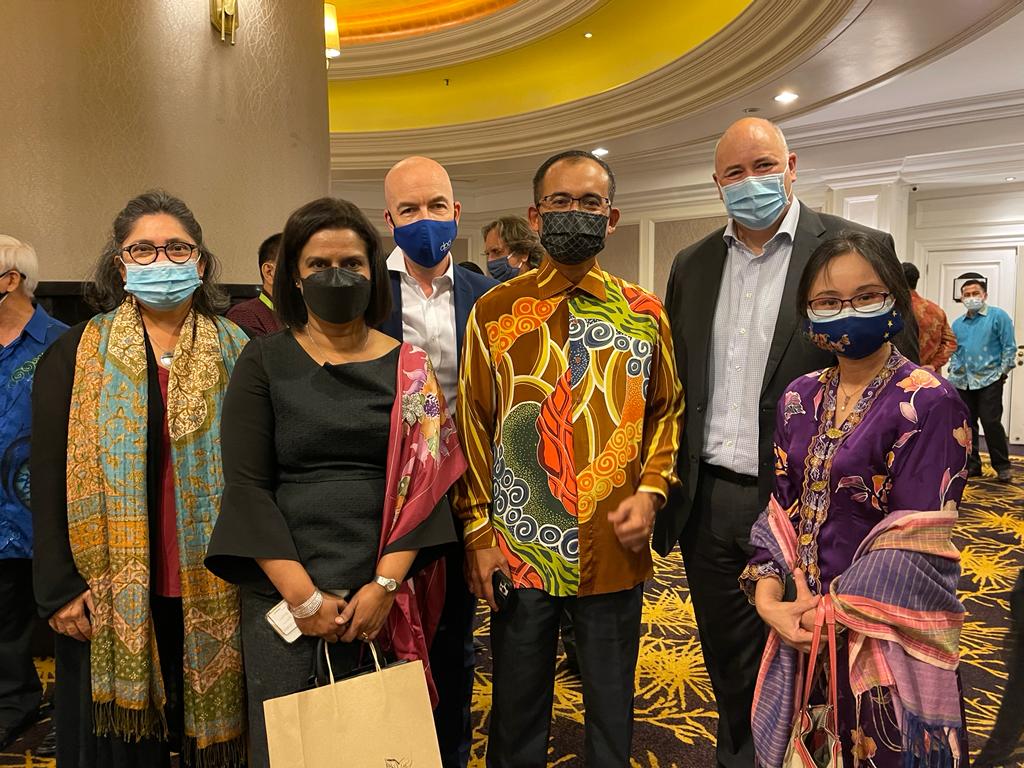
AMCHAM participated in an engagement session with the Minister of Home Affairs at the Ritz-Carlton Hotel on 9 December 2021. Our CEO Siobhan Das was able to relate the need for a robust and secure talent pipeline, at all levels, and the importance of talent mobility especially at this time of recovery.
“AMCHAM looks forward to establishing a regular engagement with the Ministry to develop short, mid, and long-term plans to address the talent gaps emerging as the country tries to meet the needs of incoming FDI. The inclusion of international workers at various levels will inject the right skills and drive local job growth, said Siobhan Das at the engagement session.
Many of AMCHAM member companies already have highly-localized workforces but new technologies, business models and supply chain movements will bring new demands to upskill and deepen capabilities and capacities. Working together with policymakers to maintain the integrity of the talent pipeline will ensure Malaysia remains competitive and resilient for future investments, both domestic and foreign.