Singapore, April 7, 2025 – Federal Express Corporation, one of the world’s largest express transportation companies, has expanded its leadership team in Asia Pacific (APAC) to advance business and talent strategy. Marcus Balzereit assumes the role of Senior Vice President, APAC Sales & Solutions, while Rumana Rahman joins as Vice President, APAC Human Resources and Shanker Venkateswaran, is appointed as Vice President, APAC Planning & Engineering. By attracting and retaining top talent across all levels, the company is strategically positioning itself to seize emerging market opportunities and fuel growth across this rapidly evolving region.
With over 25 years of experience in the logistics industry, Marcus Balzereit brings extensive expertise in driving commercial success across diverse markets. In his new role, he will lead a 2,000-strong sales organization in the Asia Pacific region, driving profitable revenue growth and expanding market share. Marcus will focus on delivering differentiated solutions and strengthening customer relationships, enabling customers to fully leverage the strong FedEx value proposition.
People are the driving force behind FedEx, and its talent strategy is key to achieving its ambitious goals. With 24 years of experience in human resources across Asia Pacific, the Middle East and Africa, Rumana Rahman brings deep expertise in shaping high-impact people strategies. In her new role, Rumana will lead talent development to cultivate a high-performance culture and evolve workforce strategies to meet the needs of a rapidly changing and diverse talent landscape.
Shanker brings over two decades of experience across business, technology and operations, with expertise spanning multiple industries and geographies. In his new role, Shanker will lead the transformation of FedEx’s ground network through design, digitization and automation, enhancing efficiency and flexibility to meet customer demands, with focus on optimizing operations to stay ahead of market changes and exceed customer expectations.
“Building a future-ready team in Asia Pacific is a top priority,” said Kawal Preet, president of Asia Pacific at FedEx. “With these new appointments, we’re further strengthening our commitment to anticipating customer needs, driving market growth and empowering our teams with the agility and innovation required to make a lasting impact in this fast-evolving region.”
Special Economic Zones (“SEZs”) are designated areas within a country that offer a more favourable regulatory framework to encourage both local and international investment. Over the decades, SEZs have played a crucial role in driving economic growth, attracting foreign direct investment, and fostering industrial development. These zones typically provide investment-friendly incentives, such as tax breaks, streamlined regulations, and enhanced infrastructure. A prime example of a successful SEZ is Shenzhen in China, the country’s first SEZ, which has been instrumental in driving China’s economic reforms and continues to be a key player in its growth. Other examples of special economic zones in Asia include the Incheon Free Economic Zone in South Korea, Kendal SEZ in the Centra Java province of Indonesia, the BBK free trade zone comprising of Indonesian islands of Batam, Bintan, and Karimun, the Eastern Special Development Zone of Thailand and the Golden Triangle Special Economic Zone along the border region of Thailand, Laos and Myanmar.
In a similar vein, on 7 January 2025 at the 11th Malaysia-Singapore Leaders’ Retreat, the Governments of Malaysia and Singapore formally established the Johor-Singapore Special Economic Zone (“JS-SEZ”) through an exchange of the signed agreement. This collaborative effort is designed to facilitate the cross-border movement of people and goods, while strengthening the regional business ecosystem. By joining forces, both nations aim to attract global investments more effectively and enhance their competitive edge. As Malaysian Prime Minister Anwar Ibrahim aptly stated, this initiative is unique in that it leverages the strengths of both countries, deepening their economic ties in an increasingly polarised world.
President Donald Trump has announced a 90-day pause for countries hit by higher US tariffs but a trade war with China has escalated.
In a dramatic change of policy, just hours after levies against roughly 60 of America’s trading partners kicked in, Trump said he was authorising a universal “lowered reciprocal tariff of 10%” as negotiations continued.
At the same time he increased tariffs on goods from China to 125%, accusing Beijing of a “lack of respect” after it retaliated by saying it would impose tariffs of 84% on US imports.
Pointers from the article:
1. Trump said he was authorising a universal “lowered reciprocal tariff of 10%” as negotiations continue
2. Trump’s latest plans have not affected other recently-announced tariffs already in play.
3. These include the 25% import taxes on cars and car parts coming into the US, which came into effect on 2 April, and a further 25% tariff on all steel and aluminium imports.
4. He increased tariffs on goods from China to 125%
AMCHAM had the pleasure of meeting with Mr. Herman Kemp, General Manager of the soon-to-open Park Hyatt Kuala Lumpur, during a courtesy visit held earlier this afternoon. Representing AMCHAM was CEO Dato’ Siobhan Das, who welcomed Park Hyatt to the Chamber as a Bronze Member.
Although the hotel is not yet open, the meeting served as a friendly introduction and an opportunity to connect with the leadership behind this exciting new addition to Malaysia’s hospitality scene.
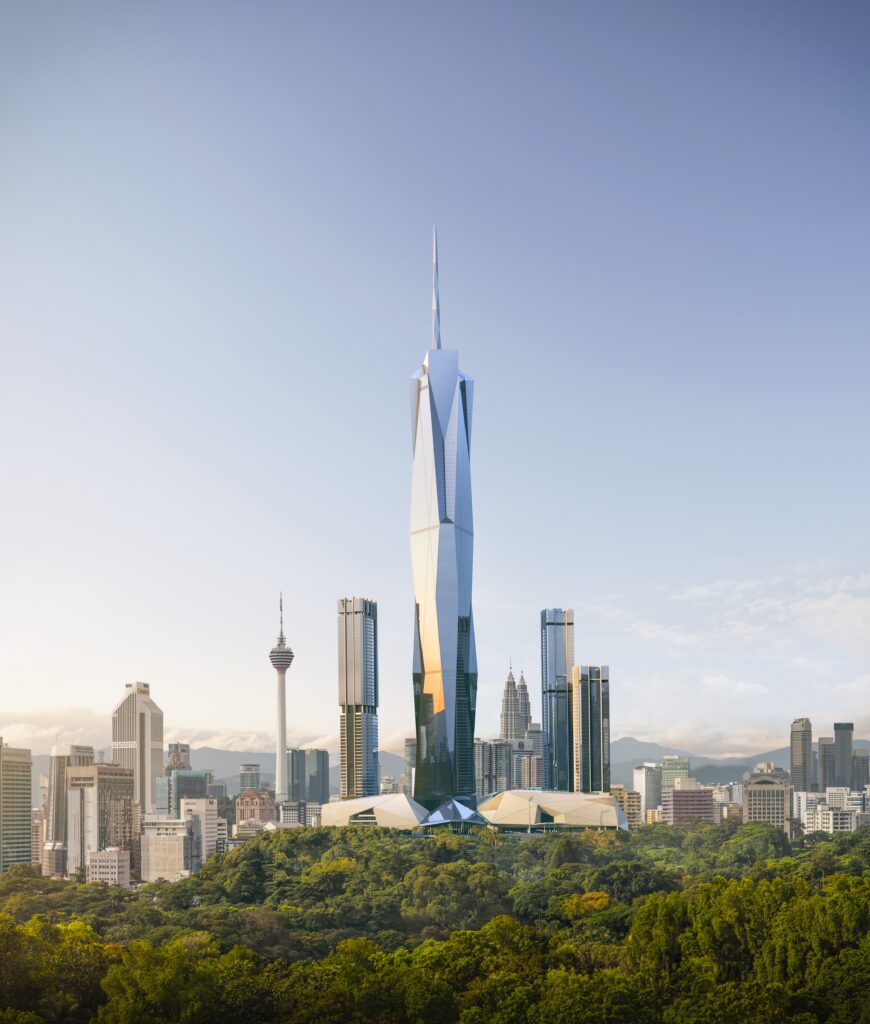
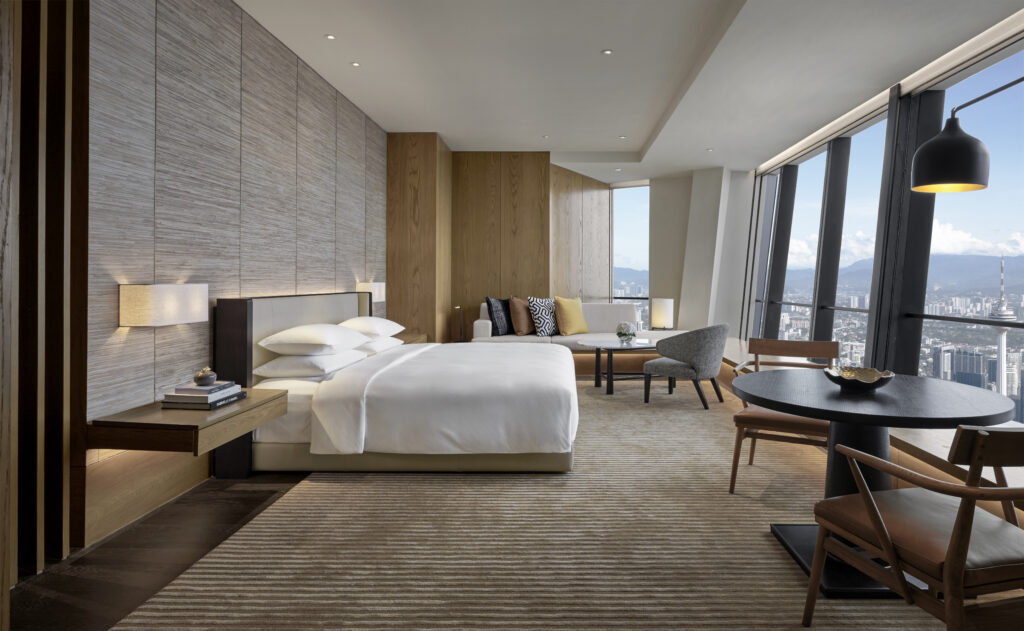
Set to open in June 2025, Park Hyatt Kuala Lumpur will mark the debut of the Park Hyatt brand in Malaysia. The hotel will occupy the top floors of Merdeka 118—the tallest skyscraper in Asia Pacific—offering discerning global travellers a refined home in the sky, complete with tasteful comforts and purposeful culinary and wellness offerings.
At the helm is Herman Kemp, a seasoned hospitality professional with over 20 years of industry experience. Inspired by his parents’ passion for hospitality, Kemp is driven by a commitment to excellence and creating meaningful, personalized experiences for every guest.
“Hospitality is about people,” Kemp asserts. “It is about understanding their needs, anticipating their desires, and exceeding their expectations. This philosophy drives everything we do at Park Hyatt Kuala Lumpur.”
We are delighted to welcome Park Hyatt Kuala Lumpur to the AMCHAM community and look forward to supporting their journey as they prepare to open their doors later this year.

The United States said on Tuesday (Apr 8) that 104 per cent duties on imports from China will take effect shortly after midnight, even as the Trump administration moved to quickly start talks with other trading partners targeted by President Donald Trump’s sweeping tariff plan.
US stocks retreated on the news. Global markets had previously posted gains on hopes that Trump might be willing to negotiate down the array of country and product-specific trade barriers he is erecting around the world’s largest consumer market.
The administration has scheduled talks with South Korea and Japan, two close allies and major trading partners, and Italian Prime Minister Giorgia Meloni is due to visit next week.
But the White House made clear that country-specific tariffs of up to 50 per cent would nevertheless take effect at 12.01am Eastern Time, as planned.
The chilling effect of United States President Donald Trump’s sweeping new tariffs on economic growth in Southeast Asia’s key economies is expected to pose stern tests for these countries, say analysts.
Some governments have already stated their intention to negotiate deals with the Trump administration in return for lower tariffs. But should this fail, they may also need to roll out a slew of fiscal measures to cushion the impact on their people, experts caution.
The leaders of Indonesia, Malaysia, Thailand and Vietnam have pinpointed steady economic growth as a key priority during their terms in government. As economists slash growth forecasts, all eyes will be on how they react to maintain domestic political stability.
Malaysia, as the current chair of the Association of Southeast Asian Nations (ASEAN), is coordinating a response with other regional leaders “to engage constructively” with the US.
Putrajaya will also chair a special ASEAN Economic Ministers’ meeting on Thursday (Apr 10) to address the impact of newly imposed US tariffs on regional trade and investment and to coordinate a collective response.