Event : We Care We Share Program
Date : 28 November 2019 – Thursday
Venue : Pusat Transit Gelandangan, Jalan Pahang, Kuala Lumpur
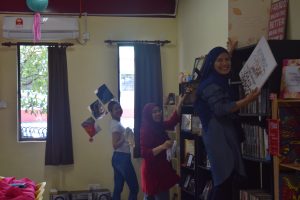
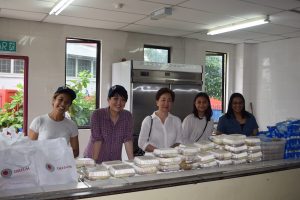
Deleum’s Corporate Social Responsibility initiative recognises the importance of reaching out and supporting the community where we operate. On 28 November 2019, a group of Deleum’s volunteers spent their morning at the Pusat Transit Gelandangan Kuala Lumpur (Homeless Transit Centre). The day started with volunteers sprucing up the centre through activities such as cleaning and tidying the common areas as well as repainting the grills. Meals, toiletries and other basic necessities were then distributed to the homeless people residing at the centre and residents were treated to a free haircut service.
Such a program inspires Deleum to make a positive contribution and play a role in poverty reduction. The time spent with the residents was an eye-opening experience for the volunteers. It is touching to see the gratification on their faces and by learning more about them, it provides insight on how Deleum can enrich the livelihood of Malaysia’s underprivileged community.

(Article by Global Compact Network Malaysia)
Businesses not only meet the needs of communities with purchasing power but create more of them. They can create decent sustainable jobs, foster economic activity through their supply chains, and contribute tax revenues for basic services and infrastructure.
This role of businesses is becoming more important as we move towards the 2030 Agenda of eradicating poverty according to SDG 1, and as the task becomes increasingly monumental. The pace of poverty reduction is decelerating, with a “nowcast” of 8.6% in 2018. Baseline projections suggest that 6% of the world population will still be living in extreme poverty in 2030, missing the target of ending poverty. Hence, initiatives from all stakeholders need to be amplified if this goal is to be achieved and this projection overcome.
The DNA of business is profit and incentive. Does the goal of poverty eradication by 2030 fall within this framework? It does for 3 favorable outcomes to business:
Low-income populations are a company’s employees. Addressing poverty among a company’s employees requires changing a company’s wage standards, developing individuals’ capacities and increasing benefits. Proactively doing so increases productivity and has reputational benefits; abstaining is a material risk.
Low-income populations are consumers. Low-income populations have purchasing power. Even if it’s marginal, how and what low-income populations buy affects a company’s bottom line. Businesses can also apply innovation and creativity to proactively provide solutions to poverty where they operate. Particularly through inclusive business models by developing innovative products and services to better serve communities affected by poverty and leveraging the unique perspectives of the poor as consumers, employees, entrepreneurs.
Low-income populations are the new supply chain. Supply chains are changing. Once defined by labor abuses and lack of career prospects, supply chains are now expected to be workplaces with human rights standards, career development processes and wages that allow for decent living outside the factory walls and farmlands. As access to the Internet increases, supply chain workers are realizing that they have choices and rights beyond a minimum wage.
Framework for Business Action
Business Action 1: Engage in the creation of secure and decent jobs, especially in least developed countries and for vulnerable populations
One of the most effective ways to reduce poverty is to create decent jobs, that is, to offer people a sustainable and dependable source of income, decent working conditions, and support for basic amenities such as health, housing and sanitation. Given that most of the world’s poorest people reside in least developed countries, leadership can take the form of responsible and inclusive scaling up of operations in these countries, in ways that are designed to support the local economy and generate secure employment for local communities. Companies can also lead by investing in growing business in labour-intensive industries.
Example Practice
- An international food company commits to sourcing a significant percentage of its raw material from small-holder farmers in developing countries to boost local employment
Business Action 2: Implement programs to economically empower disadvantaged groups
All companies should be equal opportunity employers, ban discrimination against vulnerable groups, and adopt policies that support inclusion so as to contribute to economic empowerment. Leading companies can implement special programmes to economically empower ethnic and racial minorities, women, persons with disabilities, the elderly and other vulnerable groups that have historically faced discrimination.
Example Practices
- An international accountancy firm provides targeted internships and employment opportunities to young people from disadvantaged backgrounds in its locale
- An international beverage company leads on employing people with disabilities. It has a dedicated program that provides targeted professional and personal growth opportunities to people with disabilities through training, education, community events, networking etc.
Business Action 3: Ensure decent working conditions for all employees across the business and supply chain
A key requirement is that companies have robust procedures to identify, prevent, monitor, mitigate and, if necessary, take remedial action against any activity that contributes to poverty in its own operations and supply chain. These procedures can be guided by the UN Guiding Principles and the UN Global Compact’s Poverty Footprint Tool. Leading companies take action to control poverty impacts throughout their end-to-end operations, finding and sharing novel ways to do this, and inspiring peers and suppliers to replicate their actions.
Example Practice
- A clothing company takes robust measures to build suppliers’ capacity to pay a living wage and promotes the use of digital payments to ensure that progress can be properly tracked and evaluated
Business Action 4: Create and market goods and services that specifically cater to, and aim to improve the lives of, vulnerable groups
Economically disadvantaged groups often have to pay disproportionately high prices for basic goods and services. There is a large untapped market that companies can cater to, which can not only make business sense but can also constitute leadership on Goal 1 by raising living standards and helping vulnerable communities
Example Practices
- A start-up in India develops feminine sanitary products that are sold at low price points to help women conduct activities as normal while menstruating. It hires street vendors to distribute its products across urban settlements
- A bank designs micro-loans with soft pay-back conditions, and mobile banking apps to reach unbanked communities in rural Bangladesh. It collaborates with regional authorities to help increase the penetration of ID cards so that customers can easily verify their identity and access financial services.
Key Points of Consideration when executing ‘SDG 1: Ending Poverty’ plans
- Intentionality
- Is your company committed to supporting the achievement of Goal 1? Have you developed a holistic strategy that reflects this commitment, covering end-to-end operation and the wider community?
- Are you committed to learning from your actions and do you have processes in place to improve them accordingly?
- Is your strategy supported by the highest levels of management, including the Board of Directors?
- Ambition
- Do your actions achieve long-term outcomes that greatly exceed those resulting from current industry practice?
- Are your actions aligned with what is needed to achieve Goal 1?
- Consistency
- Is support for Goal 1 embedded across all organizational functions?
- Are staff and board incentives aligned with achieving Goal 1?
- Collaboration
- Do you proactively look for opportunities to partner with Governments, UN agencies, suppliers, civil society organisations, industry peers and other stakeholders to inform how to advance Goal 1?
- Accountability
- Do you publicly express your commitment to advance Goal 1?
- Do you identify, monitor, and report on impacts, including potentially adverse impacts?
- Do you mitigate risks associated with your action?
- Do you remediate negative impacts associated with this action?
- Do you engage stakeholders in a meaningful way?
Engaging the 4 billion people at the base of the economic pyramid in a responsible and inclusive manner may be the biggest business opportunity of our day. If development efforts have failed and globalization is further impoverishing the world’s most disadvantaged people, then corporations surely deserve part of the blame. If, on the other hand, global poverty is declining and global integration is helping people to escape poverty, then corporations are presumably part of the solution.
The banking and finance industry has seen a proliferation of new digital technologies, programs, and platforms. The fintech revolution and trends within it, such as digital banking are fostering significant transformations across the industry. On 12 February 2020, AMCHAM had the first entry of its Digital Transformation Series for the year focusing on these trends fintech in the banking and finance industry.
We had two amazing presenters, Mr. Shayan Hazir, Head of Global Liquidity & Cash Management, HSBC Malaysia and Mr. Rafidz Rasiddi, Chief Strategy Officer, Merchantrade Asia Sdn. Bhd.
This session highlighted the drivers of growth and innovation within their respective organizations and new initiatives implemented for better serving their various customer segments. The two speakers also indicated how the role and function that banks, in general, would change in the foreseeable future. Indicating how the focus of banks is now shifting towards a more user and customer-based experience.
This is the first entry into AMCHAM’s Digital Transformation Series in 2020. There was a great turn out for this session and attendees actively participated in an in-depth Q&A session.
Stay tuned for more talks in this series, coming to you throughout the year.
Kuala Lumpur, 11 February 2020 – Gibraltar BSN Life Berhad (“Gibraltar BSN”), one of Malaysia’s fast growing life insurance companies, recently opened its first agency sales hub in Johor Bahru on 6 February 2020.
Located at Danga Utama, the sales hub will serve as a strategic base catering to the life insurer’s southern region agency force which is made up of agents and professional advisors, Team Alpha.
Rangam Bir, President and Chief Executive Officer of Gibraltar BSN Life Berhad said, “The opening of our agency sales hub in Johor Bahru reinforces our belief in the southern region as one of Malaysia’s bright spots in the economy. As a key location in our network, we recently expanded the coverage of our professional advisors to Johor last year and we look forward to serving the needs of our customers and communities in the area.”
The agency sales hub was officiated today by Rangam Bir, President and Chief Executive Officer of Gibraltar BSN, Susan Ong, Chief Marketing Officer, and Daniel Toh, Chief Sales Officer of Gibraltar BSN.
Allowing for better customer service, the 2,400 square feet agency sales hub is located next to Gibraltar BSN’s current branch in Danga Utama. The facility features meeting pods for the agents to meet up with their customers and training facilities to continuously upgrade the professional skills and capabilities of Gibraltar BSN’s sales advisors. Commenting further, Rangam Bir added, “Our new sales hub is dedicated to providing high quality technical support to our agents, ensuring that they continue to deliver superior service to our customers.”
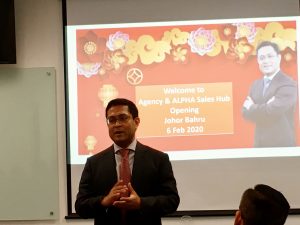
Pic 1: Rangam Bir, President and Chief Executive Officer delivering his opening remarks
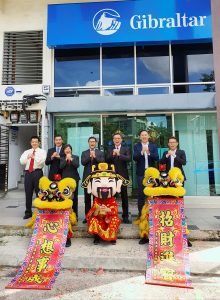
Pic 2: Gibraltar BSN Life Berhad’s senior management celebrating the opening of the new agency sales hub in Johor Bahru
From left to right:
- Loo Sai Chong – Regional Director (Southern region)
- Levi Chong – Head of Sales Development
- Susan Ong – Chief Marketing Officer
- Rangam Bir – President and Chief Executive Officer
- Daniel Toh – Chief Sales Officer
- Alvin Lee – Regional Director of Agency
- Jerry Lee – Asst. Regional Director (Southern region)
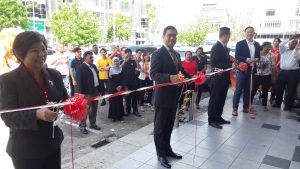
Pic 3: All smiles at the ribbon cutting ceremony
From left to right:
- Susan Ong – Chief Marketing Officer
- Rangam Bir – President and Chief Executive Officer
- Daniel Toh – Chief Sales Officer
Adding 12 lanes for International Priority DirectDistribution® and 47 lanes for International Economy DirectDistribution® connecting Asia Pacific to 28 EU countries
Kuala Lumpur, February 10, 2020—FedEx Express, a subsidiary of FedEx Corp (NYSE: FDX) and the world’s largest express transportation company, has expanded coverage for its FedEx International Priority DirectDistribution (IPD) and FedEx International Economy DirectDistribution (IED) services from Asia Pacific to European Union (EU) countries. In addition to its existing routes from Asia Pacific to Europe, FedEx now has 12 additional lanes for International Priority DirectDistribution and 47 additional lanes for International Economy DirectDistribution, extending both services from 13 major Asia-Pacific markets to all 28 EU countries.
IPD and IED services simplify and speed up cross-border deliveries between Asia Pacific and EU, enabling businesses, especially SMEs, to deliver goods to their customers faster. The enhanced connectivity facilitates easy, efficient shipping for customers in Asia Pacific to send multiple packages from a single location in an origin country to multiple recipients in an EU country. For example, a customer can use IPD or IED to ship at one time 20 packages as a consolidated shipment from Hong Kong, SAR China to different recipients in Germany. Customs clearance for such packages will be processed through a single shipping label and a Consolidated Commercial Invoice (CCI). Customers can use alternate channels, such as intermediaries, to reduce cycle time and move products from origin to end recipient more swiftly.
“Trade between the Asia-Europe Meeting (ASEM) countries account for 55% of all world merchandise trade. As trade relations between Europe and Asia strengthens, this is an excellent opportunity for greater bilateral trade,” said Karen Reddington, president, Asia Pacific, FedEx Express. “As customer requirements for cross-border access increase, the expanded coverage of IPD and IED services will enable our Asia Pacific customers to capture global opportunities and tap new possibilities.”
IPD Single Point of Clearance (SPOC) and IED Single Point of Clearance (SPOC) services are also available for Asia Pacific businesses to send multiple packages under the same master airway bill from a single location in an origin country to multiple recipients in multiple destinations among the 28 EU countries.
To help Asia Pacific businesses further connect to Europe opportunities, FedEx Express has expanded the destinations for its FedEx International Economy and International Economy Freight services. In addition to its existing routes, FedEx opened 148 lanes for International Economy and 56 lanes for International Economy Freight from Asia Pacific to Europe.
Learn more about the services at www.fedex.com/hk_english/shipping/services/international-priority-directdistribution.html.
The novel coronavirus (2019-nCoV) continues to cast a nervous pall on much of our activities but, with the right precautions, it is still “Business As Usual” at AMCHAM. We do, however, ask you to wash your hands on arrival to keep us all safer.
We are sorry to see the postponement of the 2020 AmChams of Asia Pacific Business Summit in March due to the heightened health risk alert from the Singapore government. Not unlike the Summit AMCHAM hosted in 2018, this would have been an excellent platform to discuss key aspects of trade in Asia. We had been watching the reverberations of trade tensions and their partial resolution, but we are now also looking to see how far-reaching the disruption to supply chains will be as a result of 2019-nCoV and how much resilience is built into global value chains.
To help us get snapshots and take the pulse of what is happening in our sphere, we ask that you please take part in the quick polls and surveys that we are issuing. Your input matters!
AMCHAM is rolling out a few areas of focus this year. Firstly, you would have started to see us working to raise awareness of the United Nations Sustainable Development Goals (UN SDGs), which feature prominently in our Membership Directory 2019/20. Linking up with the UN Global Compact we are looking to help to make these goals relevant to the day-to-day activities of our membership. Another area we are supporting is the empowerment of women. Kicking us off down this path is a partnership with LeadWoman and their 3-day Board Journey training. Watch this space as there is more to come during March, the month of International Women’s Day.
The APEC SOM I is well underway in Putrajaya and we are starting to slowly see the emergence of some of the discussion areas that will go toward the formation of the next set of goals. AMCHAM was able to get some members accreditation to attend and their reports back to date have been encouraging. If you are interested in attending the accessible workshops at future SOMs, please contact us to learn more.